


Emergency Roof Tarp
Service Near Me.
Fast, 24/7 protection for homes after storm or leak damage.
As an insurance-approved vendor, we are here to help
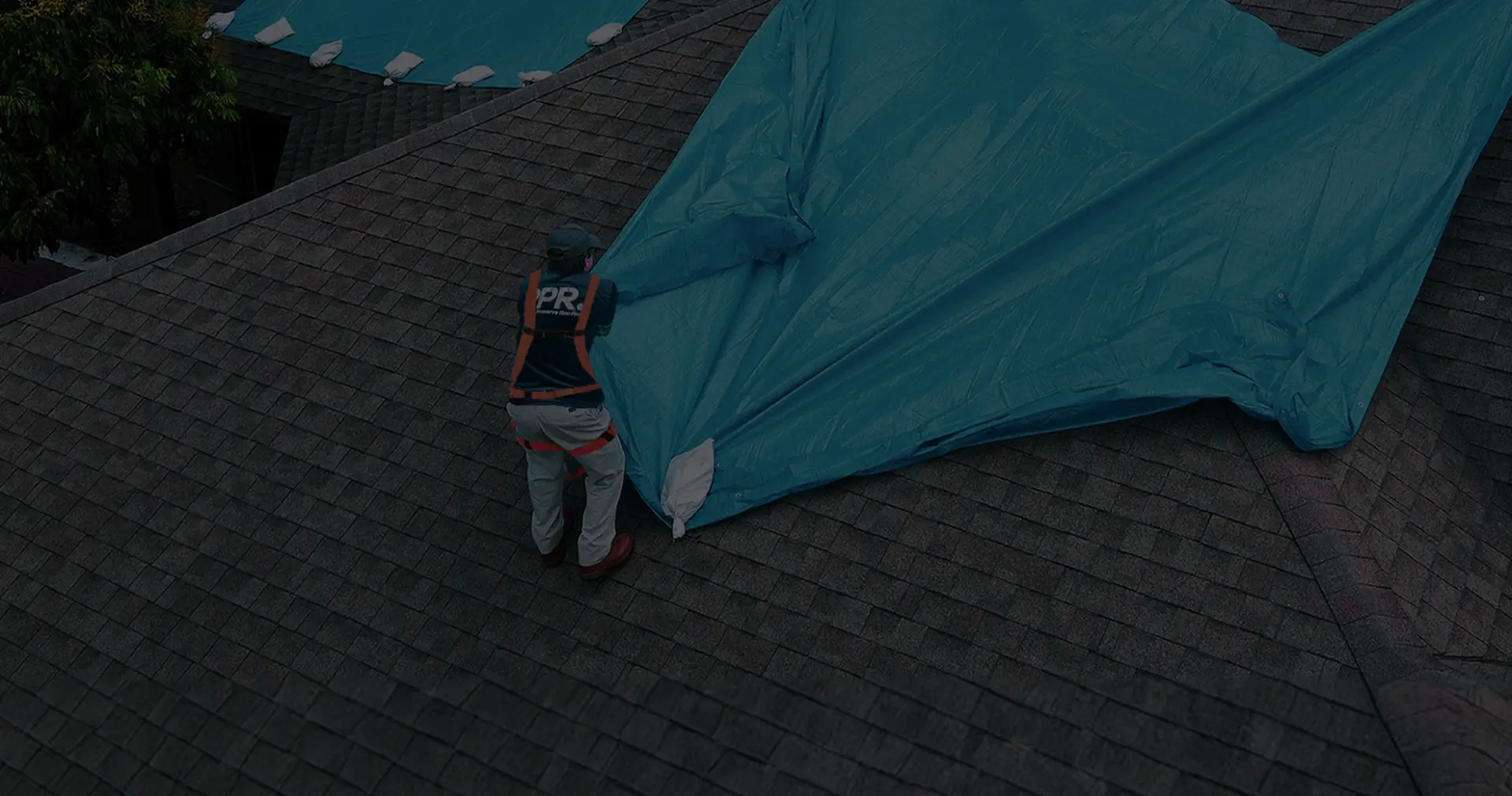
When leaks or storm damage strike, quick response can prevent thousands in losses. Our certified team provides immediate tarping to secure your property until full repairs are completed.


What Is an Emergency Roof Tarp and How Does It Work?
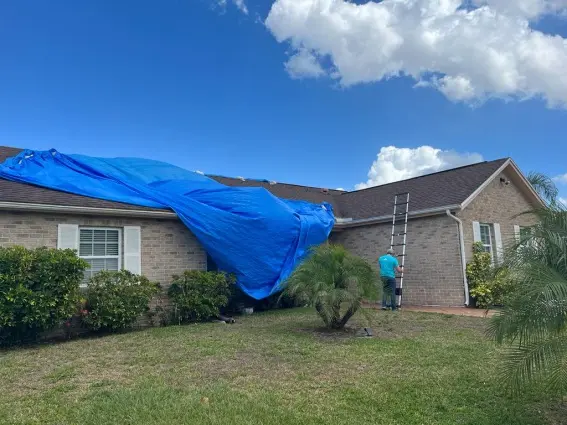
An emergency roof tarp is a durable, waterproof covering installed to keep water out after storm or impact damage. It serves as a critical first defense, protecting your interior from further leaks or structural deterioration until full repairs can be completed.
Typically made from heavy-duty polyethylene or vinyl, these tarps are engineered to withstand Florida’s high winds, heavy rain and UV exposure. Proper installation ensures a tight seal around damaged areas, redirecting water safely off the roofline.
While a tarp provides short-term protection, usually lasting a few weeks to several months, timely professional inspection and permanent repair are essential to restore long-term integrity and insurance compliance.
Two Effective Ways to Stop a Roof Leak
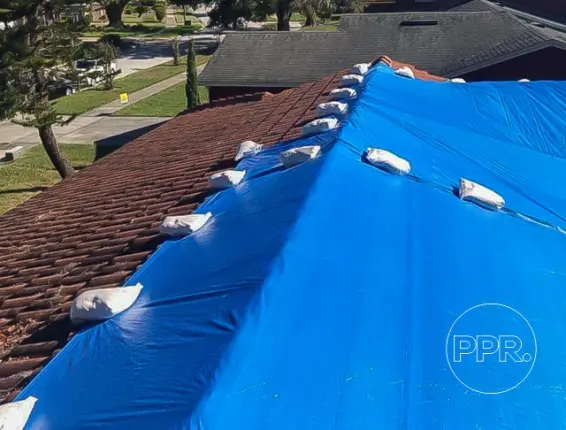
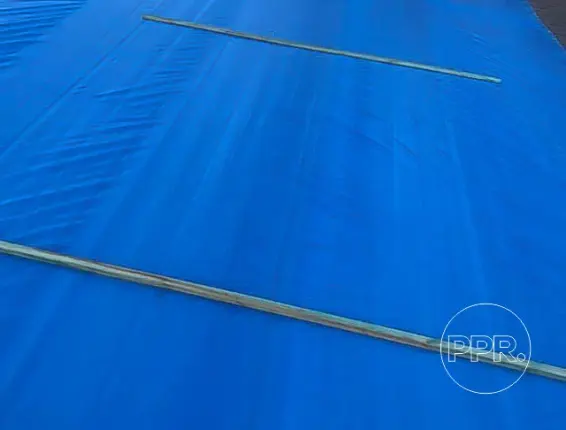
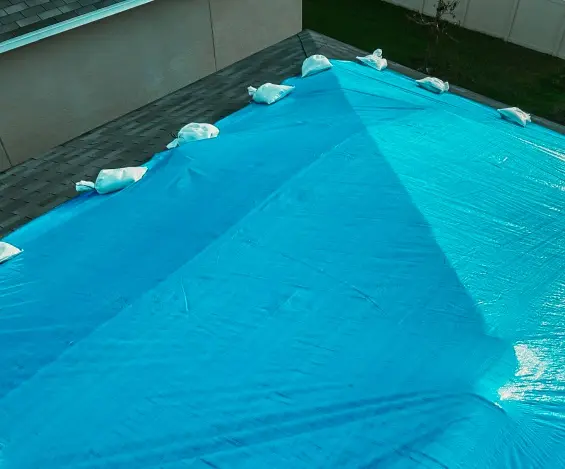
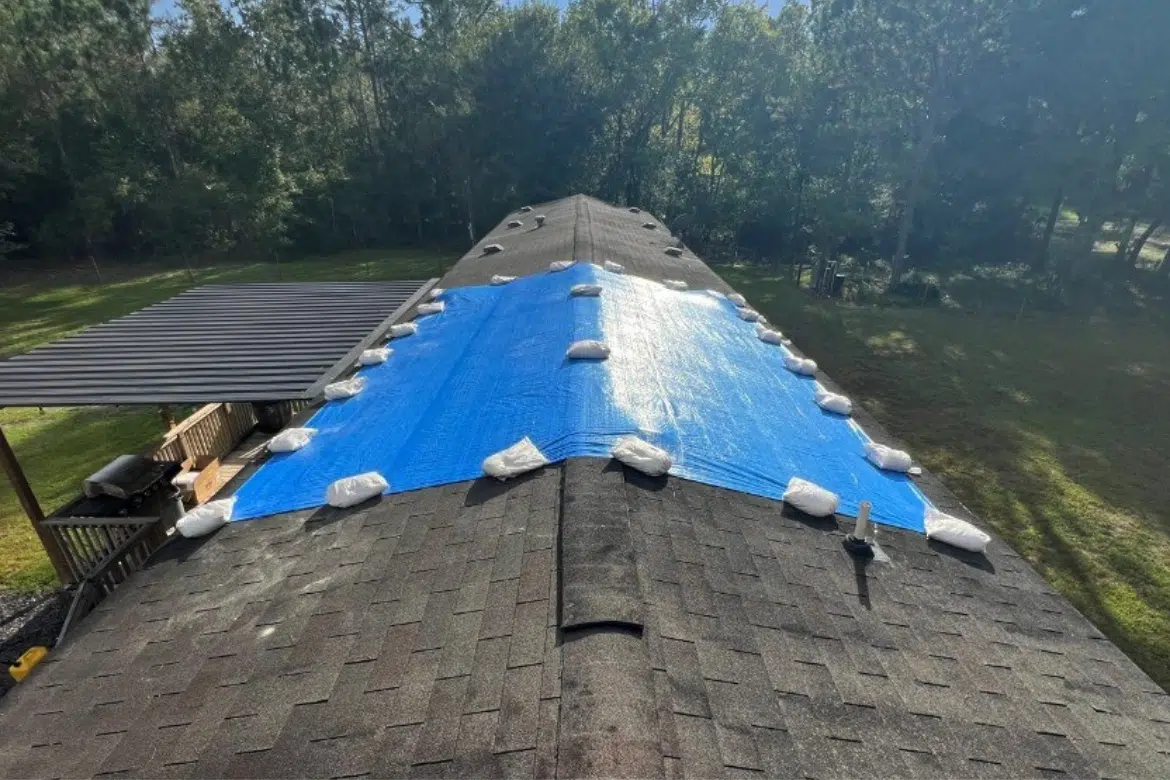
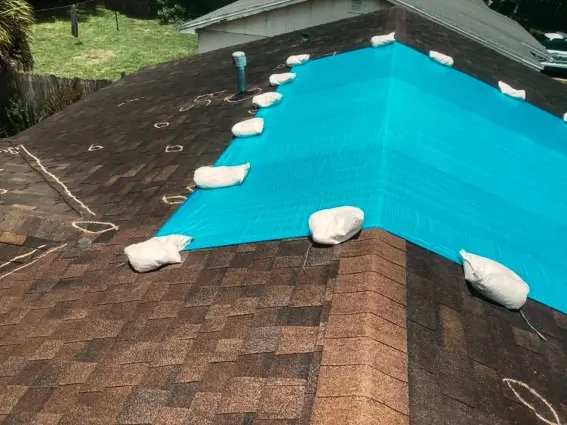
When a roof leak begins, acting fast can prevent major water intrusion. There are two main methods used to secure a tarp꞉ non penetrating setups, which rely on sandbags or weights to avoid nail holes and mechanically attached systems, anchored to the roof deck for enhanced stability during strong winds.
Each approach depends on your roofing material, whether asphalt shingles, tile, metal or flat roofing systems, and the extent of the damage. Professional crews choose the safest and most efficient technique to ensure your property is fully protected from additional weather exposure.
How to Install an Emergency Roof Tarp
When a roof is damaged by severe weather or falling debris, installing an emergency roof tarp can stop leaks before they cause further interior damage. The most effective and recommended option for Florida homes is the non-penetrating roof tarping method, which relies on weighted anchors instead of nails or screws. This avoids additional punctures, preserves structural integrity and ensures your property remains inspection ready for insurance documentation.
Every installation should be tailored to the roof slope, material and weather conditions. Professional tarping services ensure the tarp is positioned to direct water away from critical entry points and secured tightly against high winds.
Step-by-Step Roof Tarp Installation Guide
Here’s a general overview of how a non-penetrating emergency roof tarp is safely installed꞉

1. Position a stable ladder extending at least three rungs above the roofline
2. Stabilize the ladder base on flat or firm ground; never place it on uneven surfaces
3. Secure the ladder top using a rope or bungee cord for extra stability.
4. Work with a partner to ensure safety and proper handling of materials
5. Locate the source of the leak, then extend the tarp over the ridge line to cover the damaged area completely.
6. Anchor the tarp using sandbags or weights attached to each grommet for balanced tension.
7. Tighten gradually, ensuring the tarp lies smooth and taut to resist uplift during high winds.

For fast, compliant, and 24/7 assistance, call Protect Preserve Roofing. Our emergency roof tarping service ensures your home stays protected until permanent roof repairs are completed.
For fast, compliant, and 24/7 assistance, call Protect Preserve Roofing. Our emergency roof tarping service ensures your home stays protected until permanent roof repairs are completed.
Pros and Cons of a Non-Penetrating Emergency Roof Tarp Installation
A non-penetrating roof tarp installation is one of the safest and most common temporary roofing solutions used after storms in Florida. It protects your home without creating new holes or damage to the structure, making it ideal for short-term stabilization until a full repair or roof replacement is completed.
Cost of Emergency Roof Tarp Installation
The cost of an emergency roof tarp depends on several job-specific details such as roof design, accessibility and service conditions. Each situation is evaluated individually to ensure safety and accuracy
In Florida, basic emergency tarping typically starts around $800 for standard single-story homes, while larger or more complex roofs can vary. Specialized methods like shrink wrap or reinforced tarping systems are priced per square foot based on project scope.
For fast, compliant, and 24/7 assistance, call Protect Preserve Roofing. Our emergency roof tarping service ensures your home stays protected until permanent roof repairs are completed.
For fast, compliant, and 24/7 assistance, call Protect Preserve Roofing. Our emergency roof tarping service ensures your home stays protected until permanent roof repairs are completed.

Frequently Asked Questions
About Emergency Roof Tarp
& Roofing Services