



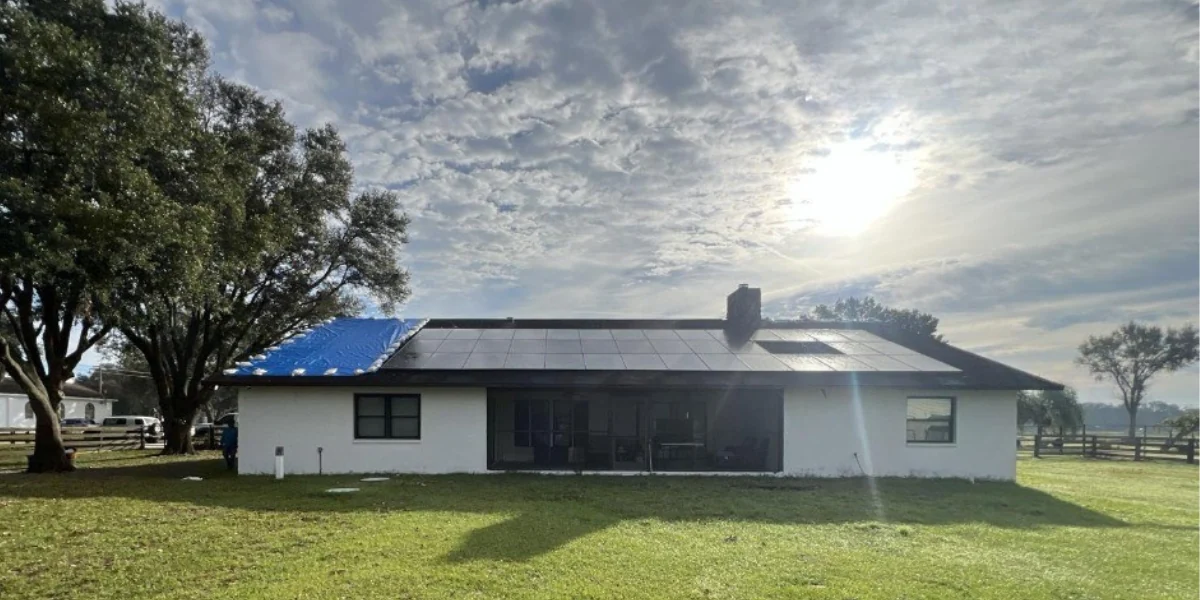


Do blue tarps block UV light? If you’ve ever rushed to cover your roof after a storm, that question probably crossed your mind. Perhaps it seems simple to grab something blue, tie it down, problem solved.
However, the truth is that not all blue tarps offer UV protection and choosing the wrong one can cost you far more than just another trip to the hardware store, especially in places like Florida where sun isn’t just hot, it’s relentless. Ultraviolet rays are responsible for up to 90% of the degradation in common plastic materials.
That’s why a cheap tarp might give you shade, but without UV treatment, it breaks down in just a few days and exposes your roof to leaks, mold, and structural damage.
So what really works? Which tarps actually block UV rays? And how can you tell the difference before it’s too late? This guide answers all these questions with no guesswork, just real answers that help you make smarter choices and protect your roof under the Florida sun.
Let’s start with the truth behind “do blue tarps block UV light” and UV protection.
Do Blue Tarps Block UV? Here’s the Truth
The name sounds promising, right? A blue tarp should protect everything underneath it, especially from the sun; but not every blue tarp blocks UV rays. In fact, most of the cheap ones don’t.
The color blue doesn’t guarantee UV resistance. What truly matters is how manufacturers make the tarp—its thickness, material, and whether they treat it with UV stabilizers. That’s the real deal. Without those additives, even a tarp that looks tough will crack, fade and fall apart under Florida’s sun.
According to polymer durability studies from manufacturers like Interplast, exposure to UV rays can degrade untreated polyethylene tarps by up to 40% in just 60 days. If you thought that tarp would hold up forever… think again.
Blue tarps might look the same on the shelf, but there’s a world of difference in how they perform on a roof. UV-treated tarps are made to last under direct sun. The others? Well, they’re just temporary shade and sometimes, not even that.
So next time you’re about to throw a blue tarp over your home, ask yourself: “Is this just for color or does it actually protect?” Because once the sun beats down and the rain follows, that decision can cost you.
Also read:
What Makes a Tarp UV-Resistant?
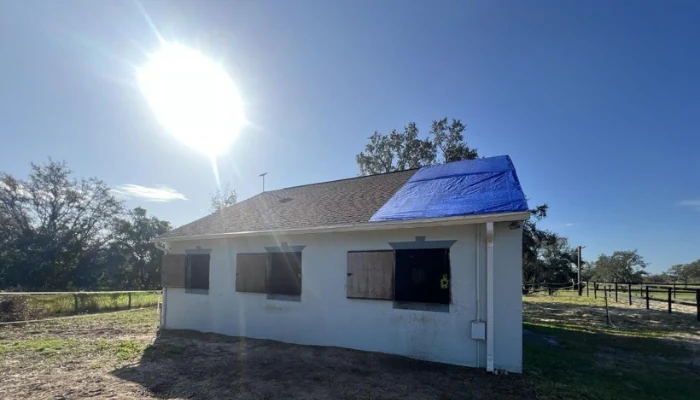
Not all tarp manufacturers design their products to withstand the sun. A tarp blocks UV rays only if they make it with the right materials and most budget options don’t.
To resist UV damage, a tarp needs two things: (1) the right material and (2) a chemical treatment that absorbs or reflects ultraviolet light. Let’s break it down like you’d explain to a buddy on a job site:
- Material matters: Polyethylene is the standard, but not all polyethylene is equal. The stronger ones are reinforced and multilayered, kind of like comparing a sandwich bag to a truck tarp.
- UV treatment: This is the game-changer. Tarps without this treatment will go brittle, crack and start to tear after a few weeks in Florida’s heat. With UV protection? You can get months of use safely.
Therefore, once the tarp breaks down, it exposes shingles, underlayment and wood decking. That leads to leaks, mold, and soaked insulation. Worse? If the damage gets worse and your tarp wasn’t UV-rated.
What you really need is a tarp that meet industry standards for UV resistance. If you want to sleep at night during storm season, you need more than something blue. You need something that lasts.
Blue Tarps vs UV-Resistant Tarps: Which One Holds Up?
They might both be blue, but the way they behave on your roof is night and day.
A regular blue tarp looks tough at first. You throw it up there, tie it down and think the job’s done. Then comes the sun, a week or two later, it’s brittle, faded, maybe already torn at the edges. But most manufacturers don’t make blue tarps to fight UV rays, they just design them to look like they do.
Now compare that to a UV-resistant tarp. It’s thicker. It’s reinforced and, more importantly, it’s chemically treated to block the sun’s rays. That means it won’t break down as fast, even when temperatures soar.
Trust us, friend, we’ve seen basic blue tarps start cracking in just 10 to 14 days during Florida’s summer. However, a UV-treated tarp? Some hold up for 60 to 90 days or more, even under pressure.
Keep in mind: when your tarp fails early, it’s not just about buying a new one. It means leaks, soaked drywall and wet insulation. That’s why Protect Preserve Roofing doesn’t mess around. We use blue tarps that are built to last. They’re tested, sealed right and ready for the sun, not scared of it.
Do Blue Tarps Block Heat as Well?
Let’s clear something up: if the case is “do blue tarps block UV” is different from the heat case. Just because a blue tarp blocks light, doesn’t mean it blocks heat.
Most standard blue tarps do a decent job of creating shade. Step under one and it feels cooler… for a while. That relief is mostly from blocking visible sunlight, not stopping the heat itself.
So here’s the truth: UV rays and infrared radiation still pass through – or get trapped underneath – especially if the tarp isn’t UV-treated, which means it offers little protection for your roof over time.
Here’s what actually happens:
- Non-treated tarps absorb heat. They warm up fast, which can bake the roofing materials below.
- They trap hot air. If moisture gets underneath, the trapped heat speeds up mold and rot.
- They offer zero insulation. No real barrier against solar gain.
In Florida’s summer, this turns into a bigger problem. The heat wears down the tarp quicker and weakens your roof’s structure. That’s why UV resistance isn’t just about sunburn, it’s about survival.
Quick reminder: the blue tarps used by Protect Preserve Roofing are tested under direct heat. They’re thicker, last longer and don’t fold after a few hot days. Our team knows Florida heat doesn’t take weekends off, so neither should your tarp.
How UV Exposure Impacts the Lifespan of a Tarp
The sun doesn’t just heat things up, it breaks things down and tarps are no exception. UV rays are silent destroyers. They dry out plastic, weaken fibers and, over time, they turn what looked like a strong tarp into something that tears with a light tug.
Most standard blue tarps begin to degrade in as little as 10 to 14 days of full sun exposure. You may not notice it right away, but under the surface, the material is turning brittle. One windy afternoon later and half your roof is exposed again.
What happens to your tarp is this:
- Breaks molecular bonds in polyethylene, weakening it day by day.
- Fades the color, which is a warning sign the protection is failing.
- Turns flexibility into stiffness, causing cracks with every movement.
And once the tarp fails, it’s not just the material that suffers. Your roof becomes vulnerable, water gets in, mold starts to form, insulation gets soaked and now you’re not just replacing a tarp, you’re rebuilding your whole ceiling.
UV exposure is constant and a big problem, you need to thnik about it. It doesn’t care if you bought the “heavy-duty” label. What matters is what’s inside the tarp and whether it was built to last in real-world conditions.
So if your tarp’s fading, cracking or flapping more than it should, take the hint: the sun already won that round.
What Happens When You Use the Wrong Tarp?
Let’s not sugarcoat it: picking the wrong tarp can wreck your roof, your claim and your wallet.
At first, it might seem like you’re saving money. A $40 tarp, a few ropes, problem solved, but that’s where things go sideways. If that tarp isn’t UV-resistant, thick enough or sealed properly, it won’t last long, especially in Florida heat and storms.
Here’s what can go wrong:
- Leaks return fast. The tarp shrinks, tears, or shifts, letting water in where you can’t see it.
- Insulation gets soaked. Wet insulation leads to mold, higher energy bills, and structural damage.
- Ceilings start to sag. The more water sneaks in, the worse the damage gets.
- Claims get denied. If the tarp fails and you didn’t take “reasonable action,” insurance might say no.
Keep in mind that happens fast. We’ve seen cases where a homeowner used a hardware store tarp, only for it to rip within days. The roof ended up worse than it started. Instead of a patch job, it turned into full replacement.
The bottom line is: the tarp isn’t just a cover, it’s your first line of defense. If it fails, everything underneath pays the price.
How to Spot a True UV-Treated Tarp Before You Buy?
Not all blue tarps are the same. Some look tough, but fall apart under sun. Others look basic and hold up like champs. So, how do you know which one actually protects your roof? Do blue tarps block UV, which each of them really do?
Here’s a simple checklist to help you spot a real UV-treated tarp, the kind that won’t quit after a few hot days:
- UV treatment label: Check the packaging or product listing. Look for terms like “UV-resistant,” “UV-treated” or “sun protection additive.” If it doesn’t say it, probably isn’t.
- Mil thickness (at least 10 mil): The higher the mil, the thicker the tarp. UV-treated tarps are usually 10 to 16 mil. Skip anything below 8 mil unless it’s for short-term use.
- Color fading warning: UV-treated tarps keep their color longer. If it fades fast, it’s a red flag. The deeper the blue stays, the longer it lasts.
- Mesh count: Look for numbers like 12×12 or higher (threads per square inch). Higher mesh means stronger material and more resistance.
- Feel the material: UV-treated tarps feel sturdier, heavier and less flimsy. They don’t fold like paper or crack when bent.
- Manufacturer specs or warranty: Reputable brands often state the expected lifespan under sun exposure (30, 60, or even 90 days). If there’s no info, proceed with caution.
Quick reminder: Protect Preserve Roofing uses tarps that check every box above. We’ve tested them under real heat, real storms, and real stress. So when we cover your roof, we know it’s actually protected.
Will UV Protection Make a Tarp Last Longer in Florida?
Short answer: yes and by a long shot. Florida isn’t just hot. It’s relentless. The sun here doesn’t play nice with plastic. Without UV protection, most tarps start breaking down in just 10 to 14 days. That’s barely enough time to file your insurance claim, let alone wait for the adjuster to show up and you know why:
- UV rays break down plastic fibers. They make the tarp stiff, then brittle. The edges curl, the surface cracks and pretty soon, water starts getting in.
- Heat accelerates the damage. Florida’s combo of high temps and direct sun is like an oven for cheap tarps.
- Moisture gets trapped underneath. As the tarp weakens, it traps humidity, turning your attic into a sauna and your wood framing into a sponge.
Now compare that with a UV-treated tarp. It’s made with chemical stabilizers that block ultraviolet rays. That means:
- The material stays flexible longer.
- Color stays strong instead of fading in a week.
- You get 2 to 3 months of real protection, even in peak summer.
Don’t forget: If your goal is to protect your home until the real fix happens, then UV protection isn’t optional, it’s essential.
Conclusion: Protect Preserve Roofing Doesn’t Just Cover, It Shields
A tarp is more than a piece of plastic. It’s the line between a fixable problem and a flooded mess.
Cheap tarps don’t tell you when they’ve failed. They just crack, shift and let water do its thing. By the time you notice, your ceiling might already be stained, your insulation soggy, and your claim denied.
Protect Preserve Roofing does it differently. We don’t gamble with thin, untested tarps. We use UV-treated, Florida-tough solutions installed by pros who know what your roof is up against. No shortcuts or half-measures, just protection that holds up through the storm, the sun and the wait for full repairs.
So if your roof is exposed and you’re unsure what to do, call us and let’s get it sealed or get a quick estimate to prevent or repair damage.
We don’t just cover roofs, we protect peace of mind.


Leave a Reply