



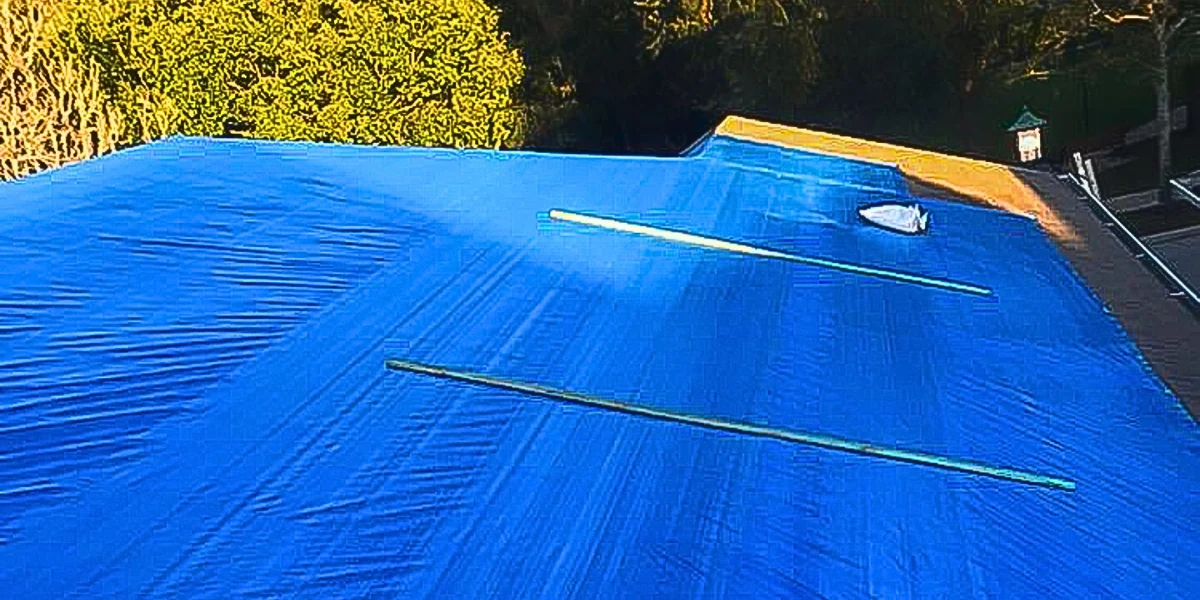


Do blue tarps block heat or do they actually trap it and make things hotter underneath? It’s a fair question and one more people are asking than ever. With rising summer temps and more homeowners turning to tarps for quick roof coverage, this simple blue sheet has become a go-to solution across the U.S.
However, does it really protect you from heat or is it just giving your attic a free sauna treatment? Well, standard blue tarps can reach internal temperatures 15–25°F higher than white or reflective alternatives when exposed to direct sunlight for extended periods.
So, what’s going on? Is it the color? The material? The way the tarp is used? Today we will answer all these questions for you with real numbers, scientific insights and clear guidance. You’ll find out when a blue tarp works, when it doesn’t and what heat-blocking options actually deliver results.
Thinking of throwing a tarp over your roof this summer? Don’t move a muscle until you read this.
Do Blue Tarps Block Heat: How Tarps Work?
A tarp works by doing two basic things: blocking sunlight and slowing down heat transfer. But not every tarp does both well.
Most people think that if something blocks the sun, it automatically keeps the space cool underneath. That’s not always true. It depends on the material, the color and how the tarp is installed. Let’s break it down.
Blocking sunlight
When we say a tarp blocks sunlight, we’re mostly talking about UV protection. That helps slow down damage to what’s under the tarp, like your roof, your tools or your furniture. Most standard blue tarps do a decent job at blocking UV rays, they stop direct light and prevent fading or surface damage.
Pro tip from Protect Preserve Roofing: Blocking the UV rays doesn’t mean they’re cooling anything. You need to look for more.
Blocking heat
Here’s where things get truly tricky. Heat travels in waves, just like light. Some materials reflect it, others absorb and trap it. And most blue tarps absorb heat and then radiate it downward, which can make the covered area feel hotter.
According to a 2024 report from Material Science Lab Reports, blue poly tarps retain 60–70% more heat than silver or white tarps under direct sun. That’s a big deal if you’re trying to keep a roof, shed or work area cool.
What actually cools things down?
If your goal is to fight off heat, these tarps reflect heat away, instead of holding it in:
- Light-colored tarps (white or silver).
- Reflective surfaces (like aluminum-layered options).
- Heat-blocking tarp materials (vinyl-coated with UV inhibitors).
Quick reminder: A tarp might block the light, but if it traps heat, it’s working against you. Protect Preserve Roofing knows which tarps actually work and we install them right.
Heat Blocking Tarp vs. Standard Blue Tarp: What’s the Real Difference?
At first glance, a tarp is a tarp. However, when the sun’s beating down, the difference between a standard blue tarp and a heat blocking tarp can feel like standing in the shade versus standing inside a parked car with the windows up.
Let’s cut to the chase: blue tarps protect from rain, but they hold heat. Heat blocking tarps do both and keep temperatures down.
Standard blue tarp
What a standard blue tarp does well is blocks the rain, provides temporary shade and is inexpensive and easy to find. But it doesn’t reflect heat, absorbs sunlight, warms up and radiates that heat underneath and, under strong sun, it turns the covered space into an oven.
Heat blocking tarp
These ones are good to reflect sunlight, reduce radiant heat, provide cooler and longer-lasting protection and are often made with white or silver reflective material.
These tarps are built to fight off both UV and infrared radiation. Instead of storing the heat and passing it along to everything underneath, they push it back into the atmosphere. That means a cooler space and less stress on your home.

Quick comparison
| Feature | Blue Tarp | Heat Blocking Tarp |
|---|---|---|
| UV protection | Moderate | Strong |
| Heat reflection | Low | High |
| Temperature underneath | Hotter | Cooler |
| Water resistance | Yes | Yes |
| Best use | Short-term cover | Heat + weather protection |
Which one should you use?
If you’re dealing with quick coverage after a storm and just need to keep the rain out, a blue tarp works. But if your tarp will be exposed to the sun all day or you’re covering something heat-sensitive, you’re better off with a heat blocking tarp.
Pro tip: The color matters a lot. If you need help to decide, contact Protect Preserve Roofing, we can recommend and install the right tarp for your roof without shortcuts or heat traps.
What Happens When the Sun Hits a Blue Tarp?
You cover your roof with a blue tarp thinking you’ve got it handled. However, a few hours later, the space under that tarp feels like a sauna. So, what’s going on?
Well, blue tarps are made from polyethylene, a plastic that absorbs heat when exposed to sunlight. Add the color blue, which holds more heat than white or silver, and you’ve got a heat trap, not a heat shield. In other words, instead of reflecting sunlight, the tarp soaks it in.
The material warms up fast and then it radiates that heat downward, straight onto whatever’s underneath, especially in Florida where a blue tarp left in the sun reaches the surface temperatures over 120°F by early afternoon. The air underneath climbed to over 100°F, depending on airflow and exposure.
Now imagine that sitting on your roof for days… That’s heat pressing down on your attic, warping plywood, stressing shingles and in some cases, speeding up moisture buildup from trapped humidity.
What science says
Shows that the color matters:
- Blue tarps retained up to 65% of the heat.
- Silver tarps reflected over 70% of radiant heat.
- White tarps performed second-best for cooling.
So, while the blue tarp might stop the rain, it’s often heating your home while it protects it. For these ones to work, you need to check the label, the material, among other things to get the precise tarp that will last longer in the sun.
Quick reminder: at Protect Preserve Roofing, we’ve seen what happens under blue tarps and we know when to use them. Need a solution that actually keeps things cool? Let us assess and install the right tarp for your roof.
Do Blue Tarps Block Heat or Reflect It?
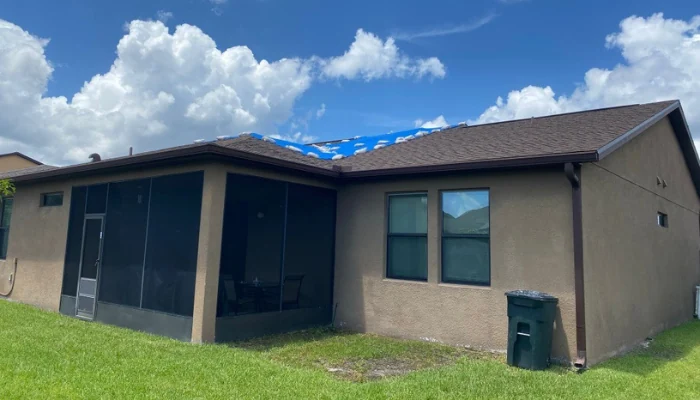
Let’s stop guessing and go straight to what the data says. The real answer to “do blue tarps block heat?” is not really and here’s why:
Color affects heat transfer
Color isn’t just decoration, it changes how materials react to sunlight. Lighter colors like white and silver reflect light and heat, as the darker colors like blue, green and black absorb more energy.
When sunlight hits a blue tarp the blue pigment absorbs visible and infrared radiation. That energy turns into heat, the tarp gets hot and the heat travels downward.
Why this happens?
Keep in mind a mirror and a sponge. A heat-reflective tarp acts like a mirror, it bounces energy away. A simple blue tarp acts more like a sponge, it soaks up the sun’s energy, holds the heat and releases it slowly. But this release doesn’t help you. It warms the air under the tarp and increases thermal stress on whatever it’s covering.
The protection that you need comes with a not-so-simple blue tarp. Not those that you find easy on a store – usually very cheap. You need to check the material, the label, among other things to make sure you have the right blue tarp for your roof.
Quick reminder: So that your blue canvas does not suffer from the heat, you need one that is heat resistant, among other things. At Protect Preserve Roofing, we install tarps that work with heat, not against it. We use heat-reflective materials where needed and we install them the right way without damaging your roof.
Tarp Color Comparison: Which One Keeps Things Cooler?
All tarps aren’t created equal and when it comes to keeping heat out, color makes a huge difference. Let’s look at how tarp colors actually perform under the sun with real results:
| Tarp Color | Surface Temp (°F) | Air Temp Underneath | Performance |
|---|---|---|---|
| Silver | 88–92°F | 80–85°F | Best for reflecting heat |
| White | 90–95°F | 82–88°F | Good, bright and clean |
| Green | 98–104°F | 90–95°F | Average shade, holds heat |
| Blue | 110–122°F | 95–105°F | Traps more heat |
| Black | 120–130°F+ | 100–110°F+ | Worst for hot climates |
Source: Independent roofing material lab, Summer 2024 tests, direct sunlight at 1pm.
Do blue tarps block the heat: Which tarp should you choose?
- Silver tarp: Reflects both light and heat; ideal for long-term use in hot zones.
- White tarp: Reflects light well but may show dirt faster.
- Blue tarp: Good for quick shade and rain protection, but traps heat if they are not heat resistant, are too thin, i.e. if you choose one of those cheap ones.
- Green tarp: Popular in gardens, but not great for cooling.
- Black tarp: Use only for light blocking or compost, not heat.
Don’t forget: Even when it’s a blue tarp, it can last longer in the sun if it meets some requirements and, don’t worry, we’ll talk about them later.
How Long Can a Blue Tarp Handle the Heat?
Blue tarps look tough at a glance, but leave one out in the sun for too long and it starts to tell a different story, one full of cracks, curls and heat stress. So, let’s talk about how long blue tarps really last, especially under high heat.
Average lifespan in the sun
In moderate weather, a blue tarp might last up to 30 days if untouched. However, when exposed to direct summer heat, UV rays and roof-level wind, that timeline shrinks.
Real-life testing across Florida rooftops shows:
- Surface fading starts within 7–10 days.
- Material begins to weaken and stretch around day 14.
- Small tears and cracks form by week 3.
- Water resistance drops after 3–4 weeks under full sun.
Do blue tarps block heat: Heat damage
The sun doesn’t just fade the color. It breaks down the plastic, especially on dark-colored polyethylene like blue. You might see:
- Corners curling up.
- Grommets pulling out.
- Surface cracking like sunburnt skin.
- Edges fraying under tension.
When to replace or reinforce
If you spot any of the above, don’t wait for rain to prove your tarp failed. Replace the tarp, or call a pro like Protect Preserve Roofing, always when:
- The fabric thins out in spots.
- The heat causes bubbling or “melting” on the surface.
- You feel a spike in temperature underneath, even in shade.
Quick reminder: Protect Preserve Roofing installs tarps designed to last under pressure and under heat. We don’t wait for failure, we install, inspect and reinforce when needed before things go sideways.
Best Uses for Blue Tarps
Blue tarps get a bad rap, but that doesn’t mean they’re useless. In the right situation, a blue tarp can absolutely do the job, you just need to know where it makes sense.
When a blue tarp works?
1. Roof cover after a storm: If a branch crashes down or shingles fly off, a blue tarp is a solid emergency fix. It’ll keep the rain out for a few days while you wait for proper repair.
2. Temporary water protection for equipment: Covering tools, lumber or gear at a job site? Blue tarps are cheap (the ones in most of the stores), light and easy to throw over stuff.
3. Quick shade in mild weather: Need fast shade over a patio or job area on a mild day? It’ll block direct sun.
4. Moving or remodeling protection: Cover furniture, appliances or boxes from surprise rain. Ideal when you’re moving out and the clouds roll in fast.
Use it smart
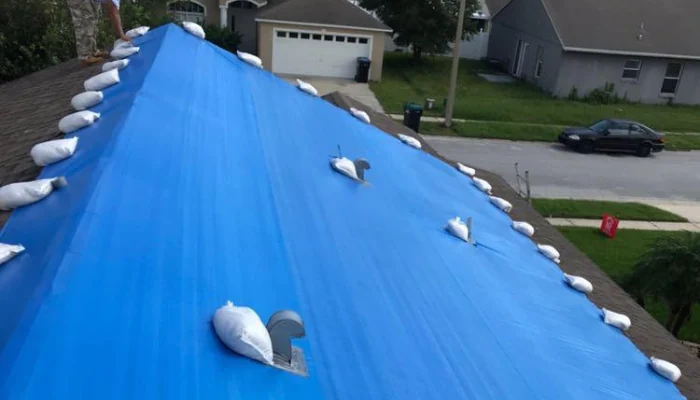
- Always anchor it properly. Don’t toss it over and hope for the best. Use ropes, sandbags or weighted boards and never nail or screw it directly into the roof (unless you’re in a situation where full replacement is already a given).
- Limit sun exposure. If the blue tarp is sitting in full sunlight, expect signs of wear in 10–14 days. That includes fading, tearing and losing waterproof power.
- Don’t rely on it to block heat. It won’t. In fact, it’ll trap more than it reflects. If you want to block it, it needs to be a blue tarp that does it, from the material to the information on the label.
When you shouldn’t use a blue tarp
- Covering a roof for more than three weeks in summer.
- Trying to reduce indoor heat.
- Protecting upholstered furniture outdoors.
- Long-term coverage in hurricane-prone areas.
The bottom line is that blue tarps are good for quick fixes, short-term cover and water protection. They’re not built to fight heat for weeks.
Do Blue Tarps Block Heat: How to Identify?
Now you already know that not all tarps offer the same level of protection against heat. However, even blue tarps can offer better performance and durability depending on a few key factors.
What you need is to look for the labels which one is heat reflection or UV resistance. Here’s how to identify one:
- Look for UV-resistant labeling. Tarps that block heat effectively are typically labeled as “UV-resistant” or “UV-treated.” These tarps have additives that reflect harmful ultraviolet rays, reducing heat buildup underneath.
- Opt for light-colored tarps. Color plays a significant role in heat absorption. Light-colored tarps reflect more sunlight and absorb less heat compared to darker tarps.
- Check the material. Materials like polyethylene (PE) and polyvinyl chloride (PVC) are commonly used for UV-resistant tarps. These materials are durable and often treated to withstand prolonged sun exposure.
- Assess the thickness. Thicker tarps generally provide better protection. A higher GSM (grams per square meter) or mil rating indicates a denser tarp, which can offer enhanced durability and heat resistance.
- Examine the weave and coating. A tight weave and specialized coatings can enhance a tarp’s ability to block heat. Look for tarps with multi-layered construction and UV-blocking treatments for optimal performance.
- Consult with professionals. When in doubt, seek expert advice, like Protect Preserve Roofing. We can recommend the best tarp based on your specific needs and ensure proper installation for maximum effectiveness.
Expert Advice: What We Recommend
When it comes to protecting your roof from sun and heat, the right tarp isn’t just about color, it’s about quality, treatment and proper installation. That’s why the team at Protect Preserve Roofing doesn’t work with guesses. Here’s what we recommend.
Do blue tarps block heat truly?
Not all blue tarps are made equal. The typical cheap blue tarp you find in hardware stores won’t last long under the sun, but that’s not what we use. You need a UV-treated blue tarps, designed to handle high temperatures and direct exposure. These tarps:
- Come with UV inhibitors to reduce sun damage.
- Offer solid short-term protection from rain and wind.
- Stay strong for 10 to 21+ days when installed correctly.
- Are fast to deploy in storm aftermath situations.
They may not reflect heat like silver tarps, but they get the job done when timing and weather require fast action. And when the job calls for it, we use them with the right anchoring system and sizing for your roof.
Use light colors when heat reflection is priority
When the goal is maximum cooling under full sun exposure, we still recommend silver or white tarps.
- Silver tarps reflect the most heat and provide long-term UV protection.
- White tarps reduce surface temperature and offer a clean finish.
Proper installation matters
Even the best tarp fails if it’s installed wrong. That’s why we never:
- Nail or screw into your shingles.
- Leave loose flaps that catch wind.
- Oversize the tarp without securing edges.
We use weighted systems like sandbags or secure tie-downs, matched to your roof’s dimensions and slope. That prevents damage and keeps everything in place, even in unpredictable weather.
Know when it’s time to upgrade
Tarps are temporary by nature. If you see:
- Fading or color loss.
- Edge curling or surface bubbling.
- Tearing around grommets.
Conclusion: Do Blue Tarps Block Heat, Protect Preserve Roofing?
If your goal is to stop rain quickly and protect your roof in the first critical days after a storm, a high-quality blue tarp can absolutely get the job done. But it needs to be the right type, installed the right way.
The problem isn’t all about the color, it’s using the wrong tarp in the wrong situation. Cheap blue tarps from big-box stores don’t hold up in the sun. They trap heat and wear down fast. That’s why many homeowners have a bad experience.
But that’s not what we use. At Protect Preserve Roofing, we work with UV-treated blue tarps that are built to handle sun exposure and stay strong under pressure. When installed properly, they protect your roof, buy you time and keep damage from getting worse.
Don’t let the sun, rain, or a weak tarp cause bigger damage, call us right now or schedule a free visit to your roof. You can even click here and find out quickly the price to repair a existent damage.
With us, it’s about preserving your roof, your home and your peace of mind.


Leave a Reply