



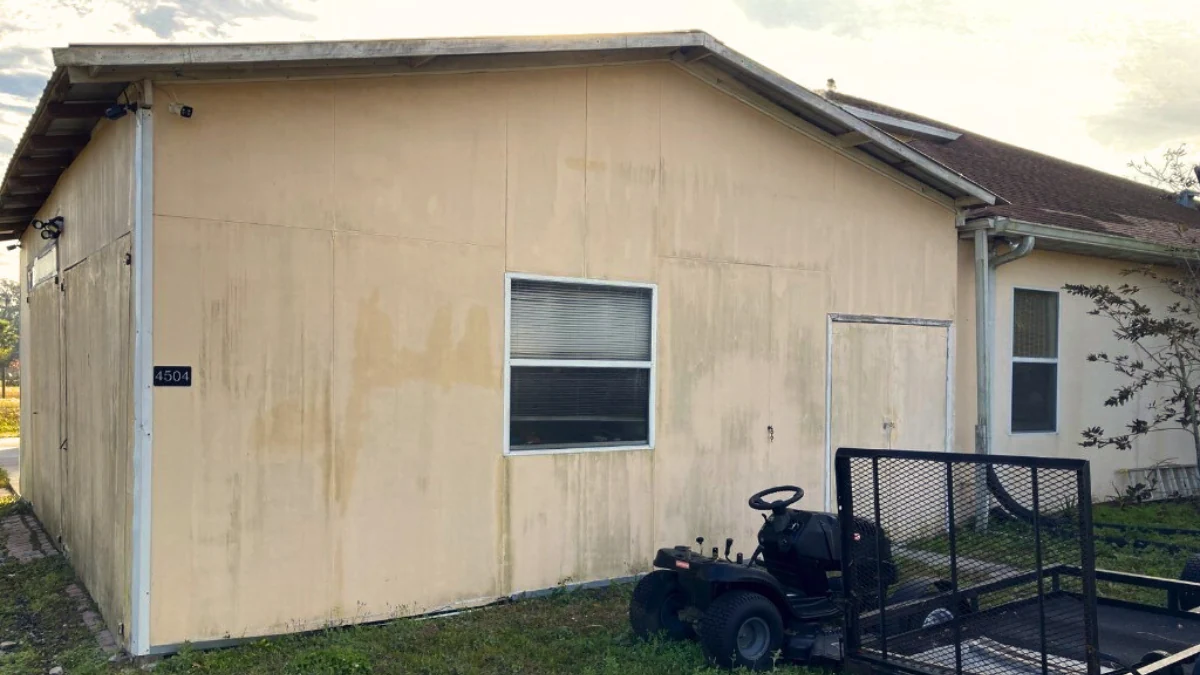


Most homeowners ask this question “Does homeowners insurance cover water damage from roof leak?” because it is one of the most expensive problems to face and often it strikes without warning. According to FEMA, even one inch of water can cause over $25,000 in damage and things get worse, many homeowners discover too late that their insurance won’t cover the damage.
Imagine waking up after a storm and noticing a brown spot growing on your ceiling. You patch it up and hope for the best. Weeks later, mold sets in, drywall starts crumbling and your insurer says the damage was “avoidable”. However, thousands of policyholders deal with denied claims every year because they didn’t act fast and by the rules.
So, what’s really covered? How can you protect your home before it’s too late? Well, in this guide, we’ll break down exactly when homeowners insurance covers water damage from a leaking roof, why some claims are denied and how a small mistake can ruin your chances of getting a payout. We’ll even show you how to fix the damage the right way with guidance from roofing professionals.
Don’t wait for water to take control of your home. Find out what your insurance really covers and how to stay one step ahead.
What Roof Leak Scenarios Are Typically Covered by Insurance?
If you are asking “Does homeowners insurance cover water damage from roof leak”, let’s get right to the point: homeowners insurance can cover, but it depends entirely on how the damage happened.
Covered situations (most of the time)
If the leak was caused by a sudden and accidental event, you’re likely in the clear. These are the cases insurers usually pay for:
- Storm damage (heavy rain, hail, lightning, falling tree).
- Wind-driven rain that tears off shingles or flashing.
- Ice dams (in colder regions) causing water backup under shingles.
- Flying debris (branches, objects) damaging roof layers.
- Fire or vandalism leading to roof exposure.
Not covered (most of the time)
Here’s where the trouble starts. Insurance doesn’t pay for preventable or gradual damage. If your roof is older than your favorite pair of sneakers, you’re probably out of luck. Situations usually not covered include:
- Old age or wear and tear.
- Neglected maintenance.
- Leaks that happened slowly over time.
- Mold growth due to poor ventilation.
- Tarp installations done wrong.
The grey area
Let’s say a leak started during a storm but your roof was already in bad shape. Some adjusters may try to argue pre-existing damage. That’s when documentation and a roof inspection from professionals like Protect Preserve Roofing can make all the difference.
Therefore, before you assume anything is covered, check your policy. Every insurer uses different wording and if the roof is already patched with tarps, that could complicate things especially if nails were used where they shouldn’t be.
And if you want to know for sure if you’re covered, call Protect Preserve Roofing now for a no-obligation assessment before you spend a cent.
When Will Insurance Not Cover a Roof Leak or Water Damage?
This is not the time to sugarcoat things, so understand that most denied insurance claims happen because of stuff the homeowner didn’t do or did it the wrong way.
You might think your policy’s got your back, but certain slip-ups can leave you holding the bucket. Here’s when your claim might go straight to the denial pile:
- Old roof with no maintenance: If your roof looks like it’s been through two wars and a barbecue, don’t expect sympathy from your insurance. They won’t cover leaks caused by shingles that are curling, cracked or missing, gutters clogged and flashing that hasn’t been checked in years.
- Long-term leaks you ignored: That brown stain on the ceiling didn’t show up overnight. If it’s been spreading, the insurer will say it’s your fault. They want to see that the damage was sudden (not slow), that you acted fast and didn’t pretend it would fix itself.
- Poor repairs or wrong tarps: Insurers often deny claims when tarps were nailed or screwed into the roof (this creates more damage), you hired an unlicensed crew or DIY jobs made things worse.
- Mold and secondary damage: Mold doesn’t happen overnight and insurance companies know that. If water leaked, sat there and started growing fungus in your attic, guess what? That’s on you, not them.
- Exclusions hidden in the fine print: Every policy has exclusions. Some don’t cover wind damage, others limit coverage to the structure. Always read the policy or ask an expert.
Quick reminder: Want a leak covered? Treat it like an emergency and book a claim-friendly roof inspection with Protect Preserve Roofing today.
Does Homeowners Insurance Cover Water Damage from Roof Leak?
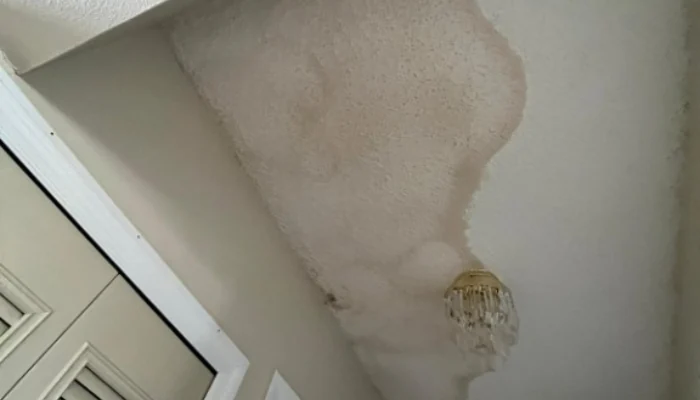
Straight to the point, but it depends on the storm and the story. Most homeowners insurance policies do cover storm damage, especially when it’s sudden and unavoidable. Think wind ripping off shingles, hail smashing into tiles or tree branches crashing through your roof. In other words, the storm has to be the villain of the story.
With the storm being the villain – which in addition to taking away the sunny day, brought problems to your roof – insurance usually steps in, even more so when:
- The roof was in good condition before the storm.
- You took action fast (like calling in a pro or covering the hole properly).
- The damage came from wind, hail, or flying debris.
Furthermore, if you are simply calling the storm the villain, but the problem was something else, there will be no coverage. In other words, you will have your claim denied if:
- Your roof was already weak or leaking.
- You delayed the tarp or fix.
- You installed a tarp with nails and made it worse.
What about water damage inside the house?
Well, if rain entered because of storm damage, the water damage might be covered too. However, if the leak started months ago and you ignored it or you used a tarp the wrong way and the rain got in… the insurer might say: “Sorry, that’s on you.”

A storm might be an act of nature, but how you respond is what matters to your insurer. That’s why, after a storm, get a professional to inspect your roof and document everything. A proper tarp installation, with no nails and zero shortcuts, can make or break your claim, such as those made by Protect Preserve Roofing.
What Happens If You Use a Tarp Incorrectly?
Trying to fix a leaking roof with a tarp seems simple, right? Climb up, throw it on, nail it down and… job done. But the truth is that it’s not like that. That DIY move can backfire. When talking about “does homeowners insurance cover water damage from roof leak”, you need to do things right.
Nailing or screwing a tarp directly into your roof? That’s like fixing a flat tire with a kitchen knife: you’re not solving the problem, you’re making it worse. Most insurance companies reject claims when the installation of the tarp causes more damage. Simply because once you poke holes in your roof with nails or screws, you’re the one who caused the new damage, not the storm (you are the villain now).
When tarping goes sideways
Using a tarp the wrong way can lead to:
- Water getting under the tarp and soaking your insulation.
- Strong winds ripping the tarp off, exposing the roof again.
- Mold growth that insurance won’t pay for.
- Structural damage that snowballs into thousands of dollars.
But sometimes…
In some rare cases, like super steep roofs (a.k.a. “pitch too crazy for sandbags”) or roofs already shredded beyond patching it might be the only option to nail it down, but only when done by a pro with full documentation.
So what’s the right way, you might be wondering? The right way is:
- Use heavy-duty tarps with weighted sandbags, not nails.
- Cover the leak completely, extending at least 3 feet past it.
- Secure it tight, no flapping corners.
- Take pictures and call the pros fast.
Quick reminder: At Protect Preserve Roofing, we don’t play the improvisation game. We know how to tarp the right way, document every step and protect your claim. That way, you stay dry and covered.
Will Your Insurance Pay for a New Roof or Just the Leak Repair?
You spotted a leak and patched it. Now the ceiling’s stained and you’re wondering, “Will my insurance pay to fix all this or am I on the hook for a whole new roof?”… Short answer: it depends and sorry, it’s not always good news.
Tou need to understand that insurance covers sudden damage, not old problems. If the leak came from a sudden event (like a tree branch or windstorm), there’s a solid chance your homeowners insurance will cover the damage. That could include:
- Leak repair.
- Water damage cleanup.
- Damaged drywall or ceiling tiles.
- Mold removal (in some cases).
Therefore, the insurance will only cover a full roof replacement if:
- A storm tore off multiple shingles.
- Wind or hail made large areas vulnerable.
- The adjuster sees widespread storm-related failure.
That’s when it’s cheaper for the insurer to pay for a new roof than to keep covering repairs piecemeal.
Common mistakes that ruin your claim
Here’s where people mess up:
- Delaying the tarp after the leak (letting more water in).
- Nailing tarps into the roof (creates new damage, insurance can deny).
- Not calling a roofer or adjuster right away.
- Not documenting the damage before doing temporary fixes.
These small decisions can cost you thousands and don’t forget that your insurer will send an adjuster to inspect your house. But they’re not always on your side. That’s why homeowners call pros (like Protect Preserve Roofing) before the adjuster shows up.
Pro tip from Protect Preserve Roofing: If your leak started small but caused water to spread through walls, ceilings, or flooring, that damage may qualify for broader coverage even if the full roof doesn’t. Take photos and save receipts.
Is Emergency Roof Tarping Covered by Insurance?
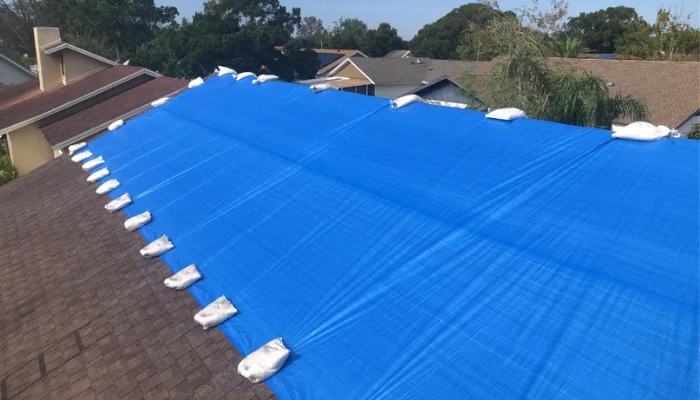
You’ve got water dripping from the ceiling, a tarp halfway across the roof and one big question: does your insurance pay for that tarp job? Straight to the point: yes, but there’s a catch.
Most homeowners insurance policies do cover emergency tarping, but only if it’s part of protecting the home after a covered event, like a storm or fallen tree. In other words, you don’t just get paid because you slapped a tarp up there. You get reimbursed because you acted fast to prevent more damage.
Here’s what they usually cover:
- Labor to install the tarp.
- Materials (tarp, sandbags, straps – no nails!).
- Follow-up visits to re-secure it if storms continue.
- You must act immediately and document everything.
What insurers want to see
To approve reimbursement, most insurers require:
- A valid reason (storm, impact, sudden leak).
- Timestamped photos of damage before tarp installation.
- Proof you didn’t cause more damage during the process.
- A professional roofer’s report (like one from Protect Preserve Roofing).
If you waited too long, didn’t tarp at all or nailed the tarp into your roof? They might deny coverage because insurance companies will look for any excuse to deny a claim and more holes on your roof can cause more damage. The storm needs to be the villain, not you.
Unless the roof pitch is dangerously steep or all other options fail, do not use nails or screws. Use weighted systems like sandbags. That’s what real pros (like our crew) do.
How much will insurance pay?
The question is “does homeowners insurance cover water damage from roof leak”, but you want to know the price as well, right?
Well, prices vary, but in most cases, a proper tarp job from a licensed pro costs between $800 and $1,600. If your policy covers emergency mitigation, that full amount may be reimbursed, especially if it’s tied to a larger claim.
Always confirm with your provider, but we help clients file the right way so they don’t leave money on the table. And to keep things simple, let’s take a look at other numbers in Florida:
| Roof Type | Florida Avg. Payout | Other States Avg. Payout |
| Flat/Low-Slope | $900–$1,300 | $750–$1,100 |
| Steep Asphalt | $1,200–$1,600 | $1,000–$1,400 |
| Tile or Metal | $1,300–$1,700 | $1,100–$1,500 |
| Hurricane-Damaged | $1,400–$1,800+ | $1,200–$1,600 |
How to File a Roof Leak Water Damage Claim
Filing a claim for roof leak water damage might seem simple, until your insurance company finds one excuse to deny it. To keep your coverage intact and avoid headaches later, follow these no-BS steps.
1. Act fast, really fast
The longer you wait, the more damage stacks up. And guess what? Insurance companies will say you “failed to mitigate”. Do this immediately:
- Stop the leak with a tarp (professionally installed, no nails!).
- Snap timestamped photos of damage.
- Write down the date and time you noticed the issue.
2. Call a roofing pro
Yes, call your insurer, but call Protect Preserve Roofing first because if you file a claim before knowing the real source of the leak, you risk saying something wrong that could kill your claim. A licensed roofer gives you a full damage report, which:
- Confirms the cause of the leak.
- Proves it wasn’t due to neglect.
- Helps guide your conversation with your insurer.
3. Contact your insurance company
Now you’re ready. Call or file online and stick to facts. Don’t guess or over-explain. Use the language from your roofer’s report. Ask for your claim number and the name of your adjuster.
4. Meet the adjuster prepared
Before the adjuster shows up, make sure you:
- Have photos from before and after tarping.
- Have a copy of your roofer’s assessment.
- Didn’t nail or screw anything into your roof.
- Tarp is secure and safe.
5. Keep receipts and tarping invoices
Save every receipt. Insurance won’t pay what you can’t prove.
6. Follow up and don’t settle too early
Insurers sometimes lowball the first offer. Don’t accept until:
- You understand the full repair scope.
- A roofer confirms their estimate is accurate.
- You’ve reviewed what’s covered and what’s not.
Average Cost to Repair Water Damage from a Roof Leak
Water damage from a roof leak is like that guest who shows up uninvited and leaves a mess behind. Fixing it costs more than most expect and if you wait, the damage gets worse and more expensive.
So, what’s the real cost? It depends on the size of the leak, how long the water has been there and which parts of the house were hit. Here is a realistic and average cost breakdown:
| Damage Type | Estimated Cost Range (USD) |
|---|---|
| Minor ceiling stain & patchwork | $200 – $500 |
| Drywall replacement (per room) | $500 – $1,200 |
| Mold remediation | $800 – $3,000+ |
| Flooring repairs (laminate/wood) | $1,000 – $3,500 |
| Roof repair (shingles/tiles) | $300 – $1,500 |
| Structural water damage (joists) | $2,000 – $5,000+ |
| Emergency roof tarping | $800 – $1,600 (Protect Preserve Roofing base) |
Factors that push the cost higher
- Waiting too long: Delays allow water to seep into more areas.
- DIY mistakes: Using nails or screws for tarps can lead to insurance rejection.
- Pitch of your roof: Steeper roofs are more dangerous and expensive to access.
- Hidden damage: Water loves dark places, inside walls, insulation, framing.
Can insurance help?
Yes, if you followed the right steps. Homeowners insurance may cover:
- Water extraction.
- Drywall and ceiling repair.
- Flooring replacement.
- Mold removal (in some policies).
- Tarping (if done professionally and documented).
How to Protect Your Insurance Claim
A leaking roof is already a headache. But losing your insurance coverage because of small mistakes? That’s a nightmare. Below are expert-backed tips to protect your insurance claim from being denied or worse, ignored altogether.
- Don’t wait, act immediately: Insurance adjusters look for signs of neglect and delays are the #1 reason for denied claims. You need to act and take clear photos of all visible damage (roof, ceiling, attic, walls), document the weather event that caused it and call a professional roofer (like Protect Preserve Roofing) for a full inspection report.
- Never install a tarp with nails or screws: Puncturing the roof may void your policy, it can cause additional leaks and damage and insurers may call it “faulty mitigation” and walk away. Only in rare cases, like steep-pitch roofs or completely destroyed structures, is nailing justified.
- Keep every receipt and report: Contractor invoices, emergency service receipts, mold inspections, roof inspection reports, communication with your insurance company… keep everything.
- Avoid fixing too much before inspection: If you remove or cover the damage before an adjuster sees it, you may lose eligibility for coverage. Do instead:
- Mitigate damage (with tarping, water removal).
- Leave damaged materials (flooring, drywall) in place temporarily.
- Get written documentation of all immediate actions taken.
Quick reminder: A missed detail or misplaced receipt might seem small, until it’s used as a reason to deny your claim. Protect Preserve Roofing doesn’t just tarp your roof, we protect your claim from day one. Call us, let’s make sure your insurance works for you, not against you.
Conclusion: What to Do After Noticing a Roof Leak?
Every hour you wait after spotting water damage increases the risk of mold, electrical hazards and structural rot. Worse: insurance companies often deny claims when they think the homeowner delayed action. That’s where Protect Preserve Roofing makes the difference.
Why homeowners trust us? Because we act fast. Our team responds quickly, inspects thoroughly and gives you honest answers. We also know what can make or break your insurance approval, so we avoid tarp mistakes (like nailing), document everything and guide you step-by-step.
Bottom line? Don’t wait, guess or risk your claim. Call us, the name Florida homeowners trust when it really matters. Protect Preserve Roofing is more than a tarp crew. We’re your first line of defense when it counts for your roof, your home and your peace of mind.
You can also get a quick estimate to prevent or repair damage, or even schedule a free visit to your roof. Let’s protect what’s yours before the damage spreads.
Frequently Asked Questions
Yes, most policies cover sudden damage caused by events like storms. But if the leak was due to poor maintenance, insurance usually won’t pay.
It’s not recommended. Using nails or screws can damage the roof structure and may void your claim. Use sandbags unless the pitch is too steep.
It depends. If the damage is extensive and part of a covered event, they might approve a full replacement. But most times, only the damaged area is repaired.
Repair costs range from $800 to $1,600 or more depending on roof height, pitch, and interior damage. Protect Preserve Roofing offers free evaluations.


Leave a Reply