





Atualizado em 09/02/2026
The Blue Roof Tarp Program Florida exists to help homeowners after severe storms damage their roofs. However, getting one isn’t always as easy as it sounds. Every year, thousands of residents in hurricane-hit counties apply, hoping to secure a free emergency tarp to cover broken shingles, leaks and structural gaps.
If you’ve ever been through a Florida storm season, you know the drill: heavy winds, blown-off tiles and rain that just doesn’t stop. You patch, wait and hope FEMA steps in on time. But what if your roof can’t wait?
Let’s not forget, Operation Blue Roof offers a temporary solution to protect habitable homes from further damage. It’s real and it works for many. Still, thousands of homeowners report delays, rejections or limitations they weren’t expecting.
That’s why this complete guide walks you through who qualifies for the Blue Roof Tarp Program in Florida, how and where to apply, what’s covered (and what isn’t), and when it’s time to call a professional instead.
Don’t wait until your ceiling drips or insurance claims fall through. Let’s walk through your options now and help you make the best call for your home.
Table of Contents
What Is the “Blue Roof Tarp Program Florida”?
The Blue Roof Tarp Program in Florida is a federal emergency service that covers damaged roofs with blue tarps after storms. It’s designed to protect homes that are still safe to live in but need temporary roof coverage to prevent more water from getting in.
The program is managed by the U.S. Army Corps of Engineers, in partnership with FEMA. Homeowners who qualify get the program for free, but only after the federal government declares a major disaster.
So, when strong winds or hurricanes rip shingles and tear through roofs, FEMA steps in to help. Through Operation Blue Roof, teams install blue tarps that keep rain out and help homeowners avoid even bigger repairs later.
Therefore, this isn’t permanent. The program acts as a stopgap, it buys you time while full roof repairs or replacements are scheduled. But there’s a catch: to participate, you must meet specific rules, such as:
- The home must be in a declared disaster zone.
- Your roof must be structurally safe to enter and work on.
- The house must be the primary residence.
- Vacant homes or commercial buildings don’t qualify.
Many people apply thinking it’s a quick fix, but the wait times can stretch out and not every roof makes the cut. If there’s too much damage, or if your application isn’t processed fast, you might be left exposed to more storms.
Here’s where local help comes in. While FEMA works at a national level, companies like Protect Preserve Roofing offer faster, professional tarp installations with stronger materials, better anchoring (no nails) and local crews ready to act right after the storm clears.
Don’t forget: Whether you qualify for the program or not, it’s always smart to know your options.
Who Runs the “Blue Tarp Roof Program Florida” and Why It Exists
The Blue Tarp Roof Program – formally called Operation Blue Roof – is managed by the U.S. Army Corps of Engineers (USACE) and funded by FEMA. It exists to give homeowners a quick, no-cost way to keep water out after major storms, especially hurricanes.
When Florida gets hit by a disaster, FEMA and the Army Corps step in. They don’t repair roofs. Instead, they install temporary blue tarps over damaged sections to stop leaks and protect what’s inside. It’s a fast patch to avoid bigger problems, like mold, ceiling collapse or full structural damage.
This program began after Hurricane Andrew in 1992 and has been used in nearly every major storm since. In Florida, it’s activated when the federal government issues a disaster declaration.
Why the Government offers this program?
- Most homeowners can’t afford roof repairs right after a disaster.
- Some insurance claims take days – or weeks – to process.
- Roof leaks lead to rapid home damage, making homes unlivable.
Furthermore, it’s not a one-size-fits-all solution. The program limits coverage to primary residences that are still safe to enter—and in some cases, officials tell people they don’t qualify because of the roof type, the damage level, or delays in inspection.
What Areas in Florida Are Covered?
Operation Blue Roof only activates in parts of Florida hit hard by hurricanes or tropical storms. And even then, it doesn’t cover the whole state. The program operates at the county level, and FEMA and the U.S. Army Corps of Engineers only install tarps for homeowners living in federally declared disaster zones.
After each major storm, FEMA publishes a list of approved counties. These are places where damage is widespread, roofs are open to the weather and people need fast, temporary help to protect their homes. Check theses examples of counties covered in past years:
- Hurricane Idalia (2023): Taylor, Dixie, Levy, and surrounding areas.
- Hurricane Ian (2022): Lee, Charlotte, Collier, Sarasota, and more.
- Hurricane Irma (2017): More than 40 counties across the state.
But coverage changes every year, depending on the storm path and FEMA’s assessment. Some homeowners only find out they’re not eligible after applying, which wastes time when the roof needs help fast.
How to know if you’re covered?
- Check the official FEMA disaster declarations.
- Visit the Blue Roof Info page from the U.S. Army Corps.
If your zip code isn’t on the list? FEMA won’t install a tarp and if your roof is leaking while you wait for FEMA to decide, you risk water damage, mold and expensive repairs.
Who Qualifies for the “Blue Roof Tarp Program Florida”
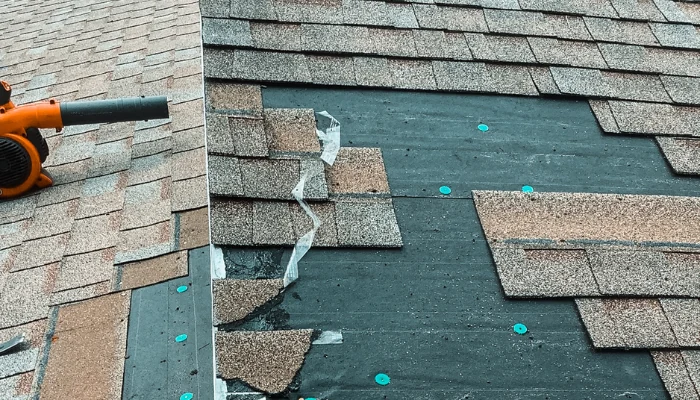
Not every Florida homeowner can get help through the Blue Roof Tarp Program. There are clear rules and if you don’t meet them, FEMA will turn your request down, even if your roof is leaking. Therefore, we have put together a list for you to check if you are qualified before wasting time. Let’s check it out:
- You qualify If:
- Your home is in a federally declared disaster zone.
- The home is your primary residence.
- You are the owner or a verified tenant of the home.
- The roof is less than 50% damaged.
- Your roof is made of shingles, metal, or similar standard materials.
- The structure is safe to enter and work on.
- You don’t qualify if:
- The home is a vacation house, rental, or abandoned.
- Your roof is made of tile, clay, or slate.
- The damage is so bad that the roof is unsafe.
- You’re outside the covered counties.
- The home is part of a commercial property.
Quick reminder: If you check even one of those with an “x”, you might not hear back from FEMA at all and while you’re waiting, rain could be soaking your attic, insulation, drywall and your wallet. Skip the gamble and call Protect Preserve Roofing instead. We don’t ask for red tape.
If you need an emergency blue tarp, click here and we’ll help you.
How to Apply for the “Blue Roof Program Florida”
If you meet the requirements, you can apply for the Blue Roof Tarp Program Florida online or in person, but you’ve got to move fast. Once FEMA opens the program, there’s a limited window to apply, sometimes just a few weeks after the storm hits. Follow these steps to navigate the process smoothly, so you don’t get stuck in the system.
Step-by-step application guide
- Step 1: Check eligibility. Make sure your address is in a federally approved zone. You can check it out on the U.S. Army website under the section “How to know if you’re covered?”.
- Step 2: Gather basic info. You’ll need full name and phone number, address of damaged home, insurance details (if available) and description of damage.
- Step 3: Apply online or in person
- Online: Go to blueroof.us and fill out the form.
- By Phone: Call 1-888-ROOF-BLU (1-888-766-3258).
- In Person: Visit a temporary FEMA Disaster Recovery Center (check your city).
- Step 4: Wait for inspection. After you apply, a team may inspect your home. Keep in mind that if the roof is unsafe or missing too much material, you might be denied.
- Step 5: Tarp installation. If approved, a contractor working with the Army Corps will install your blue tarp. Most of them use nails or staples, which can cause problems later with your insurer. So keep an eye on that.
What the “Blue Roof Tarp Program Florida” Covers?
The “Blue Roof Tarp Program Florida” sounds like a fix-all, but it’s not. It has limits. FEMA and the Army Corps of Engineers don’t cover every kind of roof or every level of damage. Let’s break down what the program actually offers and where it stops.
- What the Blue Roof Program covers:
- Shingle or metal roofs with partial damage.
- Primary residences (you live there full-time).
- Homes inside the federal disaster area.
- Areas where the roof is still safe to walk on.
- Temporary coverage using 6-mil blue polyethylene tarps.
- Installation using nails, screws, or staples (yes, that’s standard).
- What it doesn’t cover:
- Tile, slate, clay, or flat membrane roofs.
- Homes with more than 50% roof damage.
- Rental properties, vacation homes, or empty buildings.
- Roofs that are unstable or hazardous.
- Leaks caused by walls, gutters, or flashing.
- Long-term protection, tarps last only 10–21 days on average.
What they don’t tell you
Most FEMA tarps are basic. They’re thin, not UV-resistant and installed quickly by crews that follow a fast-track checklist.That’s not a criticism, it’s simply how large-scale emergency response works. They’re doing triage, not craftsmanship. And yes, they often nail directly into the roof deck, which can lead to:
- Leaks down the road.
- Trouble with your insurance claim.
- Even more damage if the tarp pulls off during high winds.
Pro tip: Need more control over the result, call Protect Preserve Roofing, you get a tarp that’s UV-treated and reinforced for Florida heat, anchored without nails (we use sandbags, boards, or tie-downs), sized to fully cover the damage and installed fast, often same day or next morning.
Common Frustrations: What FEMA’s Program Can’t Guarantee
The Blue Roof Program helps a lot of people. However, it also leaves many waiting, guessing or dealing with extra damage. Here’s what homeowners across Florida often report when depending on FEMA tarps:
| Frustration | What Really Happens |
|---|---|
| Slow Installation | It can take 10 to 20 days—or more—especially after big hurricanes. |
| Lack of Updates | Many people hear nothing after applying. No tracking, no callbacks, just silence. |
| Roof Damage Risk | Installers often use nails or screws. That can lead to leaks or void your insurance. |
| Partial Coverage | They only tarp the damaged spot. If your roof is too far gone, they might skip it. |
| Tarp Quality | Most FEMA tarps are thin, not UV-treated, and don’t hold up in Florida heat. |
FEMA vs. Professional Installation
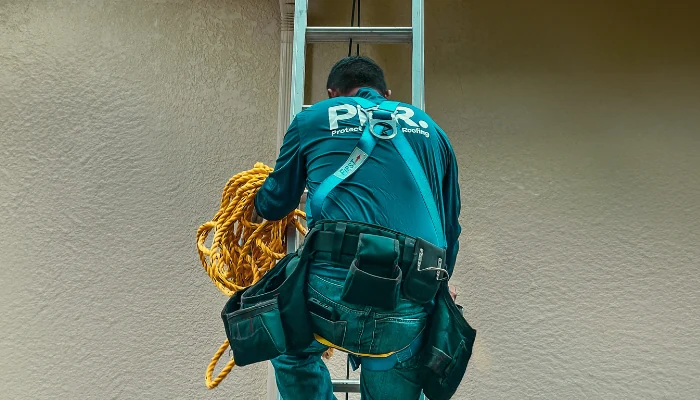
After a storm, you have two real options: wait for FEMA’s Blue Roof Program or call a local professional. Each has pros and cons, depending on how urgent your situation is and how much control you want over the result. Let’s check:
| Factor | FEMA Blue Roof Program | Protect Preserve Roofing |
|---|---|---|
| Response Time | 10–20 days (can be longer after major storms) | 24 to 48 hours – same day in many cases |
| Cost | Free (if you qualify) | Starts at $800–$1,600 depending on roof type and pitch |
| Installation Method | Nails, screws, or staples driven into roof | No nails – secured with sandbags, boards, or anchors |
| Tarp Quality | Thin 6-mil plastic, not UV-resistant | UV-treated, reinforced blue tarps |
| Coverage | Damaged areas only | Entire exposed roof section covered securely |
| Eligibility Limits | Must meet FEMA requirements | No red tape, we serve everyone |
| Insurance Risk | Nail holes can lead to denied claims later | We protect the roof without puncturing it |
| Support & Communication | Hard to get updates or speak to someone | Fast support, clear answers, no waiting |
Quick reminder: If your roof’s just a little damaged and you’re okay waiting? FEMA might help… eventually. But if your ceiling’s dripping and the next storm’s on the radar, waiting could cost you a lot more than a tarp. Call Protect Preserve Roofing for immediate protection with better materials, a damage-free installation and peace of mind that doesn’t come with “maybe”.
Prevent Damage Before the Storm Hits
You don’t have to wait for shingles to fly off to think about roof protection. Most serious leaks start with one loose edge or a clogged gutter. A little prep goes a long way, especially in Florida, where storm season doesn’t mess around.
Here’s what you can do to keep your roof strong before the wind picks up:
- Check your roof: Walk around your house. Look for cracked, curling or missing shingles. If they’re lifting in calm weather, they’ll rip off in the first gust.
- Clear gutters and downspouts: If water can’t drain, it’ll back up under the roofline. Clean out debris and make sure downspouts are aimed away from the house.
- Trim nearby trees: One weak branch can punch a hole straight through your roof. Trim limbs that hang over or near your house, especially old or dead ones.
- Get a professional roof inspection: A pro can spot small issues before they turn into expensive damage. Schedule a checkup, especially if your roof’s over 10 years old.
- Know when to call for backup: If a storm is inbound and your roof already has weak spots, don’t wait. Protect Preserve Roofing can tarp your roof in 24 to 48 hours, before the first drop falls.
Conclusion: Why Homeowners in Florida Choose Protect Preserve Roofing?
When a storm rips through your neighborhood, you don’t have time for paperwork, phone trees or guesswork. You need action, people who show up, know what they’re doing and don’t leave holes.
That’s why so many Florida homeowners call Protect Preserve Roofing first. We’re not a hotline, but your neighbors. We install heavy-duty blue tarps fast, using materials that hold up under Florida heat, sun and wind. No nails, shortcuts or drama. With us you get:
- UV-treated tarps that don’t fall apart after a week.
- Anchoring methods that don’t damage your roof.
- Same-day or next-day response, even after major storms.
- Full coverage, not just patches.
- Real updates, real humans, real peace of mind.
If you’re in Florida and can’t wait for the Blue Roof Program, Protect Preserve Roofing is ready to help. We offer professional tarp roofing services throughout Florida after hurricanes and severe storms, providing immediate protection while you await permanent repairs.
Contact us today and protect your roof before the next storm.
How long should I wait after storm damage before installing a roof tarp?
After a storm, waiting too long can make roof damage worse. In Florida, rain and humidity can quickly turn a small leak into interior damage. Installing a roof tarp early helps protect your home while you plan permanent repairs.
What if my home doesn’t qualify for the Blue Roof Program?
Some homes don’t meet the requirements for the Blue Roof Program due to roof type or damage level. When that happens, homeowners must find another way to protect their property. Professional roof tarping is often the fastest option to prevent further damage.
Is roof tarping a permanent fix?
No. Roof tarping is a temporary solution designed to stop water from entering your home. It protects the structure until repairs or a roof replacement can be completed, but it does not replace permanent roofing work.
Can roof tarping help with insurance claims?
Yes. Installing a roof tarp shows that you took steps to prevent additional damage after a storm. This can support an insurance claim, though coverage always depends on your specific policy and provider.
Why is professional roof tarping better than doing it myself?
Storm-damaged roofs can be unsafe to access. Professionals have the tools and experience to install tarps securely without causing more damage. In Florida’s weather conditions, proper installation helps ensure the tarp stays in place during the next rain.


Leave a Reply