





Updated for 2026: New insights on condo roof leaks, repair costs, and insurance responsibilities in Florida.
“Condo roof leak interior damage” isn’t just a minor inconvenience; it’s a ticking time bomb hiding above your ceiling. A single unnoticed drip can turn into thousands of dollars in repairs and spark heated debates between condo owners and HOAs.
According to a 2023 insurance report by the Insurance Information Institute, nearly 40% of all property damage claims in condos are related to water intrusion, with roof leaks begin the leading culprit.
However, before you grab a tarp and duct tape, stop. The wrong fix at the wrong time could void your insurance or delay the claim process entirely.
That’s why in this guide, you’ll learn how to identify damage before it spreads, what Florida laws and condo agreements say about who pays, the right way to file a claim without losing coverage and how Protect Preserve Roofing can help you avoid bigger problems and costly mistakes
So, let’s break it down clearly, practically and without complicated legal talk.
Who’s Responsible for Condo Roof Leak Interior Damage?
This is where things get murky. The responsibility often depends on where the damage started and what’s written in the HOA bylaws. Here’s a quick breakdown:
- Roof = HOA’s problem. In most condos, the roof is part of the common areas. That means the homeowners association (HOA) is usually in charge of roof maintenance and repair.
- Interior = Your problem. Once water breaches the roof and starts affecting your drywall, ceilings, flooring or personal stuff, it might fall on you to fix it. Even if the roof leak wasn’t your fault.
Many HOAs include “walls-in” clauses. That means they cover everything up to your interior wall, but not what’s within it. So, if your ceiling collapses or your furniture gets soaked, your homeowners insurance might have to step in.
Quick reminder: You can hold them accountable, especially if there’s proof of prior roof issues. A licensed roofer like Protect Preserve Roofing can inspect and document the problem in a way that gives weight to your insurance claim or legal action.
What Florida Law Says About Condo Roof Leaks and Interior Repairs
Under Florida Statute 718.111(11), the condo association is responsible for maintaining common areas, including the roof. But they’re only liable for damage if negligence is proven. That means:
- If the roof leak happened because of wear and tear or poor maintenance, the HOA might have to pay for both roof and interior repairs.
- But if the roof leak was caused by a storm, or if no negligence can be proven, then you (the unit owner) might be responsible for the interior damage, even if it came from the roof.
Wait, doesn’t my insurance cover that?
It depends. Most condo homeowner policies (HO-6 policies) cover interior damage, like ceilings, walls, flooring, cabinets and appliances. However, they don’t cover the roof itself, that’s on the HOA. Also, your deductible still applies and if the damage wasn’t sudden or reported in time, your claim can be denied.
In the end, Florida law gives condo associations room to protect themselves. That’s why it’s crucial to report leaks immediately and document everything with photos, videos and a roofer’s report.
Quick reminder: Need a backup? That’s where a roofing company like Protect Preserve Roofing steps in with licensed reports that carry legal weight and can help speed up claims or support legal action.
HOA vs. Unit Owner: Who Covers What After a Leak?

You noticed a roof leak in your condo and now your ceiling is stained, maybe the floor’s warped and you’re wondering: who’s footing the bill? You or the HOA? So, we’ve organized the key responsibilities into a clear table so you can instantly see who handles what.
| Damage or Area | HOA Responsibility | Unit Owner Responsibility |
| Roof surface and structure | Yes | No |
| Roof maintenance (when part of common areas) | Yes | No |
| Exterior walls (structural) | Yes | No |
| Insulation behind walls | Yes | No |
| Interior drywall, paint, and baseboards | No | Yes |
| Cabinets, flooring, and appliances | No | Yes |
| Furniture and personal belongings | No | Yes |
| Water damage caused by HOA negligence | Yes (if proven) | No (you may be reimbursed) |
| Insurance deductible | No | Yes |
What the law (and real life) says
If the roof is part of the common structure (which it usually is), the HOA handles repairs to the roof itself and structural parts of the building.
Once the water reaches inside your unit? That’s typically your turf drywall, flooring, furniture. Your condo insurance should step in, but you’ll still deal with deductibles and possibly some out-of-pocket costs.
If the HOA knew about the roof problem and delayed action, or failed to maintain it properly, you may have a case to push the cost onto them. That’s why:

- You need documentation from a licensed roofing contractor (Protect Preserve Roofing does this fast and with legal-grade accuracy).
- You should file your own insurance claim ASAP to avoid denial due to delay.
What Does Interior Roof Leak Damage Really Look Like?
You might spot a small yellow stain on your ceiling and think, “No big deal”, but let’s be honest, that’s rarely the whole story. Here’s what roof leak damage inside your condo actually looks like in real life:
- Brown or yellow ceiling stains – These are the early warning signs. That “coffee ring” look means moisture’s been there a while.
- Peeling paint or bubbling walls – When the drywall gets soaked, the paint starts to lift like old wallpaper.
- Warped or cupping floors – Hardwood or laminate floors don’t like moisture. They’ll rise or separate if water pools underneath.
- Mold and mildew odors – Even before you see the mold, you’ll smell it. If it smells musty, it’s not just the gym bag.
- Sagging ceiling – A drooping ceiling is a ticking time bomb. It means the water is collecting above it and might collapse.
You have to keep in mind that many leaks travel along beams or behind insulation before finally showing up inside. So, if you see a wet ceiling in the bedroom, the leak might actually be over the living room. That’s why homeowners often chase the “wrong” spot until it’s too late.
What to do when you see these signs?
Don’t wait to see if it gets worse. If you see any of these red flags:
- Take photos.
- Call your HOA and document the report.
- Get Protect Preserve Roofing on-site ASAP to assess both roof and interior safely without invalidating your insurance.
Interior Damage vs. Roof Damage
Let’s cut to the chase: what’s dripping on your couch is just the symptom. The real problem is usually hiding above your ceiling and the ceiling lies… literally. You see a small wet patch, maybe a paint bubble. Looks minor, right? Not always. Most roof leaks travel through:
- Attic insulation.
- Joists.
- HVAC ducts.
- Drywall layers.
By the time water reaches your ceiling, it’s already soaked multiple parts of your structure. That means more damage, higher repair costs and serious mold risk. So you need to understand the difference, check it out:
| Visible Inside | Hidden Above the Ceiling |
| Light stains on the ceiling | Waterlogged insulation |
| Bubbling or peeling paint | Wood rot in rafters |
| Musty odor | Mold growing in attic spaces |
| One visible drip | Multiple unseen leak points on the roof |
| Slight sag in ceiling | Full section of drywall at risk of collapse |
Why that matters?
Insurance adjusters don’t just look at the stain. They look at what caused it and how long it’s been leaking. If they suspect “neglect” or improper tarp use, your claim can be denied faster than you can say “deductible”. And if you try to fix the ceiling without fixing the roof first? You’ll be fixing it again in a month.
Quick reminder: Don’t let a silent leak drain your wallet. Call Protect Preserve Roofing the moment you see interior signs. We’ll find and fix the source fast without damaging the roof or your chances with insurance.
Emergency Tip: When a Tarp Helps
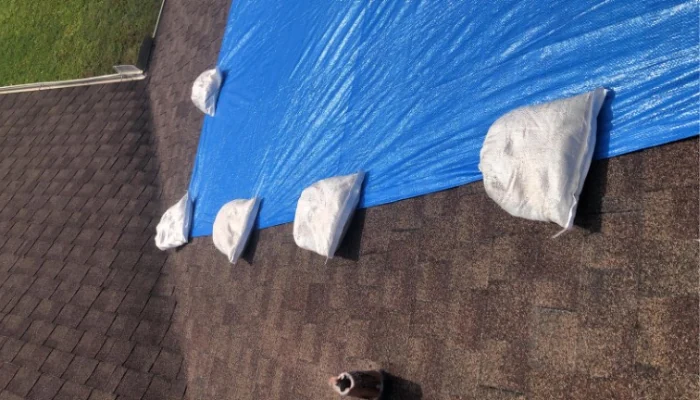
A tarp can save your condo or sink your insurance claim. It all comes down to how you use it. So, a tarp is a lifesaver when used:
- Right after discovery: A properly placed tarp buys you time before professional repair.
- During heavy rain: Keeps water out until weather clears.
- Before insurance inspection: Prevents damage from getting worse (which insurers appreciate).
Therefore, you might have a big problem with your tarp if:
- You nail it directly into the roof: That breaks waterproofing and voids warranties.
- Used long-term tarp (the wrong ones): Blue tarps are temporary. Leaving one for weeks can be considered “neglect”. If you use a blue tarp, it needs to be a specific one.
- Water still enters: A poorly secured tarp doesn’t stop water, and the damage continues unnoticed.
Pro tip: Protect Preserve Roofing never nails tarps unless it’s the only safe option, like steep roofs where sandbags won’t hold. Most of the time, we secure tarps without damaging your roof, keeping your insurance claim safe.
Step-by-Step: How to File an Insurance Claim for Interior Damage
Filing an insurance claim after a roof leak can feel like wrestling with a bear in the dark. But if you follow the right steps you can protect your wallet and your peace of mind.
- Step 1: Document everything: Before you clean up a single drop take clear photos of the water damage on ceilings, walls and floors, record videos showing leaks or drips in action and save receipts, invoices and estimates.
- Step 2: Call a professional: You need a licensed roofing expert, like Protect Preserve Roofing, to inspect the roof and the leak source, provide a damage report and secure the roof (tarping, if needed) without risking your insurance.
- Step 3: Notify your insurance company immediately: Most policies have tight deadlines (sometimes just 14 days). Call your insurer or file online to explain the event (date, type of storm or leak), submit your visual evidence and include the roofer’s report if available.
- Step 4: Schedule the adjuster visit: Your insurance company will send an adjuster to inspect the damage. Be ready to have your roofer present (this is critical), ask the adjuster to look at both roof and interior damage and get everything in writing.
- Step 5: Review the payout offer: If something feels off, ask your roofer to compare the offer to actual repair costs, request a reassessment if the payout is too low and don’t be afraid to challenge the estimate with proof.
Quick reminder: Need help dealing with insurance? Protect Preserve Roofing works with insurers every day. We know how to talk their language, protect your interests and move fast to prevent more damage.
Timeline of Damage: 24h, 48h and 7 Days After the First Leak
You see a dark spot on the ceiling. It seems small. Furthermore, water damage moves faster than most people expect, and the clock starts ticking the moment that leak begins. Here’s what can happen if you wait:
| Time After First Leak | What Happens Visibly | What Happens Behind the Scenes | Why It Matters |
| Within 24 Hours | Light discoloration on ceiling. Minor bubbling. | Water spreads through insulation and starts weakening drywall. | Ignoring this step risks mold growth and ceiling sagging. |
| After 48 Hours | Stains darken. Paint may start peeling. | Moisture reaches wooden framing. Mold spores may begin to multiply. | Most insurance policies won’t cover mold if you delay action. |
| After 7 Days | Ceiling may sag or crack. Air smells musty. | Mold is now visible. Wood and drywall may be rotting. | Full interior remediation becomes expensive and harder to get covered. |
Quick reminder: Most mold damage claims are denied if caused by neglect. Delaying even a few days can cost thousands. Call Protect Preserve Roofing for emergency tarp installation. We help prevent the small stuff from turning into a financial nightmare.
Repair Costs Breakdown
When a condo roof leak causes interior damage, the repair bill can sneak up fast. Understanding the typical costs upfront helps you plan and helps you argue with confidence if your HOA or insurer gives you the runaround. Here’s a breakdown of what you might face:
| Repair Item | Estimated Cost Range | What It Includes | Insurance Coverage? |
| Ceiling Drywall Replacement | $250 – $600 per section | Removal, drying, new drywall, mudding, painting | Often covered if leak source is covered |
| Mold Remediation | $500 – $3,000+ | Testing, containment, mold removal, ventilation | Not always covered (depends on timing of claim) |
| Insulation Replacement | $150 – $500 | Removing wet insulation, installing new material | Usually covered |
| Roof Leak Repair (Tarp + Fix) | $800 – $1,600+ | Tarping (emergency), patching, sealing or re-shingling small area | Sometimes split: roof = HOA, tarp = emergency claim |
| Flooring Repairs | $300 – $1,200 | Replacing warped or soaked hardwood, laminate, or carpet | May be denied if caused by long-term damage |
| Paint & Finishing Touches | $200 – $800 | Repainting damaged walls or ceilings | Partial coverage common |
You need to have in mind a few truth bombs about coverage as well, such as:
- Insurance doesn’t love delays. If you wait too long to report the damage, mold and rot may be considered your fault.
- Not all water damage is covered. Coverage depends on what caused the leak and how fast you reacted.
- Tarp jobs count. Emergency tarping from professionals like Protect Preserve Roofing is often reimbursed if you show it prevented further damage.
Pro tip from Protect Preserve Roofing: Keep all receipts. Insurers usually reimburse after seeing proof of payment, not before. That includes emergency tarp services, so always use a licensed provider.
Conclusion: Don’t Let a Condo Roof Leak Catch You Off Guard
Florida’s laws on condo roof leak interior damage aren’t always clear. Sometimes the HOA pays. Sometimes you do. And other times…? No one’s thrilled to take responsibility. That’s why it pays to document everything, know your rights and act fast.
Here’s what you can do right now:
- Spot a stain or smell mold? Don’t wait. That’s moisture talking.
- See a leak forming? Call for emergency tarp installation. Fast action can prevent structural rot and protect your insurance claim.
- Need help figuring out who’s responsible? Talk to a roofing team that knows the Florida HOA landscape better than most.
At Protect Preserve Roofing, we’ve seen it all, from tiny leaks in third-floor condos to major ceiling collapses in beachfront buildings. We don’t just fix roofs, we protect families, property and peace of mind.
Get a free damage assessment today or here to a roof inspection. Our team can tarp, document and guide you through your insurance claim step by step before your ceiling turns into a disaster.
Protect Preserve Roofing, serving Florida condo owners with speed, clarity and zero runaround.
FAQ – Condo Roof Leak Interior Damage
Does condo insurance cover interior damage from a roof leak?
Yes—usually. Your condo (HO-6) insurance typically covers interior damage, like ruined drywall, flooring, or personal property. But it won’t cover the roof itself—that’s the HOA’s job, depending on your bylaws. Always check both your policy and HOA master policy.
Who pays for ceiling damage if the leak comes from the roof?
If the roof leak was caused by lack of maintenance, the HOA is often responsible for fixing the roof and any related structural damage. However, you might still need to cover your personal belongings or improvements inside your unit. Documentation is key—take photos early.
Can a tarp void my insurance if I use it wrong?
Absolutely. Nailing or screwing a tarp into your roof can be considered neglect and may void your claim. Always use professional help. A properly installed emergency tarp (weighted, not nailed) can protect your home and your insurance coverage.
How fast should I report water damage to my insurer?
Immediately. Some policies require notice within 24–48 hours of discovering damage. The longer you wait, the more likely they’ll deny coverage. File a claim as soon as you spot signs like stains, peeling paint, or bubbling drywall.



Leave a Reply