





Let’s face it: roof damage never knocks politely, it usually storms in. And when it hits, one question burns hotter than Florida’s summer sun: how to get insurance to pay for roof replacement?
You’ve paid your premiums and expect coverage. However, between insurance lingo, adjuster appointments and confusing forms, it’s easy to feel like you’re playing a game with no rulebook.
In fact, according to the Insurance Information Institute, more than 40% of home insurance claims involve wind or hail damage – the leading causes of roof failure in Florida.
So, if you’re wondering whether that recent storm qualifies, keep reading. In this no-nonsense guide, we’ll break it all down for you what your policy likely covers, how to file a claim that gets approved, what adjusters look for, why hiring a licensed roofing contractor makes all the difference and how Orlando and Central Florida homeowners can take advantage of local support.
By the end, you’ll know exactly how to handle your roof replacement with insurance and how to avoid common traps that cost homeowners thousands.
Table of Contents
What Does Insurance Cover for Roof Replacement?
Insurance only pays when the damage is sudden, accidental and caused by a covered event. If your roof is falling apart because it’s old or hasn’t seen maintenance in years, the cost is likely coming out of your own pocket. Take a look:
| Covered by Insurance | Not Covered by Insurance |
| Wind damage (like hurricane-force winds in Florida) | Wear and tear due to roof aging |
| Hail damage | Leaks from poor maintenance |
| Tree falls caused by storms | Mold or rot from water sitting for weeks |
| Fire damage | Damage from unlicensed repairs |
| Lightning strikes | Improper installation or DIY roofing errors |
| Vandalism | Cracks or sagging from years of neglect |
Protect Preserve Roofing insight: In Orlando and Central Florida, hurricane season can do serious damage. But if your roof gets soaked and you wait too long to act? Your insurance may claim you caused more damage and deny the repair costs. Quick tarp installation (done properly) can prevent this.
How to Get Insurance to Pay for Roof Replacement in Florida?
Well, insurance can pay for roof replacement in Florida. Therefore, Florida has its own rules and insurance companies here are… let’s just say, very cautious. With hurricanes, strong winds, and tropical storms happening more often, insurers are tightening the requirements. That means not every damaged roof gets approved.
Here’s what matters most when trying to get insurance to cover your roof:
| Factor | How It Affects Your Claim |
| Cause of Damage | Covered if sudden (like wind/hurricane). Denied if from age or poor maintenance. |
| Roof Age | Older than 10–15 years? May reduce payout or be excluded from replacement. |
| Roof Material | Asphalt and metal are more commonly covered than older tile or wood shake roofs. |
| Policy Type | ACV (Actual Cash Value) pays less. RCV (Replacement Cost Value) pays more — if approved. |
| Time of Action | Delaying inspection or tarp installation after damage? Claim might get denied. |
Florida insurance law
Under Florida law, you usually have 1 year from the date of loss to file a claim. But here’s the twist: If your roof gets worse because you waited too long, the insurance company may refuse to pay, claiming you didn’t act fast enough to “mitigate the damage”.
And remember: water damage isn’t automatically covered just because it came from the roof. You’ll need to prove it was sudden and unavoidable.
Quick reminder: If you’re in Orlando or anywhere in Central Florida, Protect Preserve Roofing is ready to inspect your roof, install a tarp (no nails, unless absolutely necessary), and help with documentation… the right way.
Signs That Insurance Might Cover Your Roof Damage
Let’s break it down in a way that’s quick, simple, and easy to understand:
| Sign | Why It Matters |
| Recent storm passed through your area | Storms are a top cause of covered damage. Insurers know this and track the dates. |
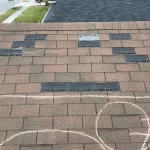
| Shingles are missing or lifted | Wind damage is usually sudden — a key factor for claims approval. |
| Tree limb hit your roof | If the impact was from a storm or sudden event, this is usually covered. |
| Roof was fine before, now it leaks | Sudden leaks after weather events raise red flags for insurers (in a good way). |
| Neighbors are getting repairs too | If other homes nearby were damaged, it strengthens your case. |
| You’ve had the roof maintained properly | Shows you’re not at fault — a key requirement for most insurers. |
Bonus tip: Document everything.When in doubt, take photos of damaged shingles, water stains, tree branches on or near your roof and the inside of your attic or ceiling. These pictures can make or break your claim.
How to Get Insurance to Pay for Roof Replacement: Insurance Claim
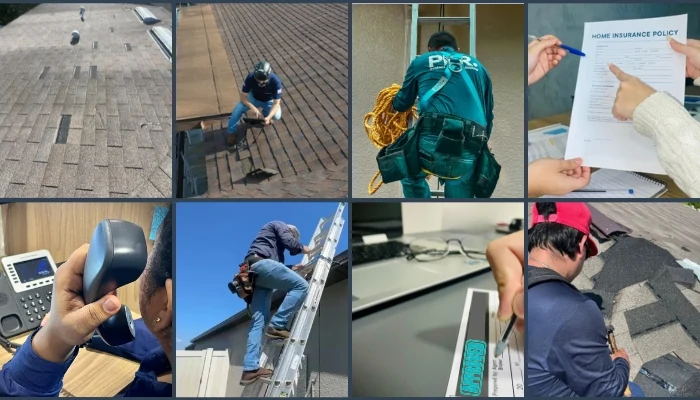
Filing a roof insurance claim can feel like dealing with a maze. However, it doesn’t have to. Below is a simple, clear and straight-to-the-point guide to get your claim moving fast and correctly:
| Step | What to Do | Why It Matters |
| 1. Inspect the damage | Check for missing shingles, leaks, or debris. | Gives you a quick idea if the damage looks recent or severe. |
| 2. Take clear photos | Snap wide and close-up shots from different angles. | You need solid proof before the insurance adjuster shows up. |
| 3. Call a licensed roofer | Get a professional inspection and a written damage report. | A roofer’s report adds credibility. Protect Preserve Roofing does this quickly. |
| 4. Review your policy | Look for terms like “wind damage,” “RCV vs. ACV,” and deductibles. | You need to know what’s actually covered before filing. |
| 5. Call your insurance company | Report the damage and schedule a visit from an adjuster. | The faster you act, the better. Waiting can cost you coverage. |
| 6. Meet the adjuster | Be present. Have your roofer there if possible. | Roofers can advocate for you and clarify technical details. |
| 7. Get your claim decision | Once approved, review the payout offer and conditions. | Make sure it covers what was agreed on. Ask questions if something looks off. |
| 8. Schedule the repair | Choose a licensed, insured roofing contractor. | Don’t hire random handymen — it can void your warranty or affect future claims. |
Extra tip: Don’t let damage get worse. Many insurers won’t cover damage that got worse because of delays. That’s why installing a tarp quickly and without nails matters, for example. Protect Preserve Roofing does emergency installation that preserves your coverage.
What Insurance Adjusters Look for During Roof Inspections
When your insurance company sends an adjuster to check your roof, they aren’t just eyeballing the damage. They’re following a checklist and if you’re not ready, your claim could hit a dead end. Let’s break down exactly what adjusters look:

| What They Check | What They’re Really Thinking |
| Visible damage (shingles, flashing, vents) | “Was this caused by a storm or is it just old age?” |
| Granule loss or lifted shingles | “Is this sudden wind/hail damage or long-term wear?” |
| Leaks or water stains inside your home | “Does this match what we see outside or was it avoidable?” |
| Signs of maintenance | “Has this homeowner kept the roof in good shape or let it go?” |
| Age of the roof | “Is this roof nearing the end of its expected life?” |
| Previous repair attempts | “Were repairs done by a licensed roofer or someone unqualified?” |
| Documentation from the roofer | “Does this damage align with the professional inspection report submitted?” |
Pro tip: Get your evidence ready. Before the adjuster arrives, have photos of the damage (before and after the storm if possible), the roofer’s inspection report, any repair receipts or prior claim history and a clean and safe area for the adjuster to walk around. And remember: Protect Preserve Roofing can help you prepare the right way.
Tips to Make Sure Your Roof Claim Gets Approved
Getting insurance to cover a roof replacement isn’t just about filling out forms. It’s about playing the game right, with timing, documentation, and smart decisions. If you follow the steps below, your chances of approval increase dramatically:
| Tip | Why It Works |
| Call a licensed roofer first | Insurance companies trust professionals. A proper inspection adds weight to your claim. |
| Take clear photos of the damage | Adjusters don’t guess, they need evidence. Include timestamps if possible. |
| Act fast after the damage | Waiting allows the problem to worsen. If that happens, insurance may deny your claim. |
| Don’t patch or fix the roof before inspection | Temporary fixes (especially DIY ones) can hide the original damage and affect your claim. |
| Know your policy | Understand if your coverage uses Actual Cash Value (ACV) or Replacement Cost Value (RCV). The payout depends on this. |
| Keep maintenance records | A history of clean gutters, repairs, or inspections shows you didn’t neglect the roof. |
| Be there when the adjuster arrives | If possible, have your roofer present too. They can speak the technical language adjusters understand. |
| Document everything | Emails, photos, estimates, receipts. The more you document, the harder it is for the insurer to say “no.” |
Bonus tip: Avoid these common claim killers:
- Using an unlicensed contractor.
- Filing too late (most policies have a time limit).
- Not reporting all the damage at once.
- Ignoring small leaks that grow into bigger issues.
Florida Homeowners: Will Insurance Pay for Metal Roofs?
The short answer? It depends. Let’s break it down so you don’t get stuck paying out of pocket when you thought you were covered:
| Factor | Metal Roofs | Shingle Roofs |
| Durability | Lasts 40–70 years | Lasts 15–25 years |
| Storm Resistance | Excellent | Moderate |
| Fire Rating | High (Class A) | Varies |
| Cost | Higher upfront | Lower upfront |
| Insurance Discount Eligible | Often, yes | Sometimes |
| Replacement Coverage | Not always fully covered | More commonly covered |
Therefore, here’s the catch: Insurance will often pay to replace your roof with like materials. So, if your policy covers shingles and your roof is damaged, they’ll usually pay to replace it with shingles, not metal.
If you want to upgrade to a metal roof, you may have to pay the difference, unless:
- Your policy includes “upgrade coverage”.
- Local building codes require a higher-grade replacement.
- You negotiate the value with proof of long-term savings and added protection.
How to Get Insurance to Pay for Roof Replacement Without Stress
If you follow a clear path, backed by the right help, you can get that claim approved without headaches, frustration or endless phone calls. Let’s break this down:
| Step | Action | Why It Works |
| 1 | Call a licensed roofer first | You need real documentation of damage, not just your own photos. Insurers take pros seriously. |
| 2 | Take photos and note the date | Visual proof with timestamps makes it harder for the insurer to deny or delay your claim. |
| 3 | Review your insurance policy | Know if you have ACV (actual cash value) or RCV (replacement cost value). It affects your payout. |
| 4 | Report damage immediately | Florida insurers can deny late claims. Time matters. |
| 5 | Request an inspection by an adjuster | This is when things get serious and where your roofer’s report really counts. |
| 6 | Let your roofer speak for you | A qualified roofing company (like Protect Preserve Roofing) knows how to “speak insurance.” |
| 7 | Stay organized and follow up | Keep a folder with all reports, emails, and adjuster feedback. Be polite, but persistent. |
Common mistake: trying to do it all alone
Homeowners often think: “I’ll just file the claim and wait”. But this usually leads to:
- Claims being delayed or denied.
- Lowball payouts.
- Insurance blaming you for maintenance issues.
That’s why step one is calling the right roofing company, one that documents everything, helps you through the claim and shows up when the adjuster does.
Quick reminder from Protect Preserve Roofing: Before you get buried in paperwork and insurance lingo, give us a call. We’ll walk you through the process, protect your home and fight for the coverage you deserve.
Emergency Tarps: What to Do While Waiting for Approval
So, your roof got hit… maybe it was a storm, wind or just bad luck. Now you’ve filed the insurance claim and are stuck in limbo, waiting for repair approval and cost confirmation.
That’s where emergency tarps come in, but if you do it wrong, you could end up making the situation worse and even losing coverage.
What is an emergency roof tarp?
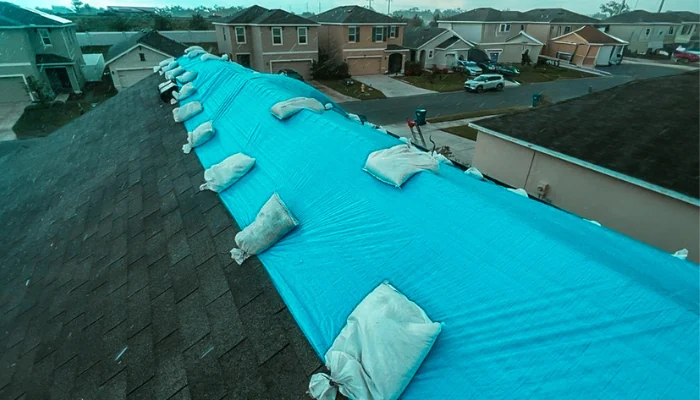
A tarp is a temporary waterproof cover installed over damaged areas of your roof to:
- Prevent leaks from causing more damage inside.
- Protect ceilings, walls, insulation and wiring.
- Show your insurer that you’re acting responsibly.
In Florida, this is critical. One heavy storm after damage and you could face mold, rot, even electrical risks.
Keep in mind: Never nail, screw or staple the tarp directly into your roof, unless it’s an emergency pitch or full replacement case because insurers can deny your claim if they think you caused additional damage.
The right way to install a tarp
Protect Preserve Roofing follows a safe, claim-friendly tarp process. We:
- Use sandbags or weighted systems to hold the tarp in place.
- Avoid invasive fastening methods.
- Document everything for your insurance file.
- Calculate costs based on real data ($800–$1,600 depending on size, height, pitch, etc.).
Insurance tip: Many policies cover emergency tarp installations as part of loss mitigation, but only if done properly. If the insurer sees that you tried to DIY and made it worse, they can deny the entire roof replacement service.
Denied Claim? Here’s What You Can Still Do
Insurers deny roof claims for all kinds of reasons. Some are valid. Others… quite questionable. The key is to know what to do next and act quickly.
So, before anything else, read the denial letter word-for-word. Most denials fall into these buckets:
| Common Denial Reason | What It Means |
| Wear and tear | They say it’s old age, not storm damage. |
| Lack of maintenance | They think you didn’t keep the roof in good shape. |
| Damage not storm-related | They blame it on poor workmanship or pre-existing issues. |
| Late reporting | You waited too long to file the claim. |
| Insufficient evidence | Not enough photos, reports, or inspection data. |
What you can still do (step-by-step)
Here’s your comeback plan and yes, it actually works:
- Request a reinspection: Politely ask your insurer for a second look, especially if weather data supports your claim.
- Hire a licensed roofer for a new report: Get a second opinion from pros who understand what adjusters look for – like Protect Preserve Roofing.
- Review your policy with a public adjuster: These are licensed pros who fight for homeowners in denied claims (and often only get paid if you win).
- Document everything again: Photos, timestamps, emails, contractor reports. The more you have, the stronger your case.
- Appeal the decision: Most insurance companies have a process for formal appeals. Just follow their steps and attach all your new proof.
- Consider legal support: If the damage is major and the insurer’s being unfair, consult a property insurance attorney.
Pro tip from Protect Preserve Roofing: If your roof is still leaking or exposed, installing a tarp immediately shows the insurer that you’re taking action and can strengthen your appeal. This will help you on “how to get insurance to pay for roof replacement”.
Conclusion: How to Get Insurance to Pay for Roof Replacement in Orlando or Central Florida
You’ve seen the fine print, read the denials, learned what works and what wastes your time. Now it’s time to do something real about your roof.
If you’re a homeowner in Orlando or anywhere in Central Florida, you don’t need to wait on luck, hope or confusing claims paperwork to move forward. You need a licensed roofing partner who understands insurance, acts fast and shows up at your house when you call.
That’s what Protect Preserve Roofing does. We will come to you fast, anywhere in Central Florida. From emergency damage control to insurance claim guidance to full roof replacements with real warranties, we’re in this with you — start to finish. Give us a call today:
- Ask about our emergency tarp service.
- Schedule a clear, honest and free roof assessment.
- Call us directly, we pick up the phone.
- Get an instant estimate for a commercial roof replacement.
Don’t wait for more rain, more damage or more red tape. Let’s protect your home – and your peace of mind – starting now.
What type of roof damage is usually covered by insurance?
Policies often cover:
Wind and hail damage
Tree impact
Fire or lightning
Vandalism
Leaks caused by wear and tear or poor maintenance are typically not covered.
How fast should I file a claim after roof damage?
Immediately. In Florida, you usually have one year from the date of damage to report it. Delays can reduce your chances of approval.
Will insurance pay for a metal roof if I had shingles?
Not always. Some policies only cover the “like-kind” replacement unless you prove metal is necessary due to code, durability, or storm resistance.
What happens if my claim is denied?
You can:
Request a reinspection
Get a second opinion from a licensed roofer
Appeal the decision
Work with a public adjuster
Seek legal advice (in serious cases)
We help with all of these steps.



Leave a Reply