



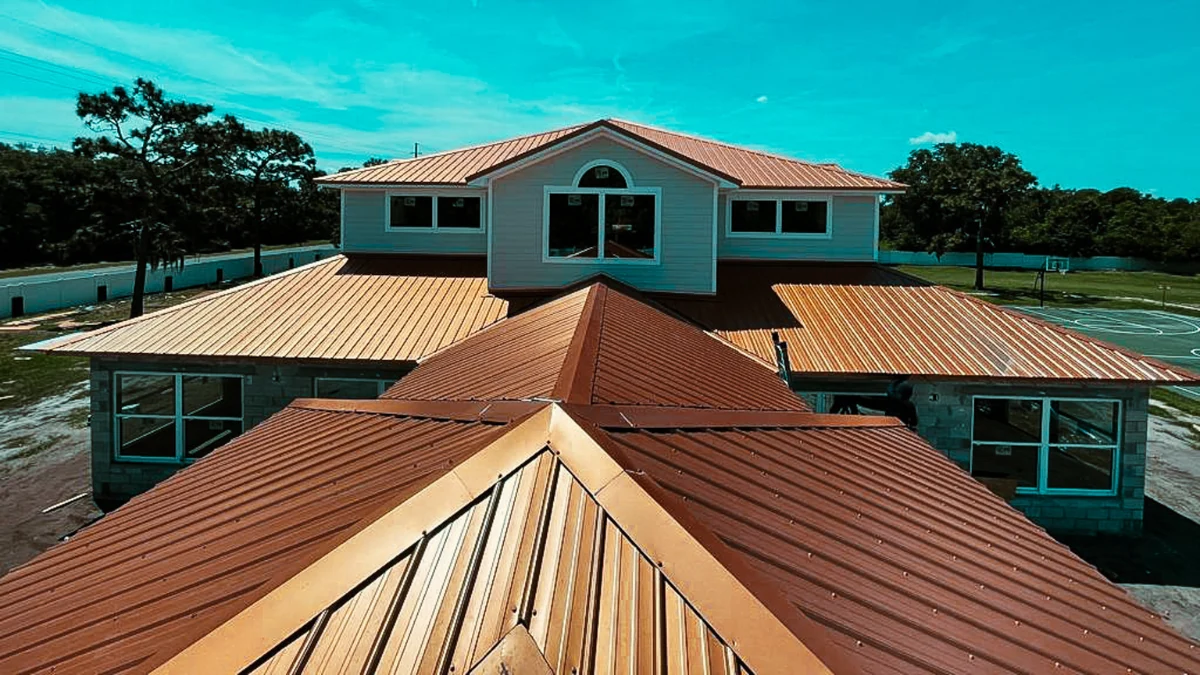


Metal roof repair might sound like a straightforward fix, find the leak, patch the metal and you’re done. But repairing a metal roof the right way is more like precision work than a quick patch job. A single missed screw or a poorly sealed joint can silently turn a small problem into thousands of dollars in structural damage.
According to the Metal Construction Association, over 65% of metal roof failures in the U.S. stem from improper maintenance or incorrect repairs. That means most roof leaks and rust issues aren’t caused by the weather alone, they’re caused by how repairs are handled.
If you’ve noticed rust spots, loose panels or water marks inside your home, you’re not alone. Many homeowners wait until leaks become visible indoors, not realizing that moisture may have been spreading beneath the surface for months.
So, by the end of this guide, you’ll understand the most common problems that affect metal roofs and how to spot them early; what a professional repair process actually looks like; how much repairs typically cost and how to avoid paying more than you should; and why working with licensed experts is the key to long-term protection.
Let’s walk through what you need to know and how to fix your roof the right way.
Table of contents
Why Metal Roof Repair Matters More Than You Think
Because when it’s properly maintained, a quality metal roof can protect a home for 40 to 70 years. However, small issues that seem harmless, like a rust spot or a loose screw, can start a chain reaction that quietly damages the structure beneath.
Most homeowners believe metal roofs are “maintenance-free.” In truth, they’re low-maintenance, not no-maintenance. Over time, Florida’s mix of heat, humidity and salt in the air can eat away at coatings, expand seams and loosen fasteners. Once that happens, water finds its way inside… and the damage begins long before you see a ceiling stain.
Ignoring minor repairs doesn’t save money; it multiplies costs. A $300 sealant job today could prevent a $3,000 water restoration later. That’s why regular inspection and timely repair matter more than most people realize.
Pro tip: If you’ve noticed corrosion, lifting panels, or leaks after a storm, now is the best time to act. A professional assessment from Protect Preserve Roofing can spot hidden trouble before it spreads, saving you time, stress, and unnecessary expense.
Common Problems That Affect Metal Roofs
Metal roofs are built to endure just about anything: heat, rain, wind, even hail. Still, time and weather always leave their mark. The good news is that most issues start small and can be fixed long before they threaten your roof’s structure.
Leaks and hidden moisture damage
Water is the quiet enemy of every roof. Most metal roof leaks don’t come from a gaping hole, they start with a tiny gap around a screw or a weak seam that lets moisture creep underneath. Once it’s in, water travels along the panels, soaking insulation and weakening decking long before you ever see a wet spot inside.
Typical leak sources include:
- Loose or missing fasteners.
- Damaged flashing around vents or skylights.
- Dried or cracked sealant at panel joints.
If you notice water stains on ceilings or walls, or hear dripping after rain, don’t ignore it. A fast repair prevents rust and rot from spreading under the surface.
Rust and corrosion
Metal roofs in Florida face a tough mix: high humidity, salt air and intense UV rays. These conditions wear down protective coatings and allow oxidation to set in. Once rust appears, it doesn’t stop on its own.
Signs of corrosion include:
- Orange or brown discoloration on panels.
- Paint blistering or peeling.
- Pitting or small surface holes.
Pro tip: Modern coatings can stop oxidation and seal minor rust areas, but waiting too long can lead to full panel replacement. Early treatment always costs less than replacing entire sections.
Damaged panels and loose fasteners
Wind uplift, falling branches or thermal expansion can cause panels to shift or fasteners to loosen. Each exposed screw is a potential entry point for water.

You might notice:
- Panels that appear uneven or lifted.
- Visible screw heads that seem raised.
- Buzzing or rattling during strong winds.
Coating and sealant wear
Coatings give metal roofs their reflective power and weather protection, but Florida’s sun is relentless. Over time, coatings fade, chalk or peel, leaving panels exposed.
If your roof looks dull or patchy or you notice areas where the coating has thinned, it’s time to refresh it. Recoating extends the life of your roof, keeps temperatures lower and improves energy efficiency.
Step-by-Step Metal Roof Repair Process
Repairing a metal roof isn’t about slapping on sealant or tightening a few screws, it’s a precise process that blends inspection, technique, and experience. Done correctly, it can add years of protection and keep your roof performing like new. Here’s how professionals at Protect Preserve Roofing do it .
Step one: Inspection and assessment
Every effective repair starts with a full inspection. Our licensed team looks for signs of leaks, corrosion, loose fasteners, and coating deterioration. Using drone imaging and moisture meters, we document every issue to create a clear, visual record of your roof’s condition.
This isn’t guesswork, it’s a diagnostic approach. Whether it’s a small seam leak or hidden panel corrosion, our report pinpoints exactly what needs attention.
Step two: Cleaning and surface preparation
Once problem areas are identified, we prepare the surface. Dirt, rust and old sealant residues are removed so new coatings can bond properly. This step often includes light power washing and the use of rust converters on affected areas.
Clean metal means strong adhesion and strong adhesion means fewer future repairs.
Step three: Repairing fasteners and seams
Loose or corroded fasteners are replaced with new, gasketed screws designed for metal roofs. In some cases, entire rows are reinforced to prevent wind uplift. Seams and overlaps are re-sealed using industrial-grade sealants that remain flexible under heat expansion.
For standing seam roofs, hidden clips are checked and resecured to ensure panels can move naturally without buckling.
Step four: Applying metal roof sealant or coating
This is where long-term protection happens. After repairs, a specialized coating or sealant is applied to restore reflectivity and weather resistance. The type of coating depends on the roof’s condition and environment:
- Silicone coatings for maximum UV protection and waterproofing.
- Acrylic coatings for energy efficiency and reflectivity.
- Polyurethane coatings for high-impact durability.
In Central Florida, where UV exposure and storms are constant, reflective coatings can lower attic temperatures by up to 20°F, improving comfort and reducing cooling costs.
Step five: Final leak test and quality assurance
Before we call a job complete, we test it. The roof is water-checked under pressure. All seams, fasteners and repaired zones are re-inspected. We document every step with photos, giving homeowners clear proof that the job was done right.
Each project includes a workmanship warranty and product warranty from trusted manufacturers, so your investment is protected on paper and in performance.
A professional repair isn’t just a quick fix; it’s a restoration that brings your metal roof back to its full strength and value. Ready to see what your roof really needs? Schedule your inspection today at Protect Preserve Roofing.
Understanding Different Metal Roof Systems
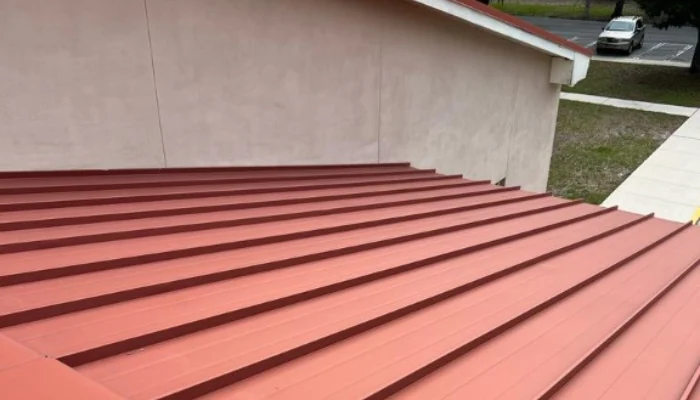
Not all metal roofs are built the same. Each system has its own structure, fastening method and maintenance needs. Knowing what type you have is key to diagnosing issues correctly and repairing them the right way.
Standing seam metal roofs (hidden fasteners)
These are the premium choice for modern homes and commercial buildings. The panels lock together with raised seams, and the fasteners are concealed under clips, which means fewer points where water can enter.
Common repair focus:
- Seam separation caused by expansion and contraction.
- Minor oil canning or panel buckling due to thermal movement.
- Re-sealing around flashings or ridge caps.
Why it matters: Standing seam systems can last 40–70 years when maintained properly. Their sleek design makes them ideal for solar integration and excellent storm resistance.
Exposed fastener metal roofs (screw-down panels)
This is the most common and budget-friendly type of metal roofing, especially for barns, garages and traditional homes. Panels are fastened directly to the deck with visible screws and washers.
Common repair focus:
- Replacing loosened or backed-out screws.
- Fixing leaks around washers and overlaps.
- Removing old, cracked sealant and applying new protection.
Why it matters: Florida’s heat causes metal to expand and contract daily. That constant movement loosens fasteners over time, which is why periodic screw replacement and resealing are vital to avoid leaks.
Stone-coated metal roofs
These roofs combine the strength of steel with the look of traditional tiles or shingles. They’re coated with stone granules for added impact resistance and curb appeal.
Common repair focus:
- Re-coating areas where granules have worn off.
- Fixing displaced panels from storm damage.
- Checking underlayment for trapped moisture.
Why it matters: Stone-coated systems are excellent for coastal climates, lightweight, stylish, and able to withstand hurricane-force winds when properly installed.
Commercial metal roof systems
Commercial roofs often cover large, low-slope surfaces. Because water doesn’t drain as fast on these systems, repair techniques focus on waterproofing seams and preventing pooling.
Common repair focus:
- Seam sealing and fastener upgrades.
- Elastomeric coatings to reduce heat and improve reflectivity.
- Correcting drainage problems that cause ponding water.
Why it matters:Flat or low-slope metal roofs need more frequent inspections, typically twice a year, to prevent leaks that can interrupt business operations or damage insulation.
Quick reminder: Every metal roof tells its own story. Whether yours is a sleek standing seam, a practical screw-down system, or a commercial roof covering thousands of square feet, each one requires a repair plan that fits its design.
Repair or Replace: How to Decide
The decision depends on condition, damage level, and long-term goals. To help you see the difference clearly, here’s a direct comparison:
| Factor | Repair | Replacement |
| Cost Range | Typically $800 – $1,600, depending on damage, height and pitch | $12,000 – $25,000+, depending on size and material |
| Time Required | Usually 1 day or less | 3–5 days, including removal and installation |
| Common Reasons | – Small leaks around fasteners or seams – Surface rust or damaged sealant – Loose panels or flashing | – Severe corrosion or multiple leaks – Bent or warped panels – Damaged roof deck or underlayment |
| Roof Age (Typical) | Under 25 years or structurally sound | Over 30 years, or extensive wear |
| Expected Lifespan After Service | Adds 10–20 years with proper coating and maintenance | Offers a fresh 40–70-year lifespan depending on material |
| Insurance Eligibility | Often covered under maintenance or storm repair claims | May qualify for roof upgrade or replacement claims |
| Environmental Impact | Extends life of existing materials; more eco-friendly | Requires full material removal and higher waste volume |
| Recommendation | When the roof structure is intact and leaks are isolated | When more than 30% of panels or structure are compromised |
Our professional recommendation
A full replacement should be your last resort, not your first. If your metal panels are solid and the structure is sound, a professional inspection and repair plan can save thousands and prevent recurring leaks.
However, when corrosion spreads beneath coatings or the decking is saturated, a new system becomes the smarter long-term investment.
If you’re unsure which option is right for you, let us help. Book your free inspection today at Protect Preserve Roofing and get a clear answer before the next storm season.
Metal Roof Repair Cost Guide
When it comes to metal roof repair, cost depends on three key factors: the type of damage, the size of the affected area and the roof’s pitch and accessibility. In Florida, where storms and humidity accelerate wear, pricing also reflects the need for weather-resistant materials and specialized labor. Below is a realistic breakdown of what homeowners can expect when budgeting for repairs:
| Type of Repair | Typical Price Range (USD) | What’s Included |
| Minor Leak Seal or Fastener Replacement | $800 – $1,200 | Tightening or replacing screws, resealing joints, and addressing isolated leaks. |
| Rust Removal and Coating Application | $1,000 – $1,600 | Cleaning rusted sections, applying primer, and adding a protective silicone or acrylic coating. |
| Panel Replacement (1–3 Panels) | $1,200 – $2,500 | Removing and installing new metal panels, securing fasteners, and sealing seams. |
| Flashing or Transition Repair | $1,000 – $1,800 | Repairing or replacing flashing around vents, chimneys, and valleys to stop water intrusion. |
| Storm Damage Restoration | $1,600 – $3,500+ | Structural inspection, replacing bent or punctured panels, and leak-proofing with coatings. |
Note: These costs are averages for residential roofs across Orlando and Central Florida. For steep or high-pitch roofs, labor time and safety equipment can slightly increase total pricing.
Factors that influence repair costs
Several variables can affect how much your repair costs, understanding them helps prevent surprises on your quote:
- Roof height and pitch: Steeper roofs require safety rigging and specialized equipment.
- Extent of damage: Localized rust or leaks cost far less to fix than structural corrosion.
- Roof type: Standing seam systems are more complex to repair than exposed fastener panels.
- Material and coating: Premium finishes (e.g., Kynar-coated steel) need compatible sealants.
- Accessibility: Homes surrounded by landscaping or limited driveway access can affect setup time.
Saving on repair costs
You can lower long-term expenses with preventive care and early detection:
- Schedule annual inspections before and after storm season.
- Keep debris and branches clear from your roof.
- Address loose screws and early rust immediately.
- Invest in protective coatings every 8–10 years to extend lifespan.
A quick inspection today could save you thousands in emergency repairs later.
Benefits of Professional Repair Services
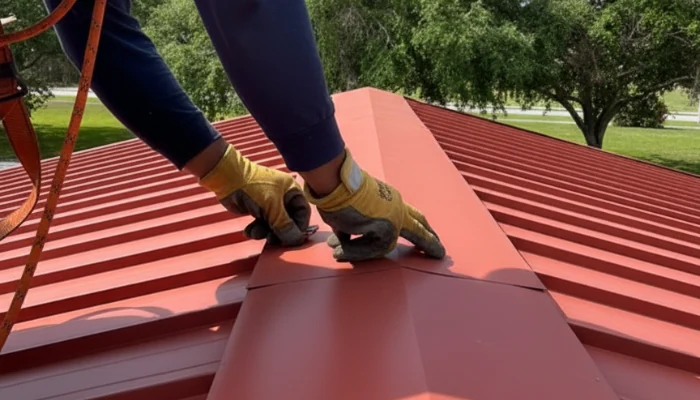
A metal roof is one of the most durable investments you can make in your property, but only when it’s properly cared for. Attempting a DIY repair may seem cheaper in the short term, but it often leads to incomplete sealing, water intrusion, or voided warranties. Professional repair brings more than convenience; it delivers expertise, safety and long-term value. And here’s why professional repair pays off.
- Licensed and insured specialists: Hiring licensed professionals ensures the work meets Florida’s strict building codes and safety standards. Our team holds full state licensing and insurance coverage, protecting both you and your property during every project.
- Accurate diagnostics and long-term solutions: A trained eye can spot issues the average homeowner might miss, like hidden moisture under seams or fasteners that appear tight but are rusted beneath the washer.
- Warranty protection and compliance: Most metal roof manufacturers require licensed contractors to perform any repairs to keep warranties valid. Our repairs maintain your warranty coverage while adding our own workmanship warranty, so you’re protected on both ends.
- Use of premium materials and coatings: Not all sealants and coatings are created equal. We use silicone, polyurethane or elastomeric products proven to withstand Florida’s UV exposure and temperature swings. These materials expand and contract with your roof preventing cracking, peeling or premature wear.
- Safety and efficiency: Our crew uses harnesses, anchor systems and roof brackets to complete work safely and efficiently.
Quick reminder: Professional repair isn’t an expense, it’s an investment in reliability, compliance and performance.
Preventive Maintenance Tips for a Longer-Lasting Roof
A metal roof is designed to last decades, but like any investment, it only performs as well as it’s maintained. Preventive care is what separates a 25-year roof from a 50-year one. The best part? Most maintenance steps are simple and affordable compared to full repairs or replacements.
Schedule regular inspections
It’s easy to assume your roof is fine if you don’t see leaks, but many problems start silently. Schedule a professional inspection at least once a year, ideally before and after hurricane season. During an inspection, our team checks for:
- Loose or missing fasteners.
- Rust formation and coating wear.
- Seam separation or flashing damage.
- Early signs of leaks under panels.
Catching small issues early keeps repair costs low and extends your roof’s service life.
Keep your roof clean and clear
Debris like leaves, branches and dirt traps moisture against metal surfaces. Over time, this causes oxidation and water pooling, two leading causes of roof damage. Simple steps make a big difference:
- Clear gutters and downspouts after heavy rain.
- Trim tree branches hanging near your roofline.
- Avoid pressure washing unless done by professionals, too much pressure can remove protective coatings.
A clean roof not only performs better but also looks newer for longer.
Reapply protective coatings periodically
Protective coatings are your roof’s first line of defense against Florida’s sun and humidity. Depending on the product type and exposure, these coatings should be refreshed every 8–10 years.
- Silicone coatings resist ponding water and UV degradation.
- Acrylic coatings reflect heat and improve energy efficiency.
- Elastomeric coatings offer flexible, long-term waterproofing.
These upgrades don’t just protect your roof; they can lower indoor temperatures by up to 20°F during peak summer months.
Address small repairs immediately
Small problems rarely stay small on a metal roof. The cost of immediate repair is a fraction of what full restoration might cost later.
Call a licensed roofing professional as soon as you spot discoloration, corrosion or lifting panels. A simple fix today can prevent structural issues tomorrow.
Don’t walk on the roof unnecessarily
Metal panels can dent or flex under uneven pressure, especially when it’s hot. Avoid walking on the roof unless necessary and if you do, use proper footwear and safety equipment.
Our professionals use non-slip pads and access ladders designed for metal systems, ensuring zero impact on the roof surface.
Conclusion: Your Trusted Metal Roof Repair Experts
A metal roof is more than protection; it’s peace of mind. However, that peace depends on timely care, expert workmanship, and a team that treats your home like their own. That’s what sets Protect Preserve Roofing apart.
From leak detection and rust treatment to full panel restoration, every project we take on is handled with precision, integrity and transparency. We don’t believe in “quick fixes”, but in long-term solutions that stand up to Florida’s harsh weather and to time itself.
If you live in Orlando or anywhere across Central Florida, our licensed and insured team is ready to help. We offer fast, reliable inspections and repairs backed by detailed photo documentation and workmanship warranties. Whether it’s storm damage, corrosion or preventative maintenance, we make the process simple and stress-free.
Request your free inspection today and see why homeowners across Florida trust our team for metal roof repairs that last.
Your roof protects everything beneath it. Don’t wait for the next rainstorm to test it make sure it’s ready now.
How do I know if my metal roof needs repair?
If you see rust spots, loose screws, or water stains inside your home, your roof needs attention. Other warning signs include lifted panels, worn sealant, and visible corrosion along seams.
A professional inspection can reveal hidden leaks before they spread — you can schedule one easily at Protect Preserve Roofing.
How much does metal roof repair cost?
Costs vary depending on the issue. In most cases, homeowners in Florida spend between $800 and $1,600 for localized metal roof repairs. Larger or storm-related damage may range up to $3,500 or more.
Getting an inspection and written estimate ensures there are no surprises.
Can a metal roof be repaired instead of replaced?
Yes — most of the time, repairs are enough. Unless panels are rusted through or the underlying structure is compromised, we can often restore your roof to full performance with resealing, fastener replacement, and new coatings.
Do you handle commercial metal roof repairs too?
Absolutely. We service both residential and commercial metal roofs, including warehouses, offices, and multi-unit properties. We use elastomeric coatings and reinforced seam sealing for large, low-slope commercial systems.


Leave a Reply