



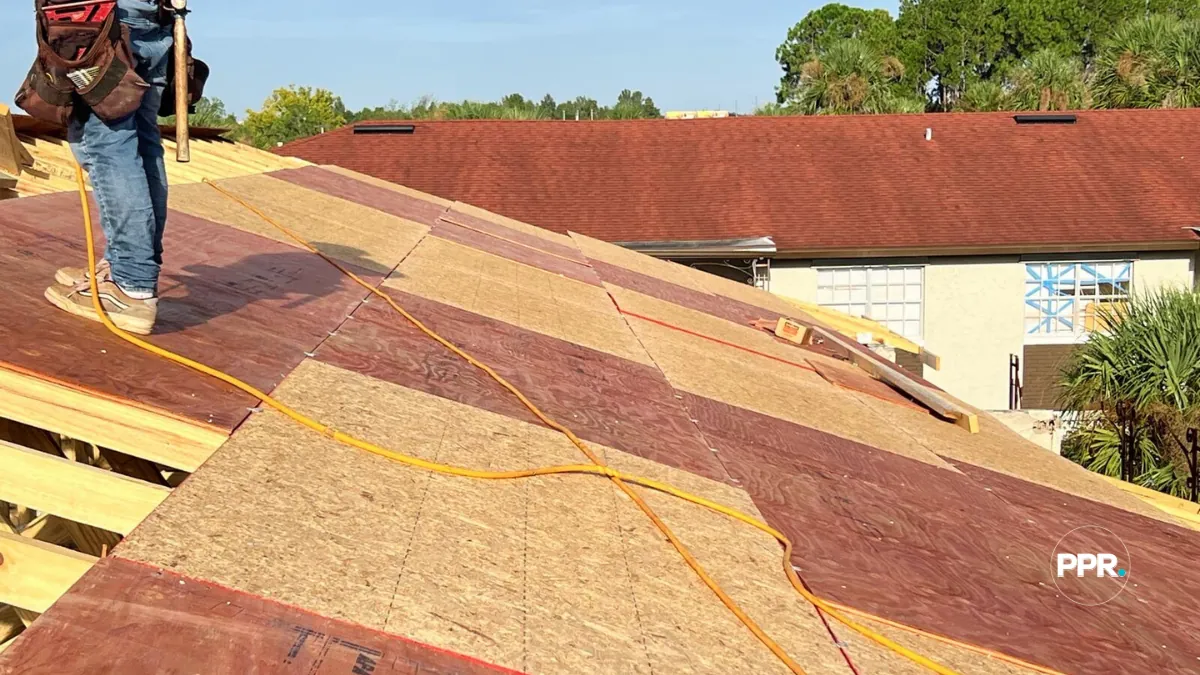


What is roof decking? For many homeowners, this might seem like a simple concept. However, it’s an essential part of your roof’s structure that plays a vital role in the safety and longevity of your home.
Whether you’re considering a roof replacement or simply curious about what’s holding up your shingles, understanding roof decking is key.
According to the National Roofing Contractors Association (NRCA), approximately 40% of roofing problems are related to issues with the decking, particularly when homeowners neglect to address underlying structural damage during a roof replacement. This statistic highlights why roof decking should never be overlooked.
So, what exactly is roof decking, and why does it matter to your home? In this article, we’ll walk you through the basics, the types of materials used, how to spot potential damage, and how it impacts the lifespan of your roof.
Whether you’re in Orlando or Central Florida, where the weather can be particularly tough on roofs, knowing about your roof decking is an investment in the long-term health of your home.
Keep reading to understand why roof decking is more important than you might think, and how maintaining it can save you costly repairs down the line.
Table of Contents
What Is Roof Decking?
Roof decking is the structural base of your roof. It’s the solid surface installed over rafters or trusses where underlayment and shingles are secured. Without it, your roof simply doesn’t function as a system.
Many homeowners assume shingles are what protect their home. In reality, shingles only perform well when the roof decking underneath is strong, dry, and properly installed. When decking fails, leaks, sagging, and even structural issues can follow.
According to data referenced by the National Roofing Contractors Association (NRCA), structural decking problems are one of the leading hidden causes of premature roof failure, especially in homes where old decking is reused without proper inspection. That’s why professional roofers never evaluate a roof by shingles alone.
So why does this matter to you?
Because roof decking:
- Supports the entire roofing system
- Holds roofing nails in place
- Helps resist wind uplift and moisture intrusion
- Directly affects how long your roof will last
If the decking is compromised, even a brand-new roof can fail early. In regions like Orlando and Central Florida, where heat, humidity, and sudden storms are common, roof decking takes even more stress over time.
Moisture exposure, past leaks, and temperature swings can weaken decking long before problems appear inside your home.
This is why experienced roofing professionals don’t ask only “Do you need new shingles?” They ask “What condition is the decking in?”
If you’re planning a roof repair or replacement, understanding roof decking now can help you avoid costly surprises later. And if something doesn’t seem right, a professional inspection can make all the difference.
Roof Decking vs Roof Sheathing: What’s the Difference?
Roof decking and roof sheathing are two terms that often cause confusion. Many homeowners wonder if they refer to different materials or parts of the roof. The short answer is simple: in most residential roofing situations, they mean the same thing.

In practice, roof decking is the structural surface installed over the rafters or trusses. Roof sheathing is the term often used to describe that same surface when talking about materials and installation standards. One name focuses on function. The other focuses on construction.
Think of it like this.
If someone calls it “the engine” and another calls it “the motor,” they’re still pointing to the same core component that makes everything work.
Why both terms exist
The term roof decking is commonly used by homeowners and contractors when discussing the roof as a system. It helps people visualize the deck as the “platform” holding everything above it.
Roof sheathing, on the other hand, is more common in technical documents, building codes, and manufacturer guidelines. It emphasizes how the material is installed and how it connects to the roof structure.
This overlap is normal in construction. What matters is not the word used, but the condition of the material itself.
What homeowners actually need to know
For a homeowner, the real question is not which term is correct. The real question is: Is that layer solid, dry, and strong enough to do its job?
If roof decking or roof sheathing is:
- soft
- swollen
- cracked
- delaminated
- or weakened by past leaks
then the roof above it is already at risk, no matter how new the shingles look.
Professional roofing inspections focus on condition, not vocabulary. At Protect Preserve Roofing, evaluations are based on structural integrity, fastening strength, and moisture exposure. That’s what protects your home. The name comes second.
Understanding this distinction early helps avoid misunderstandings during estimates, inspections, and roof replacement discussions. It also helps you ask better questions and spot red flags before small issues turn into expensive ones.
How Roof Decking Fits Into Your Roofing System
A roof is not just shingles. It works as a system, where each layer depends on the one below it. Roof decking sits right in the middle of that system, doing a job that often goes unnoticed until something goes wrong.
Starting from the structure, rafters or trusses form the skeleton of the roof. Roof decking is installed directly on top of them, creating a solid surface. Over that surface come the protective layers that most people see.
In simple terms, the roofing system follows this order:
- Rafters or trusses support the structure
- Roof decking creates a solid base
- Underlayment adds moisture protection
- Shingles protect against sun, wind, and rain
If the decking is weak, everything above it suffers.
Shingles rely on decking to hold nails firmly in place, which directly affects the roof’s ability to handle wind resistance during storms. Underlayment depends on a flat, dry surface to seal properly. When decking bends, swells, or softens, nails loosen. Water finds paths it shouldn’t. Wind has an easier time lifting materials.
This is why roof problems don’t always start on the surface. A visible shingle issue can trace back to a hidden decking problem underneath. It’s like replacing tires without checking the alignment. The fix may look good at first, but it won’t last.
In Central Florida, this layer works even harder. Heat, humidity, and seasonal storms put constant pressure on roof systems. Decking absorbs that stress day after day. Over time, small weaknesses can grow if they’re not caught early.
Understanding where roof decking fits in the system helps explain why professional roofers inspect from the structure up, not just from the shingles down. It’s the only way to ensure the roof performs the way it should.
What Roof Decking Does for Your Home
Roof decking does more than “hold the roof together.” It plays a direct role in how well your home is protected every day, especially when the weather turns against you.
First, roof decking provides structural support. It spreads weight evenly across the roof frame, helping the structure handle loads from shingles, equipment, and weather.
Without a solid deck, that weight concentrates in weak spots, which can lead to sagging or uneven surfaces.
Second, it gives roofing nails something solid to grip. Shingles are only as secure as the surface beneath them. When decking weakens, nails can loosen. That’s often how shingles start shifting or lifting during strong winds.
Third, roof decking acts as a line of defense against moisture. While underlayment and shingles block most water, decking becomes critical if those layers are compromised. Dry, intact decking slows water intrusion. Damaged decking absorbs moisture, allowing it to spread quietly through the roof system.
When decking fails, the warning signs are not always obvious. A roof can look fine from the street while problems grow underneath.
Over time, this can lead to:
- Leaks that appear far from the original entry point
- Mold or musty odors in the attic
- Rising repair costs due to hidden damage
In areas like Orlando and Central Florida, heat and humidity add extra pressure. Wood materials expand and contract. Moisture lingers longer. These conditions make roof decking performance even more important.
This is why experienced roofers focus on decking condition during inspections and replacements. A roof lasts longer when the layer holding everything together is strong, stable, and properly protected.
Types of Roof Decking: Pros and Cons
Not all roof decking is the same. The material used makes a real difference in performance, durability, and long-term maintenance. Most residential homes fall into one of three categories, depending on age and construction style.
Plywood Roof Decking
Plywood is made from thin layers of wood pressed together with alternating grain directions. This structure gives it strong resistance to cracking and good nail-holding power.
Why homeowners like it
- Handles moisture better than many alternatives
- Holds roofing nails firmly
- Performs well under wind stress
Plywood is often found in higher-end projects or older homes built before OSB became common. It tends to cost more, but it offers predictable performance over time.
OSB (Oriented Strand Board) Roof Decking
OSB is the most common roof decking material in modern homes. It’s made from compressed wood strands bonded with resin and heat.
Why it’s widely used
- Consistent sizing and flatness
- Lower material cost
- Meets modern building code requirements
That said, OSB is more sensitive to prolonged moisture exposure. When water gets trapped, it can swell and lose strength, even if the surface looks intact. This is why proper installation and ventilation matter so much.
Plank or Board Decking (Older Homes)
Plank decking is usually found in older houses. It consists of solid wood boards installed side by side, often with small gaps between them.
What to know
- Can still be structurally sound
- Often requires upgrades during roof replacement
- May need additional sheathing to meet current standards
Plank decking isn’t automatically a problem. The issue is compatibility with modern roofing materials and fastening systems.
Why material choice matters
Each decking type reacts differently to moisture, heat, and fasteners. In Central Florida, where humidity and storms are part of life, choosing the right material and ensuring it’s installed correctly can prevent future headaches.
A professional evaluation looks beyond the surface. It considers how the decking material performs in real conditions, not just how it looks on paper.
Signs of Roof Decking Damage: What to Look For
Roof decking damage rarely announces itself right away. Most of the time, it starts quietly and grows out of sight. That’s why many homeowners are caught off guard when a small issue turns into a bigger repair.
One of the most common signs is a soft or spongy feeling when walking on the roof. This usually means the wood underneath has absorbed moisture and lost strength.
From the ground, this can show up as subtle waves or uneven lines along the roof surface. It’s easy to miss unless you know what to look for.
Inside the home, the attic often tells the real story. Dark stains on the wood, a persistent musty smell, or visible mold growth are strong indicators that moisture has reached the decking. Light shining through small gaps is another warning sign. Wood should block light.
If it doesn’t, something isn’t right.
Sometimes the problem is mistaken for a shingle issue. Shingles may curl, shift, or fail prematurely, even when they’re not that old. In many of these cases, the root cause isn’t the shingle itself. It’s the decking below that can no longer hold nails firmly in place. When nails loosen, the roof starts to move. Wind finds leverage. Water follows.
In Central Florida, this process can accelerate. High humidity, heavy rain, and sudden storms create the perfect conditions for moisture to linger. Once decking starts to weaken, time works against it.
The key is early attention. Spotting these signs sooner rather than later can prevent damage from spreading across the roof structure. When in doubt, a professional inspection provides clarity and peace of mind before small issues become costly ones.
Roof Decking Inspection and Repair: What You Need to Know
Roof decking is not fully visible until the roof is opened. That’s why many issues go undetected until a repair or replacement is already underway. A proper inspection looks beyond surface damage and focuses on what the structure is actually telling us.
During a roof replacement, professional roofers inspect the decking after the shingles and underlayment are removed.
This is the moment when problems become clear. Soft areas, discoloration, swelling, and delamination are signs that the decking has been compromised. Even small sections matter, because weak spots affect the performance of the entire roof system.
Repair decisions depend on the extent of the damage. Localized issues, often caused by minor leaks or flashing failures, can sometimes be addressed by replacing specific sections.
Widespread moisture exposure, however, usually calls for full decking replacement in affected areas. The goal is not to patch problems temporarily, but to restore a solid, reliable base.
Building codes also play a role. Modern roofing standards require solid decking that can properly support fasteners and meet wind-resistance requirements. If existing decking doesn’t meet those standards, repairs alone may not be enough. Addressing this during a replacement helps protect warranties and long-term performance.
Homeowners often ask whether it’s worth fixing “just a few spots.” The honest answer depends on what’s found during inspection. What matters is integrity, not appearance. Covering damaged decking with new materials rarely ends well.
A thorough evaluation, performed at the right time, ensures the roof is rebuilt on a stable foundation. That approach reduces future risks and extends the life of the entire roofing system.
Preventing Roof Decking Damage: Maintenance Tips for Homeowners
Most roof decking problems don’t start overnight. They build up slowly, usually because water stays where it shouldn’t. The good news is that a few preventive habits can significantly reduce the risk.
Start with water control. Clogged gutters and downspouts allow water to back up under the roof edge, where it can soak into the decking. Keeping these areas clear helps water move away from the structure instead of into it.
After strong storms, a quick visual check can go a long way. You don’t need to climb the roof. Look for uneven roof lines, lifted shingles, or debris that may have shifted materials. Inside the attic, pay attention to new stains, damp spots, or unusual odors. These are often early warnings.
Ventilation also matters more than many homeowners realize. Poor airflow traps heat and moisture, creating conditions that weaken wood over time. Proper attic ventilation helps roof decking dry out instead of slowly deteriorating.
Periodic professional inspections add another layer of protection. An experienced roofer knows where decking problems usually hide and how to spot them before they spread. It’s not about finding problems. It’s about avoiding them.
Preventive care doesn’t just protect the roof. It protects the structure beneath it and helps extend the lifespan of the entire system.
Final Thoughts: Why Roof Decking Deserves Attention
Roof decking isn’t the part of the roof you see every day. But it’s the part that quietly determines how well everything else performs. When it’s solid, the roof does its job. When it’s compromised, problems tend to show up where you least expect them.
Many homeowners only discover decking issues during a repair or replacement. By then, options are limited and costs can rise quickly. Addressing concerns earlier gives you more control, clearer decisions, and fewer surprises.
In Orlando and Central Florida, where heat, humidity, and storms are part of the routine, roof decking takes constant stress. That’s why professional evaluation matters. Not guesswork. Not assumptions. A proper assessment based on structure, moisture exposure, and long-term performance.
Protect Preserve Roofing approaches roof decking with this mindset. The focus is on protecting the home as a system, not just replacing materials. Every inspection looks at what supports the roof, how it’s holding up, and what steps make sense moving forward.
If you’re planning a roof repair, replacement, or simply want clarity about your roof’s condition, now is the right time to act. Small questions today can prevent big repairs tomorrow.
What is roof decking?
Roof decking is the solid structural layer installed over rafters or trusses. It supports shingles, underlayment, and the entire roofing system.
Is roof decking the same as roof sheathing?
In most residential roofs, yes. Roof decking and roof sheathing usually refer to the same structural surface. The difference is mainly in terminology, not function.
What materials are used for roof decking?
The most common materials are plywood and OSB (Oriented Strand Board). Older homes may still have plank or board decking.
How do I know if my roof decking is damaged?
Common signs include soft or spongy areas, uneven roof lines, attic stains, musty odors, mold, or light visible through the decking.
Can damaged roof decking cause leaks?
Yes. When decking weakens, nails loosen and moisture can travel through the roof system, leading to leaks even if shingles look fine.
Does roof decking need to be replaced during a roof replacement?
Not always. Decking is inspected after shingles are removed. If sections are damaged or don’t meet current standards, replacement may be required.
Can roof decking be repaired instead of replaced?
Small, localized damage can sometimes be repaired. Widespread moisture damage usually requires replacement to restore structural integrity.
Is roof decking damage common in Central Florida?
Yes. Heat, humidity, heavy rain, and strong storms create conditions that can accelerate decking deterioration over time.
Can I inspect roof decking myself?
You can look for warning signs from the attic or the ground, but decking cannot be fully evaluated without professional inspection during roof work.
How does poor ventilation affect roof decking?
Poor ventilation traps heat and moisture. Over time, this weakens wood materials and increases the risk of decking damage.
What happens if damaged decking is covered with new shingles?
Covering damaged decking often leads to early roof failure, loose shingles, leaks, and higher repair costs later.
When should I schedule a professional roof decking inspection?
If you notice warning signs, experience storm damage, or are planning a roof repair or replacement, an inspection helps prevent costly surprises.



Leave a Reply