



Roofing Company Clearwater FL –
Residential Roof Experts.
Top roofing companies Clearwater FL for residential repair, replacement, and storm damage help from experts. Get a fast roof estimate today.


Roofing Company Clearwater FL – Residential Roof Repair & Replacement
The Residential Roofing Company Clearwater Homeowners Trust for Fast Roof Repair, Storm Damage Help, and High-Quality Roof Replacement.
Among the top-rated roofing companies in Clearwater FL, Protect Preserve Roofing stands out for reliability, craftsmanship, and fast service. Learn more below about how our licensed team protects your home with trusted roof repair and replacement solutions.
Built for Urgency. Trusted by Clearwater Homeowners and Insurance Networks

Preferred by Insurance Carriers & Local Adjusters
We support Clearwater homeowners with insurance-approved documentation, helping speed up claims and reduce delays, especially after roof repair Clearwater Florida events like storms and leaks.
Fully Licensed & Insured Florida Roofing Contractor
Your home stays protected with a residential roofing team that meets Florida’s highest standards for safety, workmanship, and compliance.
Insurance-Ready Estimates for Clearwater Homeowners
We use industry-standard estimating software trusted by major carriers, ensuring your claim moves faster and aligns with insurance requirements.
20+ Years of Combined Residential Roofing Experience
Our team brings real hands-on experience with storm damage repair Clearwater, leaks, missing shingles, wind uplift, and emergency response across the Gulf Coast.
Roof Repair First — Not Just Replacements
We fix what others replace. Whether you’re dealing with a small leak or major storm damage, our priority is restoring your roof with precision before recommending a full replacement.
Fast Turnaround — Estimates in Hours, Not Days
Emergencies can’t wait. Clearwater FL homeowners receive fast, clear, insurance-ready roof estimates to keep repairs moving quickly.
Detailed Visual Inspection Reports
Every inspection includes high-resolution photos, moisture readings, and clear documentation, ready for you or your insurance adjuster.
Rapid Roof Leak Repair & Storm Damage Response in Clearwater FL — Help When You Need It Most
When you notice roof leaks, missing shingles, or sudden storm damage, you need a licensed Clearwater roofing team that moves fast and delivers repairs that last. At Protect Preserve Roofing, we specialize in residential roof repair Clearwater Florida homeowners rely on, providing accurate diagnostics and durable solutions that protect your home before the damage spreads.
We’re not just another roofing company. With over 20 years of combined experience in property restoration and storm damage recovery, our team brings proven expertise to every residential roofing project. We understand the urgency, documentation, and precision each situation demands, especially in a coastal city like Clearwater, where wind, rain, and salt exposure can push a roof to its limit.
As an approved vendor for national and regional insurance carriers, Protect Preserve Roofing uses the same estimating platforms trusted by insurers, including Xactimate and CoreLogic, to produce precise, insurance-ready documentation. This helps streamline approvals and ensures your roof repair is handled correctly the first time.
Whether you need roof leak repair, storm damage restoration, or help securing your home with a temporary emergency tarp, our team provides fast, dependable service across Clearwater and the Central Gulf Coast. Our licensed Florida roofers are committed to restoring your roof quickly, and protecting your home with lasting results.
Fast Residential Roof Leak Repair & Storm Response — Available 24/7 in Clearwater FL.
When roof damage hits, from sudden leaks, missing shingles, or storm impact, you need a licensed Clearwater roofing team that shows up fast and gets the job done right. At Protect Preserve Roofing, we specialize in roof repair Clearwater Florida homeowners rely on, providing accurate diagnostics and long-lasting repairs that stop damage before it spreads.
Clearwater roofs face unique pressure꞉ salt exposure, heavy rain, coastal winds, and storm seasons that test every weak point. With our residential-focused approach, we deliver solutions built for Florida homes, restoring your roof with speed, precision, and materials engineered for Gulf Coast weather.
Our licensed and insured crews are trained in storm-response best practices, moisture detection, and insurance documentation, giving homeowners clear, insurance-ready reports that speed up approvals. Whether you’re dealing with a leak in your attic or shingles torn off after a storm, we provide tailored repairs that solve the problem fast and prevent repeat issues.
No repair is too small or too urgent. From single-shingle replacements to full residential roof restoration, we’re here for you, 24/7. If you need trusted help from one of the top roofing companies Clearwater FL homeowners rely on during storm season, we’re only one call away.
Tip꞉ You can request your roof inspection or estimate anytime using the form above.
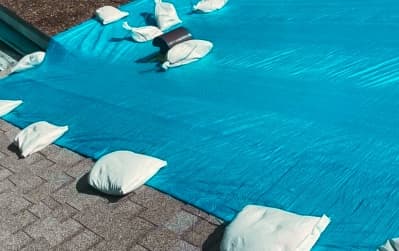
Emergency Roof Tarp Services in Clearwater FL
When storms hit Clearwater, a roof tarp is your first line of defense. Our 24/7 emergency team secures your roof fast, preventing leaks and interior damage while permanent repairs are scheduled. We document every tarp installation for insurance approval and homeowner peace of mind.
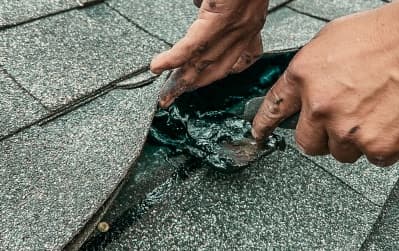
Roof Repair Services for Clearwater Homes
If you’re dealing with roof leaks, missing shingles, or storm damage, our specialists deliver fast, precise repairs that stop damage before it spreads. We use advanced diagnostics to find hidden moisture and offer insurance-ready estimates trusted by Clearwater homeowners.
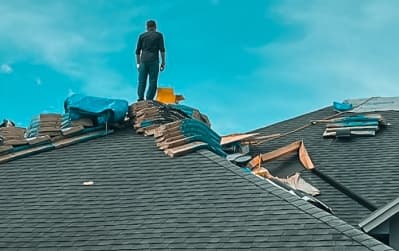
Roof Replacement for Residential Shingle & Tile Roofs
When your roof shows aging, granule loss, or storm-related deterioration, a replacement may be the safest long term option. We remove your old roof, upgrade materials to Florida code standards, and install systems built to withstand Clearwater’s coastal weather.
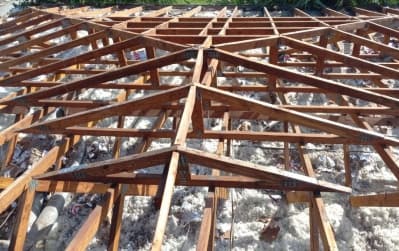
New Roof Installation for Clearwater FL Homes
If it’s time for a new roof, our licensed crew manages the entire process, permits, installation, and final inspection. We install asphalt shingle, tile, metal, or flat systems, all built for Florida’s building standards and Clearwater’s climate.
⭐⭐⭐⭐⭐
What Clearwater Homeowners Say About Us

Veronica Cartagena
⭐⭐⭐⭐⭐

We hired Protect Preserve to fix some damages on our roof and we were very happy with the results. They made what is normally a tedious process a very easy one. Thankful they were trustworthy and timely with the completion of the roof. Would definitely recommend.
Walter Barcelos
⭐⭐⭐⭐⭐
I had an excellent experience with Protect Preserve Roofing. From the first point of contact to the completion of the job, everything was handled with professionalism, efficiency, and care. I highly recommend this company for anyone looking for reliable and honest roofing services.
Vanessa Albuquerque
⭐⭐⭐⭐⭐
The best roofing company in Orlando and the surrounding area! I would give them 5 stars without hesitation. Their team is made up of experienced professionals who truly know what they’re doing. They were punctual, honest, and trustworthy throughout the entire process.
Margaret Renou
⭐⭐⭐⭐⭐
We are extremely satisfied with the work completed on our roof. Everyone was very professional. The work was completed in a timely manner and the quality is excellent. In addition the clean up was well done without leaving nails in our lawn which has not been my experience with other roofers. I would highly recommend.
Naomi Prosper
⭐⭐⭐⭐⭐
I strongly recommend Protect Preserve Roofing. They did an inspection after my house was affected by a 2.0 hail storm and they helped me thought claim process. Now I got a brand new and beautiful roof and I’m even paying less in my insurance premium. I couldn’t be happier.
John Graziano
⭐⭐⭐⭐⭐
I had a massive issue with hail damage on my roof, called insurance and this company was one of the recommended by the insurance, and what a great choice. They were fast, clean and easy to work with.
I recommend to my friends and I had to leave a review.
Great work guys !
Rick Melody
⭐⭐⭐⭐⭐
I’m extremely pleased with my experience with Protect Preserve Roofing. After doing a lot of research and comparing different companies, I’m so glad I chose them. Their team was professional from start to finish, great communication, fair pricing, and impressive attention to detail. The job was completed within the time frame they promised, and the quality of their work…
Greg Guldner
⭐⭐⭐⭐⭐
I just used these guys to replace my roof after the hurricane’s damage and they did an amazing job. They also did a very detailed clean up after the work was done. Tulio kept great communication with me throughout the entire process which gave me the peace of mind and no worries. I would highly recommend them.
Grace Gangapersaud
⭐⭐⭐⭐⭐
It was a pleasure doing business with Protect Preserve Roofing.it was a good experience. I was satisfied with the service done on my roof. I must say that MrTulio Silva and his team did an exceptional job on my roof. I was very impressed. I will never hesitate to recommend to others.
Rosemary Olivira
⭐⭐⭐⭐⭐
I had a great experience with this company from the first contact until they came to inspect my roof. They were knowledgeable, professional and I will most certainly use their service in the future, Definitely recommend it. Great work guys !
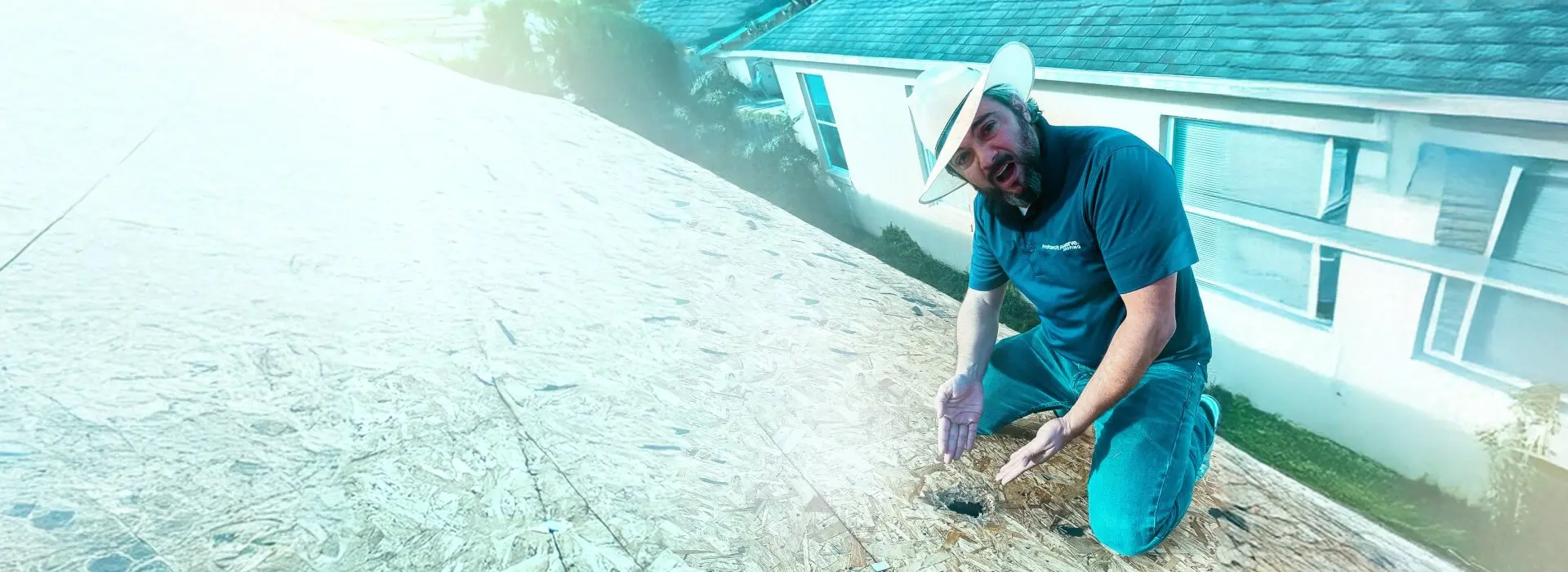

Everything You Need to Know About Roofing in Clearwater FL
Everything You Need to Know About Roofing in Clearwater FL
1) What usually causes roof damage in Clearwater homes?
In Clearwater, most roof damage comes from strong winds, heavy rain, flying debris, and long-term salt air exposure. These factors weaken shingles and flashing faster than many homeowners expect.
2) Should I call a roofer even if the damage looks small?
Yes. Small issues often hide bigger problems underneath. In Clearwater’s humid climate, minor damage can turn into interior leaks and mold quickly.
3) What’s the risk of delaying roof repairs after a storm?
Delaying repairs allows water to spread into insulation, drywall, and framing. This increases repair costs and may affect insurance coverage.
4) How do roofing companies in Clearwater inspect storm damage?
Professional inspections include surface checks, attic inspections, moisture detection, and photo documentation to catch visible and hidden damage.
5) Is emergency roof tarping always necessary after storm damage?
Not always. Tarping is needed when active leaks or exposed areas exist. If damage is contained, immediate repair may be possible without tarping.
6) How long can storm damage go unnoticed in a residential roof?
Weeks or even months. Some leaks only appear after repeated rainfall, which is why inspections are critical after major storms.
7) Can roof damage affect my home’s energy efficiency?
Yes. Damaged roofing allows heat and moisture intrusion, forcing your HVAC system to work harder and increasing energy bills.
8) What makes Clearwater roofing different from inland Florida areas?
Coastal weather brings higher wind loads, salt corrosion, and frequent storms. Roofing systems here require stronger materials and proper installation techniques.
9) How do I know if my roof needs repair or full replacement?
Repairs work for localized damage. Replacement is recommended when damage is widespread, the roof is near the end of its lifespan, or problems keep recurring.
10) Can roofing companies in Clearwater help with insurance documentation?
Yes. Professional roofers provide inspection reports, photos, and estimates that align with insurance requirements and help streamline claims.
11) What happens if my insurance denies part of my roof claim?
You still have options. Detailed documentation and repair assessments can support supplements or alternative repair plans.
12) Are roofing estimates in Clearwater affected by storm season demand?
Yes. After major storms, demand increases. Acting early often results in faster service and better scheduling availability.
13) How soon should I schedule a roof inspection after a storm?
As soon as conditions are safe. Early inspections help prevent secondary damage and provide timely documentation for insurance.
14) Can roof damage reduce my home’s resale value?
Absolutely. Visible damage or unresolved leaks can lower appraisals and raise red flags during home inspections.
15) What roofing materials perform best in Clearwater’s coastal climate?
High-wind-rated asphalt shingles, metal roofing, and properly installed tile systems perform best against wind, rain, and salt exposure.
16) How long does residential roof repair usually take?
Many repairs are completed the same day. Larger storm-related repairs may take longer depending on material availability and weather.
17) Do roofing companies in Clearwater handle permits and inspections?
Yes. Licensed contractors manage permits, code compliance, and final inspections required by local authorities.
18) What should homeowners avoid doing after roof damage?
Avoid climbing on the roof, making temporary DIY fixes, or ignoring interior signs like stains or odors. These actions can worsen damage or cause injury.
19) How can regular inspections help prevent emergency roofing issues?
Routine inspections catch weak spots early, extend roof lifespan, and reduce the likelihood of sudden leaks during storms.
20) Why is choosing a local Clearwater roofing company important?
Local companies understand coastal building codes, storm patterns, and insurance processes, leading to faster response and more accurate solutions.