



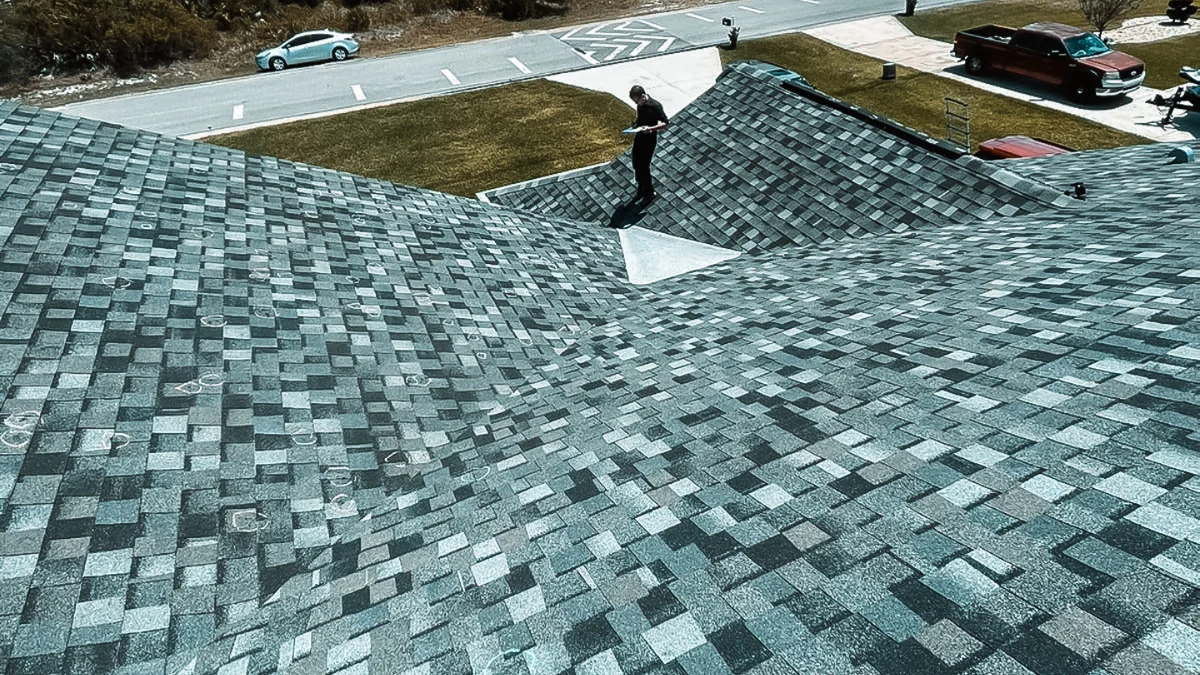


Are roof leaks covered by insurance? It’s a question thousands of homeowners ask each year, often when water is already dripping from their ceiling. But here’s the catch: the answer isn’t always straightforward.
Depending on the cause of the leak, your policy might cover everything… or absolutely nothing. According to the Insurance Information Institute, nearly 30% of denied home insurance claims were related to gradual roof damage, not sudden events. That means if your roof was already showing signs of wear, you could be on the hook for the entire repair.
If you’re unsure, you’re not alone. Many homeowners hesitate to call their insurance provider because they fear rejection or unexpected consequences. That’s why in this complete guide, we’ll break down what kinds of roof leaks are typically covered, the most common reasons claim get denied, steps you need to take right after discovering a leak and when calling a pro before your insurer can actually save you money.
Don’t wait for mold to grow or drywall to collapse. Let’s get into it and yes, we’ll tell you exactly what qualifies.
Table of contents
Are Roof Leaks Covered by Insurance?
Yes, but only in specific situations. The coverage depends on how the leak started. If your roof was damaged by something sudden, like a hailstorm or a fallen tree, your insurance will likely help. However, if the leak happened slowly over time because of wear and tear or lack of maintenance, chances are you’re paying out of pocket.
Let’s get straight to it. Covered by insurance:
- A tree crashes through your roof during a storm.
- Shingles fly off in heavy wind and water leaks inside.
- A fire damages the roof and causes internal leaks.
- Hail breaks tiles or shingles and water seeps through.
Not covered by insurance:
- Your roof is over 20 years old and slowly started leaking.
- You ignored signs of water spots or cracked shingles.
- The flashing around your chimney deteriorated over time.
- You tried a DIY fix that made things worse.
Bottom line: Insurance companies are not repair services. Their job is to cover unexpected events, not damage caused by time, negligence or skipped inspections.
When Does Homeowners Insurance Cover Roof Leaks?
Homeowners insurance covers roof leaks only when the damage comes from an event your policy lists as a covered peril. That’s the keyword here: covered peril. If the cause of the leak is on the list, you’re likely covered. If not, expect a rejection letter.
Common events that usually qualify for coverage
- Windstorms or hurricanes: If strong winds rip off shingles or cause debris to punch a hole in your roof, your insurer will typically pay to fix the roof and any water damage inside.
- Hail damage: Hail can bruise or crack shingles. This damage often leads to leaks that are covered, especially if you spot the signs quickly and report them.
- Falling trees or debris: If a storm knocks a tree onto your house, that’s a sudden and unexpected event. This kind of damage is almost always covered.
- Fire or lightning: Fires can destroy roofing material. Lightning strikes can do the same. These are standard perils covered by most homeowners’ insurance policies.
- Vandalism: Rare, but if someone damages your roof intentionally, your policy may help with the repairs.
Gray areas that need caution
- Heavy rain with no storm damage: If your roof was already weak and water just poured in, insurers may argue the roof failed due to age, not the rain.
- Snow buildup: Coverage depends on your location. In snow-heavy regions, you’re expected to maintain your roof. But if snow causes a collapse, that might be covered.
- Animals: Raccoons and squirrels chewing into your roof? Most policies don’t cover pest-related damage unless it causes a secondary issue, like a leak from chewed wiring that sparks a fire.
Pro tip from Protect Preserve Roofing: Don’t guess, document everything. Before asking “are roof leaks covered by insurance?” and calling your insurer, take clear photos of: The damaged area on the roof, any visible leaks or water stains inside and debris that may have caused the damage (branches, hailstones, etc.).
Situations Where Roof Leak Insurance Claims Get Denied

Let’s walk through the most common situations where claims get tossed out and what you can do to avoid that headache.
- The damage was gradual, not sudden: If your roof leaked because it aged, cracked or wore down over time, your insurer will say it’s your job to maintain it, not theirs to pay for it.
- You didn’t maintain the roof: Homeowners insurance isn’t a maintenance plan. If there’s moss growing, missing flashing or broken tiles that you never repaired, the insurer won’t cover the leak, even if the rain caused it.
- You waited too long to report it: Most policies have time limits. If the leak happened weeks ago and you’re just now filing the claim, they might call it “delayed reporting” and that’s often a no-go.
- The cause was excluded in your policy: Some policies don’t cover certain types of water damage or exclude risks like flooding or pest damage. If a raccoon made a home in your attic and chewed through roofing layers, it’s unlikely your policy will help.
- You tried a DIY fix that made it worse: It’s tempting to throw up a tarp yourself, but if you make it worse by nailing it in or damaging the roof further, the insurer might reject the claim based on “faulty repairs.”
- There’s no visible storm damage: Even if you’re sure a storm caused the leak, the adjuster wants proof. No visible hail marks? No wind-blown shingles? No fallen limbs? They’ll question your story and your claim.
Quick reminder from Protect Preserve Roofing: Insurance companies look for reasons to say no. They want to see sudden, clear, and verifiable damage, not delayed maintenance or guesswork. That’s why you always need to act fast and secure.
What Types of Roof Damage Are Covered by Home Insurance?
Let’s keep it simple: if a storm, fire or accident damages your roof, the insurer steps in. If time, rot or poor maintenance is to blame, they step away. Below is a breakdown of damage types of your policy may cover:
| Type of Event | Example Scenario | Usually Covered? |
| Windstorms | Wind blows off shingles or tiles | Yes |
| Hail | Hail cracks shingles or punches through soft spots | Yes |
| Fallen Objects | Tree limb falls on roof during storm | Yes |
| Fire | Fire spreads through attic and damages roof structure | Yes |
| Lightning | Strike causes fire or physical roof damage | Yes |
| Weight of Snow/Ice | Snow buildup causes roof collapse | Yes (varies by policy) |
| Vandalism | Someone intentionally damages your roof | Yes (must report) |
Not covered roof damage (most common):
| Type of Issue | Why It’s Denied | Covered? |
| Old Roof / Aging | Expected wear and tear, no sudden cause | No |
| Neglect / Poor Maintenance | Failure to repair or inspect known issues | No |
| Leaks from Gradual Deterioration | Built up over time; avoidable with routine checks | No |
| Pest Damage | Animals like squirrels or raccoons chewed through layers | No |
| Improper DIY Repairs | Temporary patches made the situation worse | No |
Quick reminder from Protect Preserve Roofing: Even if your roof damage falls into the “covered” list, your claim can still be denied if you didn’t act fast enough, can’t provide proof or made temporary repairs that worsened the situation. Always take photos immediately, secure the area to prevent more damage (without nailing tarps) and call a pro, like us.
Are Roof Leaks Covered by Insurance Depending on the Location or Insurance Provider?
Yes, both your location and your insurance provider play a major role in whether a roof leak gets covered, how much they’ll pay, and even if you can get insured in the first place. Let’s break that down in plain terms.
Location
Where your house sits on the map changes everything.

- Storm-prone states like Florida, Texas, and Louisiana often have stricter policy rules, more exclusions, or higher deductibles for roof-related damage.
- Northern states might have snow and ice clauses that only trigger if the roof collapses, not if a slow leak happens from thawing.
- Some states allow insurers to use percentage-based deductibles for named storms. That means instead of paying a flat $1,000 deductible, you could be on the hook for 2% of your home’s value – $6,000 or more.
Insurance provider
Let’s say two neighbors get hit by the same storm. One gets a check. The other gets a rejection. Why? Because insurance companies write their policies differently. Some limit roof coverage based on age. Others only cover actual cash value, meaning depreciation hits hard.
Why it matters right now
If you’re in a high-risk area or your provider has strict rules, you need to be more proactive. That means faster inspections, smarter documentation and not waiting until the ceiling starts dripping. It also means you shouldn’t trust general advice you read online because your case might be different just because of your zip code.
In this case you to review your policy before you need it, call your agent and ask direct questions about roof coverage, keep a paper trail (photos, receipts and repair logs) and if you’re already dealing with a leak, call a pro.
My Roof Is Leaking: What Should I Do First?
Here’s exactly what to do when your roof starts leaking:
- Protect what’s inside: Move furniture, electronics and valuables out of the way. Use buckets or towels to contain the water. Your insurance won’t replace your TV just because you were slow to react.
- Document the damage: Grab your phone and take photos of the leak inside (ceilings, walls, floors), where you think it’s coming from on the roof and anything outside that could have caused it (fallen limbs, hail, debris).
- Do not call the insurance company yet: Yes, you read that right. If you file too early, your claim could get flagged or denied. Even asking questions can sometimes be recorded as a “claim event” in your file. This is where a lot of people go wrong.
- Call a roofing expert first: Your first call should be to a professional – like us – who can inspect the damage, confirm the cause and tell you whether it’s claim-worthy.
- Don’t nail down a tarp yourself: It’s tempting, but unless you know exactly what you’re doing, you could cause more damage and kill your claim. Nails and screws can void your warranty or trigger a denial from your insurance. Instead, let pros handle it.
- Save receipts and records: Even temporary repairs or inspections should be logged. Insurers want proof that you acted fast to prevent more damage.
Can Emergency Roof Tarps Be Covered by Insurance?
Yes, emergency roof tarps can be covered by homeowners’ insurance. However, there’s a catch: it depends on how and why the tarp was used and who installed it. Here’s when tarp costs are often covered:
- A tree branch breaks shingles during a storm.
- Hail causes a roof puncture and rain gets inside.
- A fire partially damages the roof, leaving it exposed.
- A major storm is still active, and repairs can’t happen immediately.
In these situations, a professional tarp installation helps you preserve the damage until a full repair can begin and insurers like that.
When tarp costs might not be covered:
- The leak happened from an old roof or poor maintenance.
- There was no sudden event (just time, wear or rot).
- You installed the tarp yourself and caused more damage.
- You didn’t act fast, and the damage got worse.
In short, if the insurance company decides the damage was preventable or the tarp wasn’t needed, they can deny the reimbursement.
Tarp pricing
Professional emergency tarp installation typically costs between $800 and $1,600, depending on:
- Roof height.
- Pitch/steepness.
- Size of the damaged area.
- Weather conditions at the time of service.
This isn’t just a piece of plastic and some rope; it’s an urgent protection step that can save thousands in additional damage.
Never nail or screw tarps into the roof
Using nails or screws may:
- Void your roof warranty.
- Create new leaks.
- Give your insurer a reason to deny the claim.
- Lead to long-term structural issues.
Only in specific cases, like extreme pitch or a roof that’s already beyond saving, should a tarp be fastened that way. And even then, it should only be done by professionals.
Bottom line: Emergency tarps can be covered, but only if the damage itself is covered and the installation is handled properly. Don’t risk doing it wrong. Call the team at Protect Preserve Roofing, fast, professional and always claim-friendly.
Are Roof Leaks Covered by Insurance: How to File a Claim
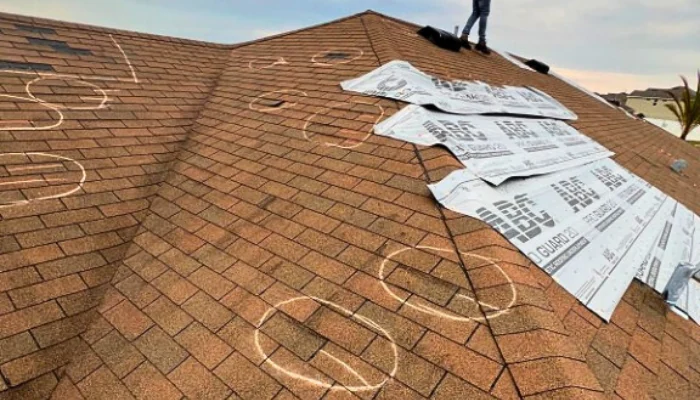
Filing a roof claim can feel overwhelming, especially when your ceiling’s already dripping. Therefore, if you follow the right steps, you’ll avoid delays, denials and stress.
Step one
Document the damage immediately – Before you call anyone, grab your phone and take clear photos and videos of:
- The inside damage (ceilings, walls, floors).
- The visible source of the leak (roofline, attic, vents).
- Any external signs (shingles missing, fallen trees, hail, etc.).
Step two
You need to prevent further damage.Insurers expect you to protect your home while you wait for repairs. That means:
- Moving furniture out of wet zones.
- Containing water with buckets or towels.
- Installing a tarp but never using nails or screws.
Step three
Get a professional roof inspection. Do not guess what caused the leak. Let a licensed roofer evaluate it first. Why?
- They’ll confirm whether it was caused by a covered peril.
- They’ll give you photos and notes you can use in the claim.
- They’ll help prevent you from filing a claim that’s bound to fail.
Step four
Always review your insurance policy: Look at these details in your policy:
- Deductible amount.
- Covered perils (wind, hail, fire, etc.).
- Exclusions (age, poor maintenance, pest damage).
- Claim filing window (some have a 14-day limit).
Step five
You need to contact your insurance company. You can typically file online, through an app or by phone. When you do, be ready to provide:
- The date/time of the incident.
- A description of what happened.
- Photos and documentation.
- Contact info for the roofer who inspected it.
Step six
Meet the adjuster prepared when they visit your home:
- Have all photos, receipts, and inspection notes printed or ready to share.
- Point out the tarp (if one was installed).
- Be honest, but don’t assume blame.
Step seven
You also need to follow up and track the claim by email, phone call and conversation. Ask for claim updates in writing. Push back (politely) if something feels off.
Pro tip: The claim process doesn’t have to be confusing but doing it wrong can cost you. Don’t roll the dice. Call Protect Preserve Roofing for help.
How to Avoid a Denied Roof Leak Claim
Most denials don’t happen because the damage was fake. They happen because the claim wasn’t filed properly, or the situation didn’t meet the policy’s fine print. Here’s how to avoid that.
- Act fast: The longer you wait, the harder it is to prove the cause of the leak. So, take photos the moment you see water stains or dripping.
- Don’t file until you know the cause: If you call your insurer before you confirm what caused the leak, you risk creating a claim history, even if it’s later denied. Get a pro inspection from Protect Preserve Roofing first.
- Avoid DIY repairs: Trying to help is great. Making it worse? Not so much. So, never nail or screw a tarp into your roof. It can void coverage.
- Keep all documentation: Insurers love paperwork. If you don’t have proof, they don’t pay. Keep photos and videos, receipts for emergency services and communication logs with insurance.
- Know your policy: Every insurance policy is different. You might have exclusions based on roof age, material type, or even ZIP code. Always ask your agent or let Protect Preserve Roofing translate the jargon.
- Be honest but stay in control: Don’t guess or exaggerate. And definitely don’t say, “I think this started a few months ago…” unless you’re sure. Stick to what you know and what you can show.
Why Some Homeowners Regret Filing for a Roof Leak?
Filing a claim sounds like the right move, but sometimes, it can backfire. We’ve seen it happen too many times: homeowners rush to call their insurer and a few weeks later… they wish they hadn’t. Here’s why:
- The claim gets denied but still hits your record: Even if your claim is denied, it still goes into your CLUE report – the database insurers use to track your history. So, your premium goes up or worse: your policy gets flagged.
- The repair cost is less than the deductible: Imagine this: your deductible is $1,500. The approved roof repair costs $1,200. The result: you get zero payout and now have a claim on file.
- The insurer blames you for the damage: Insurers love the term “lack of maintenance.” If they think you should’ve caught the problem earlier – even if that’s not fair – your claim might not just be denied. It could be used against you later.
- The payout doesn’t match the real cost: You file, wait and finally get an approval, but it’s way less than you expected, because the insurer uses actual cash value instead of full replacement, they subtract depreciation for your older roof and cap roof coverage or exclude some materials.
- You could’ve fixed it for less: Small repairs often cost less than your deductible. However, once you file a claim, it’s on your record for 5 to 7 years, even if you cancel it.
Quick reminder from Protect Preserve Roofing: Filing a claim can save you, but only if the damage is covered, the cost is worth it, and the process is handled the right way.
Conclusion: Need Help with a Roof Leak? Trust Local Experts
Now that you know the answer for “are roof leaks covered by insurance”, you always need to remember that a leaking roof isn’t just an annoying drip; it’s a warning sign. And the longer you wait, the worse (and more expensive) it gets. But here’s the part most homeowners miss: calling your insurance first may not always be the right move.
So, here’s the best recommendation for you: let the experts from Protect Preserve Roofing take a look first. We help homeowners make smart, confident decisions before you ever dial the insurance company.
Your home deserves a roofing partner you can trust. Whether you’re dealing with sudden storm damage or you’re not sure what caused that ceiling stain, don’t go at it alone. Ready for peace of mind?
- Call us now for a no-pressure roof inspection.
- Get a quick estimate before you file a claim.
- Protect your home and your insurance record by scheduling a free visit.
Serving your neighborhood with integrity, urgency, and real expertise.


Leave a Reply