





Updated for 2026: Homeowners across Florida are seeing granule loss due to stronger UV exposure and seasonal storms. Here’s how to tell if it’s serious.
Shingle granule loss might seem like a minor roofing issue, just some loose sand-like particles scattered around your driveway or clogging your gutters. However, excessive granule loss on roof shingles can signal deeper structural concerns that could shorten the lifespan of your roof and lead to costly repairs if left unchecked.
Did you know that according to the National Roofing Contractors Association (NRCA), granule loss is among the top five early indicators of roof failure in asphalt shingles across the U.S.?
So how do you know if what you’re seeing is part of a natural aging process or the sign of a roof in real trouble? This guide was created for homeowners just like you, those who want clear answers, not fluff. Backed by roofing experts and recent studies, we’ll walk you through exactly when granule loss is normal, when it’s a red flag, and what you can do about it.
Don’t wait for leaks or insurance cancellations to take action. Learn to spot the signs early and protect your investment now.
Last updated: January 13, 2026
What Is Shingle Granule Loss and Why Does It Matter?
You step outside after a storm and notice tiny sand-like bits scattered near your downspouts or stuck inside your gutters. At first glance, they don’t seem like a big deal. But they are. That gritty stuff? It’s called shingle granules and when they start falling off, it’s called shingle granule loss.
What are granules exactly?
Granules are the rough outer layer on asphalt shingles. They’re made from crushed minerals, usually ceramic-coated, and they’re added to each shingle for a few key reasons:
- Block UV rays and reduce sun damage.
- Add fire resistance.
- Add color and texture to the roof.
- Shield the asphalt layer underneath from rain, wind and wear.
In other words, granules are the armor your shingles wear to survive the weather. Without them, the roof’s core is exposed and things start to go downhill fast.
What is shingle granule loss?
Shingle granule loss happens when those protective granules start coming loose and falling off your roof. A little bit of granule shedding is normal, especially right after a new roof is installed. Some granules are loose from the factory and come off during installation or the first rain.
Therefore, if you’re noticing piles of granules in the gutters or bald patches on your shingles, that’s not normal anymore. That’s a warning sign.
Why does it matter so much?
Think of granules like the skin on your roof. When it starts peeling off, the roof becomes vulnerable to:
- UV damage, which dries out the asphalt layer.
- Cracks, from heat, cold, and water penetration.
- Leaks, that damage insulation, ceilings, and walls.
- Mold and rot, especially in humid areas.
- Insurance headaches, since pre-existing damage isn’t always covered.
Granule loss can cut years off your roof’s life if it goes unchecked. And let’s be honest, roof replacements aren’t exactly cheap, especially if the damage could’ve been prevented. Excessive granule loss is one of the top signs that a roof may be nearing the end of its service life. The earlier it’s caught, the better your chances of stopping it from becoming a budget-busting issue.
Quick reminder: If you’ve already seen a pile of granules near your downspout, it might be time for a quick inspection. And yes, Protect Preserve Roofing can handle that for you fast, safe and no guesswork involved.
Is Granule Loss on Shingles Normal?
Yes, sometimes. But like that uncle who goes overboard at the Sunday barbecue, sometimes the roof goes over the top too. Here are some normal situations:
- Right after installation: New shingles often have excess granules left from manufacturing.
- After mild storms or wind: A little movement happens. As long as it’s not consistent, you’re okay.
- Over 10+ years of age: Older roofs naturally lose granules as they reach their final rounds.
So, no panic. These signs mean your roof is living a full, honest life. Furthermore, there’s a difference between some shedding and your roof going bald. If you start seeing bare spots on the shingles or your gutters look like they’ve caught a beach, it’s time to pay attention.
Red flags to watch out for:

- Bald patches on the shingle surface.
- Granules clumping around downspouts.
- Gutters filling up with dark, gritty residue.
- Granules showing up frequently, not just after storms.
- Spots that look shinier than others (the asphalt layer showing through).
Once the granules are gone, there’s no way to put them back. The protection is gone, and the shingle is exposed to sun, moisture and damage.
What about new roofs? Should you worry?
Great question. If your roof was just installed and you’re seeing some granules around, breathe tranquilo. That’s totally expected. Here’s the deal:
- The manufacturer adds more granules than needed, knowing some will come off early.
- This initial shedding usually stops after the first few rains.
- Unless you’re seeing actual damage or bald patches, you’re in the clear.
Just keep an eye out. If it continues for weeks or the amount is heavy, call a roofing expert for a quick checkup.
Bottom line: If you’ve seen signs that your roof’s shedding more than it should, don’t wait.
Protect Preserve Roofing is ready to inspect, explain and act before the problem grows.
When Granule Loss Becomes a Real Problem
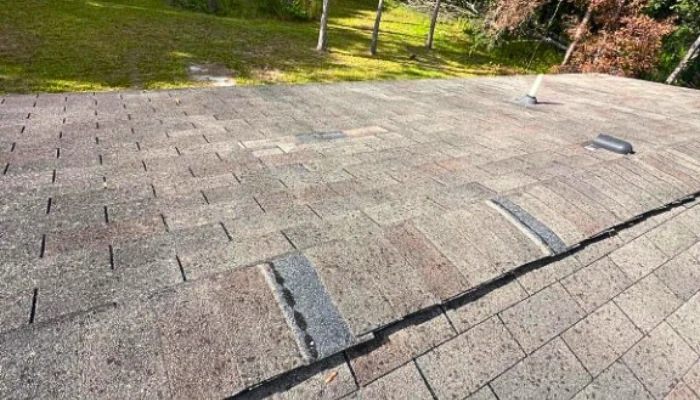
Granule loss becomes a real problem when it stops being casual and starts looking like your roof is throwing in the towel.
Do you notice more grain than usual near your gutters? Do you spot those bald spots in the corners of your roof? Or do you feel like you’re shoveling sand out of your yard every week? Then, my friend, you have a warning sign.
What does excessive granule loss look like?
If your roof could talk, it would say, “I’m getting old up here!” But since it can’t talk, it shows, and it shows like this:
- Shingles with shiny spots (that’s exposed asphalt).
- Dark streaks or spots in previously uniform areas.
- Granules accumulating at the bottom of gutters and in the corners of the house.
- Areas of the roof that look different from the rest.
- And of course, the classic: pockets of granules on the ground after rain.
When the roof loses too many granules, it loses its ability to protect itself against:
- UV rays.
- Extreme temperatures.
- Impact of hail or strong winds.
- And most importantly: water infiltrating the home’s system.
What can happen if you ignore it?
Let’s be honest, if you ignore it, you’ll pay more later. Here’s what can happen:
- Internal leaks, starting small and eventually destroying ceilings and paint.
- Mold, which not only causes damage but is also harmful to your health.
- Compromised thermal insulation, meaning your air conditioning is struggling to keep the room cool.
- And the most common: uninsured expenses, because the insurer will say you took too long to act.
And yes, this happens all the time. Most homeowners’ insurance policies don’t cover leaks caused by neglected maintenance. If your roof is leaking granules in droves and you’re still wondering if it’s time to call someone… The answer is: it’s past time.
How to know it’s crossed the line
Here are clear signs that the problem is serious:
- Your roof is over 15 years old.
- You’ve had recent repairs, yet it’s still leaking granules.
- Stains have appeared on the interior ceiling of your home.
- The temperature inside your home has changed without you touching the thermostat.
- You’ve noticed shingles starting to curl or lift at the edges.
These signs indicate that the structure is being affected and once water gets in, the clock starts ticking, and the cost of the solution goes up with it.
Quick reminder: Protect Preserve Roofing does this with safety, experience and clarity. No fuss, no budget scares and with the attention your roof deserves. No need to drill or screw tarps, okay? We respect insurance regulations and protect your home’s structure.
What Causes Granule Loss on Roof Shingles?
Let’s walk through the most common causes of granule loss on roof shingles, so you know what’s normal, what’s not, and what to look out for.
- Natural aging: As time passes, your shingles take the hit from sun, rain, wind and even temperature swings. These forces slowly loosen the outer granules. If your roof is 10 to 20 years old, it’s normal to see some light granule loss here and there.
- Hail damage: Hail might be small, but it hits hard. Even pea-sized hail can dent your shingles and knock granules loose. Signs of hail-related granule loss:
- Patches of exposed black asphalt.
- Granule buildup after a storm.
- Surface texture that feels rough or inconsistent.
- Tree branches and foot traffic: Shingles aren’t built for friction. Even soft shoes can wear them down. And tree limbs? They act like sandpaper when they scrape. The more contact, the faster your shingles break down. If you’ve had recent roof access or a storm knocked a branch loose, check for scattered granules or dull spots where color used to be uniform.
- Poor installation or low-quality materials: If your shingles weren’t installed properly, you’ll likely see granule loss way sooner than expected. Common causes include:
- Misaligned shingles or improper sealing.
- Wrong nail placement.
- Using products that don’t match the roof’s slope or climate needs.
- Pressure washing: High-pressure water removes granules fast. Not just dirt. Once they’re gone, they’re gone. Want a clean roof? Use soft-wash methods with the right chemicals. Or better yet, leave it to pros who know how to clean without causing damage.
- Water pooling on low-pitch roofs: When water sits for too long, it starts to loosen the granules. Over time, these spots wear faster than the rest of the roof. Check low-slope areas after storms or snow melt. Look for standing water and dark patches where granules are missing.
Can You Fix Granule Loss on Shingles?
Yes… and no. It depends on what “fix” you have in mind. If the granule loss is localized, say, just one or two shingles, and the rest of the roof is still healthy, you might not need a full replacement.
In cases like this, a shingle replacement or minor patch can solve the problem. A roofing professional can remove the affected shingles and swap them out with matching ones. Here’s when this makes sense:
- The roof is relatively new (under 10 years).
- The damage is small and contained.
- The underlayment is still intact and dry.
Still, even a “simple fix” needs the right touch. If the new shingles aren’t installed properly, you could create more problems than you solve. That’s why it’s not a job for a weekend YouTube tutorial.
Therefore, if the granule loss is widespread, especially across the slopes where sunlight hits hardest, a repair won’t cut it. Trying to patch large sections of granule loss is like replacing the tread on a bald tire with glue. Looks okay for a second and fails fast. Here are clear signs it’s time to replace:
- Bald spots are visible from the ground.
- Granules keep washing out after every rain.
- The roof is 15+ years old.
- You’re seeing other signs of wear (like curling, cracking or moss).
And here’s something most people don’t know: Granule loss is often the first sign of deeper damage. By the time you see it clearly, the clock is already ticking.
What about sealants or coatings?
There are products out there that claim to extend shingle life with a protective coating. Sounds good, right? Not always. Most coatings don’t replace lost granules; they just try to slow future loss. And if applied over already damaged shingles, they can trap moisture underneath, leading to rot or mold.
So, start with an inspection, understand the extent of the loss and don’t assume it’s fixable just because it “looks okay”.
How to Identify Granule Loss Without Getting on Your Roof
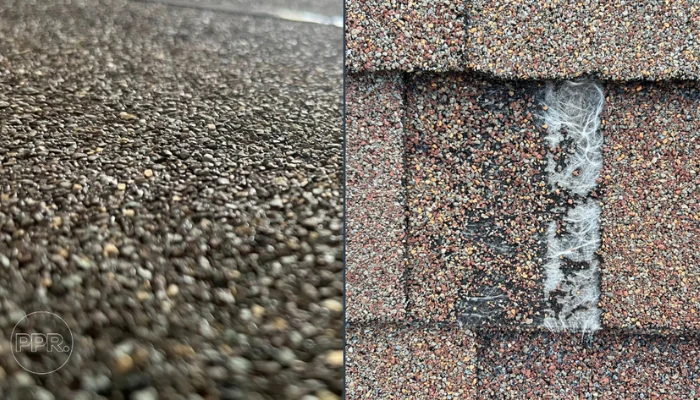
You can spot granule loss from the ground and from a few other safe spots around your home. No climbing required or risky balancing acts. Here’s how to do it:
- Check your gutters and downspouts: After a decent rain, take a look inside your gutters or where your downspouts drain. If you see dark, sand-like debris or gritty piles on the ground, that’s a classic sign of shingle granule loss.
- Look at the splash zone: Granules tend to wash off shingles, run down the gutters and settle near where the water exits. If you spot gritty black piles near the drain spouts or in flower beds, take note.
- Observe from the yard: Stand back and scan your roof with your eyes. Here’s what to look for:
- Bald patches where shingles look smoother or shinier.
- Color changes on parts of the roof that used to look uniform.
- Streaks or uneven tones that weren’t there before.
- Check your driveway and patio after storms: After a storm, take a walk outside. Look at flat surfaces near the house. If you notice gritty residue, black specks or sand-like streaks, that’s likely your shingles talking.
- Watch your ceilings and walls inside: If granule loss goes unnoticed, the next thing to follow is usually a leak. That shows up as:
- Stains on your ceiling.
- Peeling paint.
- Musty smells in certain rooms.
- Damp or soft spots in walls.
Quick reminder: Climbing a roof to check for granule loss is like opening a car hood when the engine’s steaming, you might cause more harm than good. Protect Preserve Roofing has professionals who can inspect everything safely, with the right tools and without risking your safety or your roof’s warranty.
How to Prevent Future Granule Loss
While some wear is inevitable, there’s plenty you can do to slow it down and protect your shingles for the long haul. Let’s walk through what actually helps and what doesn’t:
- Start with high-quality shingles: If you’re planning a roof replacement, invest in reputable, long-lasting asphalt shingles that meet or exceed local weather standards. Some shingles even come with impact resistance ratings (Class 3 or Class 4) to better handle hail and debris.
- Hire experienced roofing professionals: Misplaced nails, improper sealing and shortcuts during installation can lead to premature granule loss. That’s why it pays to work with licensed pros who know the job inside and out.
- Trim trees and remove overhanging branches: Regularly trimming trees near your roof reduces friction, prevents direct impact and cuts back on debris buildup that traps moisture (which can weaken granules over time).
- Clean your gutters regularly: That standing water adds weight, increases moisture and can loosen granules over time. Clean them out at least twice a year or more often if you have trees nearby.
- Avoid pressure washing your roof: Pressure washers strip granules fast. It might make your shingles look cleaner, but you’ll be removing the layer that protects your roof. Use a soft-wash system with a low-pressure sprayer and proper cleaner.
- Address roof drainage problems: Fixing pitch problems, redirecting water flow, or even adding small crickets behind chimneys can make a major difference in longevity.
- Schedule routine inspections: Roof inspections once a year (or after major storms) can catch granule loss before it becomes a leak, identify areas at risk and document condition for insurance, if needed.
Shingle Granule Loss Repair Options: Cost & Recommendations
Let’s walk through your options, what they really cost and how to make the smartest call for your home and your wallet.
First, if the granule loss is limited to a few shingles, or one area of the roof, a spot repair may be all you need. Estimated cost:
- $250 to $600, depending on slope, access, and location of damage.
- Includes labor, materials and debris removal.
It works best when the roof is under 10 years old, the damage is from a specific event (like wind or hail) and the rest of the shingles are still intact.
However, if granule loss is showing up across one side of the roof or in several areas, a partial replacement may be necessary. Estimated cost:
- $1,600 to $4,000, depending on total area, shingle type, and roof pitch.
It’s a smart choice when the damage is too extensive for a patch, but not global, the roof is nearing the middle of its lifespan and insurance may cover the affected slope only.
Now, when granule loss is visible across the majority of your shingles, it’s time to stop patching and start planning. A full replacement is a larger investment upfront, but it restores your roof’s protection, resale value, and long-term peace of mind. Estimated cost (asphalt shingle):
- $7,000 to $14,000 on average, depending on:
- Roof size (square footage).
- Pitch (steeper = more work).
- Access (height, layout, obstacles).
- Material grade and warranties.
Emergency protection
If you’re dealing with active leaks or severe granule loss and rain is coming, you may need an emergency tarp installed. But never nail or screw a tarp directly into your roof unless there’s no other option. Doing so could void your insurance and cause more damage.
Protect Preserve Roofing uses weighted sandbag systems and professional tie-downs whenever possible, protecting your roof without harming it. Tarp installation cost range:
- $800 to $1,600, depending on:
- Roof pitch (steep = harder to secure).
- Height and access.
- Weather urgency.
- Extent of damage covered.
Quick reminder: Want a real estimate, not a guessing game? Protect Preserve Roofing offers on-site inspections, fast quotes and honest advice.
Conclusion: Don’t Let Granule Loss Catch You Off Guard
Shingle granule loss isn’t just cosmetic; it’s a warning sign. Left unchecked, it can lead to leaks, mold, insulation damage and insurance denial. But caught early? It’s manageable, affordable and preventable. You now know:
- What granule loss looks like.
- Why it happens.
- When to worry.
- And most importantly, what to do about it.
The next step is simple: don’t wait, because once moisture gets in, everything else gets more complicated and more expensive. Whether you need a quick inspection, a tarp installed the right way or a second opinion before filing that insurance claim, we’ve got your back.
Protect Preserve Roofing is trusted by homeowners who want it done right the first time.
- Fast, safe inspections.
- Real answers, no scare tactics.
- Emergency tarp service with no roof damage.
- Honest pricing and work that lasts.
Schedule your inspection today and let our experts take the pressure off your shoulders and off your roof. You can also get a quick estimate for a roof job with us. Because when your shingles start falling apart, you need a team that won’t.
FAQ: Shingle Granule Loss
A small amount is normal, especially after a new roof install. But if you see bald patches, piles of granules, or frequent buildup, it’s time to act.
No. There’s no DIY fix for granules. If it’s a small area, a professional can replace shingles. If it’s widespread, replacement is usually best.
It varies: Minor repairs start around $250. Full replacements can reach $14,000. Emergency tarp installs range from $800 to $1,600.
Tarps don’t fix granule loss but help prevent leaks. Never nail tarps into your roof. Our team secures tarps with sandbags to avoid more damage.




Leave a Reply