





Fibreglass flat roof problems can seem minor at first glance. However, when left untreated, they often evolve into costly structural issues that jeopardize your entire property.
Over 70% of fibreglass roof failures are directly linked to poor installation or lack of maintenance; that’s right, according to a recent report from the UK’s Flat Roofing Association, even the most durable GRP systems can suffer from cracking, leaking and surface degradation if not correctly installed or regularly maintained.
So, whether you’re already dealing with pinholes and ponding or you’re simply researching the best way to extend your roof’s lifespan, this guide will walk you through the most common problems, their root causes and expert-backed solutions.
Ask yourself: Is your roof just aging or warning you that it’s time to take action? Let’s uncover the answers before minor issues become major expenses.
Understanding Fibreglass Flat Roof Construction
Fibreglass flat roofs are built using Glass Reinforced Plastic, also known as GRP. It’s the same kind of material used in boats and cars: tough, waterproof and long-lasting. When applied to a roof, it creates a seamless, watertight layer that’s designed to keep the elements out.
Sounds solid, right? It is, if it’s installed correctly.
What are the main components?
Let’s break it down. A typical fibreglass flat roof is made of:
- Decking Board – Usually OSB3 (Oriented Strand Board), it’s the base layer attached to the structure of the roof.
- Fibreglass Matting – A layer of chopped strand mat laid over the deck.
- Resin – Applied over the mat to harden and bond everything together.
- Topcoat – A colored, weather-resistant finish that seals the surface.
Each layer needs to be applied carefully. If one step is rushed or skipped, the roof’s lifespan can shrink fast.
Why does construction quality matter?
Here’s the catch: most fibreglass flat roof problems start with poor construction. A few examples:
- Not leaving enough expansion gaps? You’ll get cracks.
- Skimping on resin or topcoat? Hello, leaks.
- Cheap decking? Expect sagging or water pooling later.
While fibreglass is best for flat or low-slope roofs, it still needs a slight incline – called a fall – so water can drain properly. No slope? You risk ponding water and future leaks.
Quick reminder from Protect Preserve Roofing: A fibreglass flat roof is only as good as the hands that build it. If you’re dealing with issues today, there’s a good chance the problem started on day one of the installation.
What Are the Most Common Fibreglass Flat Roof Problems?
Even though GRP (fibreglass) roofs are known for being strong and low maintenance, they’re not bulletproof. When problems show up, they usually follow a few patterns. Let’s break them down.
Cracks and surface fractures
This is the #1 issue that haunts GRP roofs and it’s not just about age. Most cracks happen because of:
- Bad installation (especially poor edge spacing).
- Temperature changes (expansion and contraction).
- Walking on the roof without reinforcement.
Small cracks might look harmless, but water sees them as open doors. And once water gets in, it’s game over for the layers underneath.
Leaks and water ingress
You know that dreaded drip-drip in the attic during a storm? It’s a common sign your GRP roof is compromised. Leaks often start at:
- Poorly sealed edges.
- Thin resin layers.
- Overlapping joins that weren’t rolled properly.
What’s worse? You won’t always see the leak. It might start small and creep behind walls or insulation for weeks before showing itself.
Ponding water (flat roof’s silent enemy)
Water that just sits there after a rainstorm? That’s ponding and while it might seem like a puddle, it’s more like a warning light. Flat roofs should always have a slight slope. Without it, you’ll get standing water, which leads to:

- Weakened topcoat.
- Material fatigue.
- Extra weight on the structure.
Over time, ponding causes dips in the surface. And guess what sits in those dips? More water.
Pinholes (tiny holes, big problems)
These aren’t cracks. They’re microscopic holes in the topcoat that happen when:
- The resin was applied too thin.
- Air bubbles got trapped during curing.
They’re sneaky. You might not even notice them until it rains, and you spot damp spots below. Pinholes often lead to slow leaks that rot wood decking from the inside out.
Alligatoring
If your roof surface looks like crocodile skin, that’s alligatoring. It means the topcoat has dried out and lost flexibility. This usually happens when:
- The roof has aged past its expected life.
- UV exposure breaks down the resin.
- The topcoat was too thin or poorly mixed.
Once this sets in, it’s not a repair job; it’s a full roof replacement moment.
Noise issues (especially in Summer)
Thermal expansion makes fibreglass move. If the decking and resin don’t flex together, you’ll hear every shift. It’s not always a damage issue, but it is annoying and over time, it can signal underlying tension in the structure. Special expansion joints or flexible trims during installation can reduce this. If you’re already hearing the noise, get it checked.
Fibreglass Flat Roof Problems: The Leaking
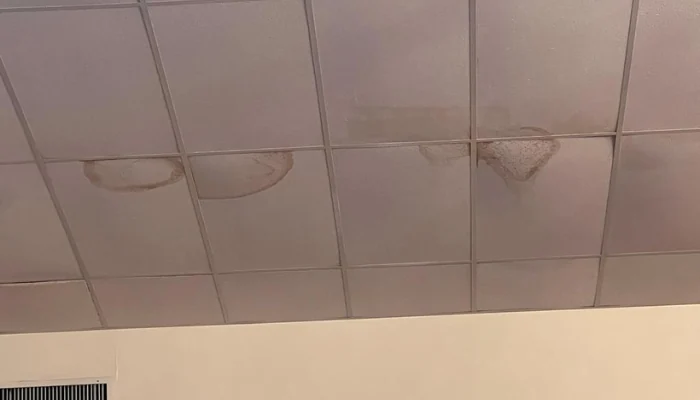
Let’s be honest, nothing ruins your day like finding a leak in your ceiling. One moment you’re making coffee, the next you’re grabbing buckets. A leaking fibreglass flat roof might start as a slow drip, but it rarely ends that way.
Why do fibreglass roofs leak?
Even though fibreglass is built to be watertight, leaks still happen. And when they do, it’s usually because something went wrong during installation or maintenance. Here are the most common reasons:
- Cracks in the topcoat: Often from thermal expansion, poor spacing or age.
- Pinholes: Tiny air bubbles or thin resin layers that let moisture in.
- Edge lifting: If the trim wasn’t sealed right, water creeps’ underneath.
- Ponding water: Sitting water can weaken the surface and find a way through.
- Improper joins or overlaps: Bad resin work creates weak spots.
Sometimes, the leak isn’t even where you see the water inside. It travels under layers and shows up far from the entry point.
How to spot a leak (early)
Not every leak makes itself obvious. Before the ceiling starts dripping, look out for:
- Dark stains on your plaster or drywall.
- Damp smells in attic spaces.
- Warped paint or bubbling under the surface.
- Mould growth (especially in corners).
Don’t wait for it to become a waterfall. The earlier you act, the cheaper it gets.
Best way to fix a leaking fibreglass roof
Step one: find the actual source. Not where it’s dripping inside, but where water is getting in on the roof. Here’s a simple way:
- Wait for dry weather.
- Get on the roof (safely).
- Look for cracks, flaking, pinholes, or edges peeling up.
- Run a hose lightly over areas one at a time. See where water starts coming in.
Once you’ve found the weak spot:
- Clean the area thoroughly.
- Sand down the damaged surface.
- Apply a new layer of resin, then a fresh topcoat.
- Make sure it cures completely before it rains again.
If the leak is big or there are multiple entry points, you may need to re-coat the entire section. And if the decking underneath is soaked or rotting? That section must be removed and rebuilt, with no shortcuts.
What not to do
Let’s clear this up once and for all:
- Don’t patch with silicone — it peels fast and makes future repairs harder.
- Don’t screw or nail tarp covers into the roof — this can void your insurance and cause more damage.
- Don’t ignore a “slow leak” — it’s just a fast leak in disguise.
Call in the pros (before it spreads)
A small leak today can:
- Rot your wooden deck.
- Rust your nails and fittings.
- Invite mould into your insulation.
- And yes, ruin your weekend.
If you’re unsure where the leak is coming from or how deep it goes, don’t roll the dice. Protect Preserve Roofing provides fast, expert inspections that stop the problem before it spreads.
Cracks, Alligatoring and Surface Damage Explained
Surface and cracks damage aren’t just ugly, they’re the first signs that your roof’s defense system is breaking down.
Cracks
Cracks don’t just show up for fun. They’re a sign that something’s under pressure, literally. Most cracks in fibreglass roofs come from:
- Thermal expansion: Heat during the day, cool at night. Fibreglass expands and contracts constantly.
- No edge gaps: If the boards were installed without spacing, they press against each other and crack.
- Cheap materials: Thin resin, bad topcoat, or rushed application make it worse.
- Heavy foot traffic: These roofs aren’t made to be dance floors.
At first, cracks may look like hairlines. But over time, they widen, water gets in and the damage spreads.
Alligatoring
Alligatoring is exactly what it sounds like. The surface of the roof starts to crack and curl like reptile skin. Why it happens:
- The topcoat has aged and dried out.
- UV rays have broken down the protective layer.
- Moisture got trapped beneath the surface.
- The roof is nearing the end of its useful life.
This isn’t just cosmetics. Alligatoring means your roof is losing flexibility and when that happens, it can’t handle weather stress.
Other surface issues to watch for
Not all surface damage fits neatly into the “crack” or “alligator” category. Here are a few more red flags:
- Blistering: Bubbles on the surface mean trapped air or moisture.
- Flaking: Pieces of topcoat peeling off like paint.
- Delamination: Layers separating from each other, big trouble if ignored.
All of these can lead to rapid deterioration if left untreated.
Quick reminder from Protect Preserve Roofing: Cracks = warning signs, alligatoring = aging and hardening and surface damage = time to act, not time to guess. And most of it? Preventable, with the right installation and regular checks.
Pinholes in Flat Fibreglass Roofing: Tiny Holes, Big Risks
Pinholes are microscopic holes in the roof’s surface. They’re often too small to see with the naked eye, but they let water in like a welcome mat. They usually form during installation, when:
- The resin is applied too thinly.
- Air bubbles aren’t rolled out properly.
- The topcoat dries too fast.
- Weather conditions (like too much heat or humidity) mess with curing.
Why are pinholes a big deal?
At first, they might not seem like much. After all, it’s not a crack or a hole you can stick a finger in. But here’s what they actually do:
- Let in moisture silently.
- Soak into the decking below.
- Rot the wood layer from the inside out.
- Cause mold, swelling, and structural weakness.
And because they’re hard to detect, you usually find out after the damage has already spread.
How to identify pinholes?
The tricky part? Most homeowners only realize something’s wrong when:
- They notice a damp ceiling.
- They smell musty air.
- Paint starts bubbling or peeling indoors.
If you’re inspecting your roof, you can sometimes spot pinholes by:
- Running water over the surface and looking for microbeads.
- Feeling soft spots or rough texture with your hand.
- Using a flashlight at an angle to highlight imperfections.
Still, many of these signs are subtle. Unless you’re trained you’ll miss them.
How to fix pinholes
There’s only one way to fix pinholes properly: resurface the affected area. Here’s the process:
- Identify the affected section, not just one pinhole, but the whole weakened zone.
- Sand it down to remove the flawed topcoat and any loose fibres.
- Clean it thoroughly, dust, moisture, oil, everything must go.
- Apply fresh resin to seal the area.
- Finish with a new topcoat, matching the original colour if needed.
If done right, that section will be good as new. But if you just smear on a sealant or patch, it’s like covering a rust spot with tape. It’ll look okay until the next storm.
Can you ignore pinholes?
Short answer: No. Long answer: Ignoring pinholes means you’re betting against water and water always wins. Even if the rest of your roof is solid, one weak spot invites:
- Rot.
- Mold.
- Internal leaks.
- Decking collapse.
It might take months to show, but by then, the cost multiplies.
Quick reminder: Pinholes aren’t minor. They’re invisible threats. They sneak in when installers cut corners or don’t take time to do the job right. If your roof is more than a few years old, or if you’ve never had it inspected, now’s the time. Let Protect Preserve Roofing take a look before a “tiny hole” becomes a massive regret.
Water Pooling on Fibreglass Flat Roof Problems
Ponding is what happens when water collects on your flat roof and doesn’t drain away within 48 hours. It pools in dips, low spots or anywhere the slope isn’t doing its job. And while fibreglass is water-resistant, it’s not meant to play host to a birdbath.
Why does ponding happen?
Flat roofs aren’t supposed to be perfectly flat. They’re built with a slight slope (called a “fall”) that helps water run off naturally. When that slope fails, ponding kicks in. Here’s what causes it:
- Poor roof design – No pitch or wrong direction.
- Sagging decking – From age, moisture or bad support.
- Heavy foot traffic – Compresses insulation or causes indentations.
- Thermal movement – Over time, expansion and contraction shifts the surface.
Basically, water looks for the lowest point and stays there.
Why is ponding a serious problem?
You might be thinking, “It’s just sitting there. No leak, no issue.” Here’s what that standing water is really doing:
- Weakening the topcoat – Over time, UV rays and moisture break it down.
- Increasing roof weight – Water is heavy. A large pond adds pressure to your structure.
- Raising risk of pinholes and micro-cracks
- Attracting dirt, algae and mold – Which speeds up decay.
And if your roof already has a small flaw? Ponding turns it into a leak waiting to happen.
How to fix ponding on a fibreglass roof
First, figure out the cause. Is it structural? Is it a design flaw? Depending on what you find, here are your options:
- Install firrings: These are wedge-shaped timbers added to the roof frame to create a slope. They’re simple, low-cost and very effective for small areas.
- Re-deck the roof: If the decking has sagged or warped, replacing it might be the only option. Not cheap, but much better than replacing the entire roof later.
- Re-skim with additional GRP layers: For minor dips, a contractor might reapply resin and topcoat to raise the low areas slightly. This works if the structure below is still solid.
Prevention tips to avoid ponding
- Always ensure your roof has a visible slope.
- Inspect after storms, don’t assume “it’ll drain”.
- Keep gutters and outlets clear.
- Avoid walking on the same area, use walk boards if needed
- Have a professional inspect your roof once a year.
Quick reminder: Ponding water is never “just water.” It’s a signal that your roof needs help. Ignore it, and it’ll slowly eat away at your surface, structure, and wallet. If you’re seeing water standing on your fibreglass flat roof, don’t wait. Let Protect Preserve Roofing inspect it before the damage sets in.
Flat Roof Vent for Fibreglass Roofs: Importance & Costs

Fibreglass roofs are designed to be airtight and watertight. That’s good for weather protection, but bad if moisture gets trapped underneath. Without proper ventilation:
- Condensation builds up inside the roof cavity.
- Insulation gets damp, reducing energy efficiency.
- Timber decking swells, warps and eventually rots.
- Mould starts growing in hidden spaces.
It’s like having a gym sauna on top of your house, but one that destroys your roof from the inside out.
Signs you may need better ventilation
A flat roof vent creates a controlled escape route for moisture and stale air. It balances internal and external temperatures, reducing stress on the fibreglass layers. You might not see vents, but you’ll see their absence in other ways:
- Damp or musty smells in your attic or upper rooms.
- Visible mould or mildew spots on ceilings.
- Decking boards starting to bulge or ripple under the fibreglass.
- Frost forming on insulation during winter.
These are all red flags that trapped moisture is making itself at home.
Flat roof vent costs: what to expect
The cost of adding a flat roof vent for a fibreglass roof depends on the size, type and installation complexity. On average:
- Basic dome vents: $80 – $150 each (materials only).
- High-quality low-profile vents: $120 – $200 each.
- Installation by a professional: $200 – $400 per vent, depending on roof height and access.
A typical home may need 2–4 vents, depending on square footage and roof design.
Important note: Costs can climb if your roof already has moisture damage. In that case, vent installation often comes with decking repair or insulation replacement. If you’re unsure whether your roof is properly ventilated, don’t guess. Let Protect Preserve Roofing assess and install the right system, saving you money on repairs down the line.
Fibreglass Flat Roof Problems: When to Repair vs. Replace
A well-installed fibreglass flat roof can last 20–30 years with proper care. However, installation shortcuts, poor materials or lack of maintenance can cut that in half. Key factors that shorten lifespan:
- No ventilation (traps moisture inside).
- Thin or poorly applied resin layers.
- Heavy foot traffic without protection.
- Ignored cracks, leaks, or pinholes.
If your roof is under 10 years old and showing problems, chances are the issue is installation, not age.
Signs repair is enough
Sometimes, fixing makes sense. Here’s when repair is the smart move:
- Cracks limited to small, isolated areas.
- A few pinholes caught early.
- Minor ponding that can be corrected with firrings.
- Localized leaks with dry decking underneath.
If the core structure is still sound, repairing buys you more time without draining your wallet.
Signs it’s time for replacement
There’s a line where patching becomes throwing money away. Here’s when a replacement is smarter:
- Widespread alligatoring across the surface.
- Decking boards are soft, warped or rotten.
- Multiple leaks in different areas.
- Roof is older than 20+ years and showing fatigue.
- Repairs cost more than 30–40% of replacement value.
At that point, continuing to repair is like repainting a car with a blown engine, you’re just delaying the inevitable.
Repair vs. replacement costs
Here’s the reality check:
- Repairs: $500 – $1,500 (depending on size and severity).
- Partial replacement: $2,000 – $4,500 (targeting sections).
- Full replacement: $6,000 – $10,000+ (based on square footage and pitch).
Repairs are cheaper short-term. Therefore, if your roof is near the end of its life, replacement is the long-term money-saver.
When repairs make sense vs. when replacement wins
Think of it like this:
- Repair if: The damage is small, localized, and the roof is still “young.”
- Replace if: The damage is widespread, structural, or the roof is old enough to vote.
Bottom line: If you’re unsure, don’t gamble. An inspection from Protect Preserve Roofing gives you a clear, honest answer and saves you from wasting money on short-term fixes when long-term security is what you need.
Fibreglass Flat Roof Materials: What the Pros Use
A fibreglass flat roof is only as good as the stuff it’s built with. Cut corners on materials, and you’re buying problems. Use the right mix, and you’ll get a watertight system that can last decades.
So, what exactly goes into a proper fibreglass flat roof?
- Decking board (the base layer): Think of the decking as the foundation. It’s the platform that carries everything above.
- Best choice: OSB3 (Oriented Strand Board): Strong, moisture-resistant and engineered for structural stability, handles thermal expansion better than cheap plywood and provides a solid bond for resin and matting.
- Fibreglass matting (the strength layer): This is the “muscle” of the roof. It comes in rolls of chopped strand mat (CSM), usually in different weights. Common options:
- 450g CSM: Standard thickness for most roofs.
- 600g CSM: Heavier duty, adds more strength.
- 900g CSM: Industrial-grade, for very high-traffic or heavy-duty use.
- Resin (the binder): Resin is what transforms fibreglass matting into a solid, waterproof surface. Two main types:
- Polyester Resin: Most common, cost-effective, cures quickly.
- Epoxy Resin: Stronger and more flexible, but pricier.
- Topcoat (the shield): The topcoat is the final, coloured layer that protects everything underneath from UV rays and weather.
- Adds durability.
- Provides a uniform finish.
- Seals the resin and matting for complete waterproofing.
- Trims and Flashings: Trims finish the edges and connect the roof to walls, gutters, or adjoining surfaces. Without them, water has a highway straight into your structure. Common types:
- Drip trims: Push water away from the edge.
- Upstands: Seal against walls and upturned areas.
- Expansion joints: Allow the roof to flex during hot and cold swings.
- Add-ons for durability: Pros sometimes add extras for performance:
- Anti-slip finishes: If the roof doubles as a balcony or walkway.
- Fire-retardant additives: For safety compliance.
- Insulation boards: To improve energy efficiency and reduce condensation.
Pro tip: The secret to a long-lasting fibreglass flat roof isn’t magic, it’s materials. If you want performance and peace of mind, invest in the right layers from the start. Protect Preserve Roofing uses only tested, professional-grade materials because your home deserves more than a shortcut.
Preventative Maintenance Tips to Extend Roof Life
A fibreglass flat roof is tough, but it’s not invincible. Like a car engine, it needs regular care. Skip the basics, and small issues snowball into costly repairs. Stick to the routine, and your roof can last decades. Here’s how to keep it healthy.
- Keep it clean: Sweep off debris, check after storms and don’t use sharp tools. A broom or soft brush is enough. A clean surface means fewer chances for water to sit and cause trouble.
- Inspect after heavy rain: After a downpour, grab a ladder and look at the roof. Watch for standing water (ponding), dark patches that suggest absorption and new cracks or weak spots.
- Maintain gutters and outlets: Clear gutters at least twice a year, remove moss or dirt from outlets and make sure downpipes flow freely. It’s simple, but most leaks start with poor drainage.
- Check seams and edges: Water loves weak edges. Look for lifting trims, loose flashings and gaps in sealant.
- Limit foot traffic: Fibreglass roofs aren’t patios. Walking on them too much can compress the surface and create micro-cracks. If you must get up there use boards to spread weight and avoid heavy boots or tools dragging across the surface
- Watch ventilation and insulation: Poor airflow causes condensation under the roof, which can rot decking. Make sure vents are in place and insulation stays dry.
If you smell dampness inside, it may be a ventilation issue, not just a leak. - Schedule annual professional inspections: Even if your roof looks fine, hidden issues might be brewing. A trained eye can catch:
- Early pinholes.
- Weak resin spots.
- Small decking dips.
Bottom line: Fibreglass flat roofs don’t demand much, but they demand consistency. Stay on top of cleaning, inspections, and drainage, and you’ll avoid 90% of the common problems. Protect Preserve Roofing can help with routine check-ups and preventative care, making sure your roof protects your home for decades, not just years.
Conclusion: Protect Your Home, Protect Your Roof
Fibreglass flat roofs are built to last, but like anything that shields your home, they demand the right care, the right materials, and the right hands. From cracks and leaks to ponding and pinholes, most problems don’t happen overnight, they start small, then grow into something expensive.
The difference between a roof that lasts 30 years and one that fails in 10 comes down to prevention, expertise, and timely action.
And that’s where Protect Preserve Roofing steps in. Our team delivers:
- Professional inspections that catch issues early.
- Repairs and replacements done with industry-grade materials.
- Honest guidance on whether to repair or replace.
- Emergency tarp services when you need immediate protection.
Don’t wait until a small drip becomes a big repair bill. Call us today to schedule a free inspection or get an instant price estimate and get peace of mind knowing your home is protected by experts who care about more than just the roof.
We care about your family’s safety and comfort.
How long does a fibreglass flat roof last?
A properly installed fibreglass flat roof can last 20–30 years. With regular inspections, clean gutters, and good ventilation, many last even longer.
Why is my fibreglass roof leaking?
Leaks usually come from poor installation, thin resin layers, pinholes, or cracks caused by thermal movement. An inspection will confirm whether it needs repair or replacement.
What does “alligatoring” mean on a fibreglass roof?
“Alligatoring” describes when the surface of your roof looks cracked and wrinkled like reptile skin. It’s a sign the roof is old, dried out, and ready for replacement.
Do fibreglass roofs need ventilation?
Absolutely. Without ventilation, moisture gets trapped, leading to rot, mold, and decking damage. Vents are small, affordable, and can save you thousands in repairs.
How long does a fibreglass flat roof last?
A properly installed fibreglass flat roof can last 20–30 years. With regular inspections, clean gutters, and good ventilation, many last even longer.
Why is my fibreglass roof leaking?
Leaks usually come from poor installation, thin resin layers, pinholes, or cracks caused by thermal movement. An inspection will confirm whether it needs repair or replacement.
What does “alligatoring” mean on a fibreglass roof?
“Alligatoring” describes when the surface of your roof looks cracked and wrinkled like reptile skin. It’s a sign the roof is old, dried out, and ready for replacement.
Do fibreglass roofs need ventilation?
Absolutely. Without ventilation, moisture gets trapped, leading to rot, mold, and decking damage. Vents are small, affordable, and can save you thousands in repairs.


Leave a Reply