





How much does it cost to repair roof shingles? If you’re asking this now, chances are your roof is showing signs of wear, or worse, leaking during Florida’s rainy season. You’re not alone.
The average cost to repair roof shingles in the U.S., according to industry data, ranges from $360 to $1,750, depending on the material, type of damage, and labor in your area. However, what does that mean for you, especially if you live in Orlando or Central Florida, where heat, humidity and sudden storms take a unique toll on roofing materials?
- Is replacing a few missing shingles enough?
- Will a small leak today become a major repair tomorrow?
- And how much should you really pay without being overcharged?
In this guide, we break down everything, from the true cost of roof shingle repairs to the smart ways homeowners are saving money without compromising safety or quality.
Whether you’re dealing with asphalt shingles blown off by a storm or cracked tiles from years of sun exposure, this content is built to help you make confident, informed decisions.
Don’t let a small issue grow into a costly replacement. Understanding the cost of shingle repair now can protect your home’s structure, value and energy efficiency for years to come.
So, let’s get into the details.
Table of contents
How Much Does It Cost to Repair Roof Shingles?
Roof shingle repair costs typically range from $800 to $1,600, depending on several key factors. But if you’re reading this, you’re probably not looking for a ballpark number. You want to know what it’s really going to cost you, here in Florida, for your specific situation.
So, here’s what directly impacts the cost of repairing roof shingles:
- Type of damage (missing shingles, punctures, leaks).
- Number of shingles affected.
- Pitch and height of your roof.
- Material (asphalt, architectural or premium).
- Accessibility (tight angles, trees, multi-story homes).
- Emergency response (nights, weekends, storms).
At Protect Preserve Roofing, most standard shingle repairs in Central Florida fall between $850 and $1,400, especially when damage is isolated to one section. For more complex repairs or roofs with steep pitches, it can reach $1,600 or more.
Important reminder: If the repair involves installing an emergency tarp, never screw or nail it directly into the roof, this can lead to insurance issues and further structural damage. Our trained team uses secure, non-invasive methods unless the roof is so compromised that full replacement is clearly needed.
What you might pay based on damage type
| Damage Type | Estimated Cost Range |
| Replace 3–5 Missing Shingles | $800 – $1,200 |
| Leak Detection & Repair | $1,000 – $1,600 |
| Flashing or Ridge Cap Fix | $950 – $1,450 |
| Emergency Tarp Installation | $850 – $1,500 |
Note: These are real estimates based on actual projects in Orlando, Tampa and surrounding Central Florida neighborhoods.
Roof Shingle Repair Cost Breakdown by Damage Type
The cost of repairing your roof shingles depends heavily on what exactly went wrong and where. So, let’s walk through the most common types of damage and what they typically cost to fix.
Missing or damaged shingles
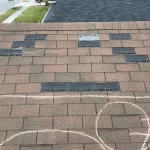
This is the most common type of repair we see, especially after strong winds or summer storms in Florida. What causes it:
- Wind uplift.
- Debris impact.
- Aging adhesive strips.
Cost range: $800–$1,200 (usually 3–5 shingles or small sections).
Note: If the damage exposes the underlayment or decking, expect costs to climb, especially if a tarp is needed.
Roof leaks and interior water intrusion
Here’s where things start to get serious. A small roof leak on the outside can cause big problems on the inside. The signs of trouble:
- Water spots on your ceiling.
- Sagging drywall.
- Musty smell in the attic.
Cost range: $1,000–$1,600 (Includes diagnostics, repair, and preventive sealing).

Tip: Insurance may not cover damage caused by delays. You’re usually required to take “reasonable steps” to prevent further damage and that includes getting a tarp installed ASAP.
Flashing, vents and ridge cap repair
These parts of your roof may not get the spotlight, but when they fail, they cause real problems. Common issues:
- Cracked flashing around chimneys or vents.
- Loose or rotted ridge caps.
- Leaks where walls meet the roofline.
Cost range: $950–$1,450 (More if access is difficult or multiple angles are involved).
Emergency tarping (temporary roof protection)
Sometimes, a full repair can’t happen right away, especially if the weather’s not cooperating or you’re waiting for insurance approval. That’s where professional emergency tarping comes in.
Cost range: $850–$1,600 (based on height, pitch, and severity).
Important: Never attach tarps with screws or nails, it can void your insurance. Our crews use non-invasive sandbags or weighted tarp systems, unless the pitch is dangerously steep.
Damage type vs cost
| Type of Damage | Estimated Repair Cost | Typical Timeframe |
| Missing Shingles | $800 – $1,200 | 1–2 hours |
| Leak Detection & Repair | $1,000 – $1,600 | 2–4 hours |
| Flashing/Ridge Cap Repair | $950 – $1,450 | 2–3 hours |
| Emergency Tarp Install | $850 – $1,600 | Same-day (within 2 hrs) |
Not sure what type of damage you have? No problem, our team inspects your roof on-site and provides a detailed, written scope with photos. You’ll know exactly what needs fixing and what it costs. Schedule your roof damage inspection now — our licensed Florida team is ready to help.
Cost to Repair a Roof Shingle by Material Type
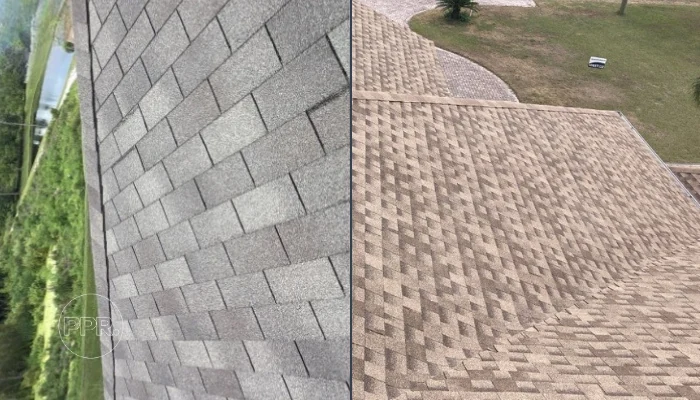
Not all shingles are created equal, and neither are their repair costs. The type of shingle on your roof affects how much you’ll pay to fix it. Here’s a clear look at how material choice impacts your repair bill:
| Shingle Type | Lifespan | Repair Cost | Best For | Notes |
| 3-Tab (Traditional) | 15–20 years | $800 – $1,200 | Budget-conscious homeowners | Light, affordable, but less durable in Florida’s wind-heavy climate |
| Architectural | 25–30+ years | $950 – $1,400 | Most modern Florida homes | Thicker, more weather-resistant, and visually appealing |
| Luxury / Designer | Up to 50 years | $1,200 – $1,600+ | Upscale homes or custom-designed roofs | Mimics slate or shake; high durability and premium look |
| Algae-Resistant | 20–30 years | Slightly higher | Homes in humid Florida areas | Prevents dark streaks from algae buildup |
| Impact-Resistant | 25–40 years | Higher (Class 4) | Homes in storm-prone or hail areas | Reinforced for better resistance to impact from debris or hail |
| Cool Roof Shingles | 20–30 years | Varies by brand | Energy-conscious homes | Reflect sunlight; helps reduce attic heat and energy bills |
Why it matters
- Basic shingles = lower upfront repair cost but may need more frequent attention.
- Premium shingles = more resilient but require expert handling during repairs (higher labor cost).
- If you’re not sure what type you have, that’s OK — our inspectors will identify it for you and explain the cost differences on-site.
Factors That Affect the Cost to Repair Shingles on a Roof
Even if two homes lose the exact same number of shingles, the repair cost might be totally different and it’s not just about the size of the roof. Several real-world factors influence how much you’ll pay to get your shingles fixed in Florida. Let’s break it down, clearly and simply:
- Roof height and pitch: The steeper or taller the roof, the more time and labor needed to fix it safely.
- Higher = more expensive. A two- or three-story home costs more to service than a one-story ranch.
- Steep roofs (high pitch) require safety gear, extra labor, and sometimes specialized equipment.
- Type and extent of damage: Is it just a few missing shingles? Or is there water intrusion, soft decking, or flashing damage?
- Minor cosmetic repairs are faster and cheaper.
- Structural or leak-related damage takes more time, materials and expertise.
- Shingle material: The more complex or premium the material, the higher the labor cost per repair.
- 3-tab asphalt shingles are simple and affordable to fix.
- Architectural or luxury shingles require more precision and matching, which takes more time.
- Specialty shingles (algae-resistant, Class 4 impact, or energy-efficient types) may involve longer sourcing or different repair methods.
- Accessibility and layout: Roofs with multiple slopes, skylights, vents or solar panels take longer to navigate.
- Emergency or after-hours response: Roof damage rarely happens at a “convenient” time. If your leak shows up during a weekend storm and you need a same-day tarp, expect added cost. Also, night calls or holiday service always involve emergency response rates, just like plumbing or electrical.
- Insurance considerations: In Florida, you are responsible for preventing further damage after a storm. That’s why emergency tarping is often needed before the claim can even move forward. If you wait too long and your attic floods, coverage could be denied. Mitigation matters.
Quick reminder: If you’re in Orlando, Tampa, or anywhere in Central Florida, Protect Preserve Roofing sends licensed professionals directly to your home. We assess damage, explain repair options, and offer accurate estimates — no pressure, no guesswork.
Should You Repair or Replace Your Shingle Roof?
The truth is that the answer depends on a few key signs. Let’s walk through them in a way that makes sense.
When a repair makes sense
In most cases, repairs are the smart first step. If your roof is still relatively young, and the damage is localized (think a few shingles, minor leak, or cracked flashing), a well-done repair is more than enough.
You should consider repairing it if:
- The roof is under 15 years old.
- Damage is isolated to one area.
- No sagging, soft decking or water pooling.
- You just lost a few shingles in a wind event.
- There’s no underlying structural issue.
Quick reminder: Protect Preserve Roofing always follows a “repair-first” approach unless a full replacement is clearly required.
When replacement is the smarter option
Some problems are signs of deeper issues and patching them may only delay the inevitable. If your roof is past its prime or showing signs of widespread wear, replacing the full system can save you money in the long run.
You should consider replacing it if:
- The roof is 20+ years old (for 3-tab) or 30+ years (for architectural).
- There are multiple leaks in different areas.
- You see curling, brittle, or missing shingles across the surface.
- The decking feels soft or spongy underfoot.
- Repairs are getting more frequent (or more expensive).
Note: In Florida, many insurers now require roof replacement after a certain age or major storm event, even if the leak seems minor.
Repair vs replacement: side-by-side
| Factor | Repair | Replacement |
| Upfront Cost | $800 – $1,600 | $9,000 – $18,000 (avg. in Florida) |
| Time to Complete | Same-day to 1 day | 1–3 days (after materials + permit) |
| Best For | Isolated damage, younger roofs | Widespread issues, older or storm-damaged roofs |
| Longevity Boost | 1–5 years (depending on condition) | 25–50 years (new system) |
| Insurance Requirements | Meets short-term needs | Often required after claims/inspections |
Important: Avoid patch overload. We get it, patching seems cheaper. But if you’re constantly repairing different sections every storm season, it adds up. Too many small fixes can cost more than a replacement over time.
Not sure which route to take? That’s what we’re here for. At Protect Preserve Roofing, we inspect your roof thoroughly, explain what we see, and show you the real cost difference between repairing and replacing. Get a no-pressure repair quote today and get honest advice from Florida roofing experts.
DIY vs. Professional Roof Shingle Repair
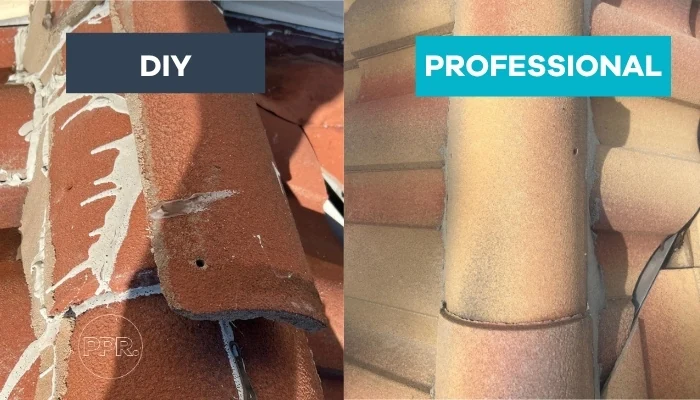
So, should you fix your roof on your own or call in a pro? Well, let’s take a look.
DIY repairs might apply (in theory) when:
- Replacing 1–2 loose or missing shingles.
- Reapplying roofing cement to a minor crack.
- Cleaning debris or unclogging roof vents.
These sound manageable… until they’re not. Most homeowners stop here because once you lift a shingle and find soggy decking, split flashing or signs of rot, it’s no longer a DIY job.
However, before grabbing your ladder, consider this:
- Safety hazards: Florida roofs can be steep and slippery, especially after storms. Most injuries from DIY roof jobs involve falls, not tools.
- Improper repairs = bigger problems: Mismatched shingles can lead to leaks or void warranties. Also, sealing over damage without fixing the root cause traps moisture.
- Insurance conflicts: If you cause more damage during a DIY attempt, your insurance claim may be denied. In Florida, you’re expected to mitigate further damage properly and that often means using licensed professionals.
- Hidden damage gets missed: A missing shingle could mean torn underlayment or soft decking beneath which a pro will spot immediately.
When professional repair makes more sense
Hiring a licensed roofer may cost more upfront, but it saves money (and headaches) in the long run. Here’s what you get with a professional repair from Protect Preserve Roofing:
- Thorough inspection with photos and moisture readings.
- Matching shingle type and color for a seamless look.
- Clean, fast repair using manufacturer-approved techniques.
- Warranty-backed workmanship.
- Insurance-ready documentation via Xactimate and Cotality.
DIY vs professional: side-by-side
| Aspect | DIY Repair | Professional Repair |
| Cost | Lower upfront ($100–$300) | $800–$1,600 (based on scope) |
| Safety | High risk | Licensed and insured crew with fall protection |
| Quality | Varies — depends on skill | Guaranteed workmanship, correct tools, proper seal |
| Warranty | None | Manufacturer and labor warranties available |
| Insurance Compliance | Risky if damage worsens | Fully compliant, insurer-trusted documentation |
Quick reminder: If the issue is cosmetics, you have experience, and the roof is safe to access a small patch job might be manageable. But if you’re not 100% sure what’s under that missing shingle, or your roof is steep, call Protect Preserve Roofing. We’ll get it done safely, properly and fast.
How Much Does It Cost to Repair Roof Shingles in Florida?
Between scorching sun, sudden storms, high winds and insurance inspections, the cost of roof repair here follows its own rules. So, if you’re in Orlando, Tampa, Daytona or anywhere in Central Florida, this breakdown is for you.
Average roof repair prices in Florida
Most shingle roof repairs in Central Florida range between $850 to $1,600 (based on real projects serviced by Protect Preserve Roofing). This range covers typical storm-related issues like:
- Replacing lifted or missing shingles.
- Fixing leaks around vents or flashing.
- Emergency tarp installation (when needed).
Why Florida repairs may cost more (or less)
Here are the main factors that shift your final cost up or down, specifically in Florida homes:
- Hurricane and storm impact: Florida sees more wind-related shingle damage than most states. Even small leaks can grow fast in humid conditions, raising complexity and cost repair.
- Insurance requirements: Many Florida insurers require professional documentation before a claim approval. Protect Preserve Roofing uses Xactimate and Cotality, the same estimating software as major insurers, to ensure full compliance.
- Material type and HOA guidelines: In communities like Lake Nona, Winter Park, Celebration or Wesley Chapel, local HOAs may require specific shingle types, colors, or brands. Premium or specialty shingles can increase both material and labor costs.
- Accessibility and pitch: Florida homes vary a lot, from low-slope bungalows to steep two-story buildings. The steeper or taller your roof, the more complex (and expensive) the repair becomes.
Real-world cost examples
| City | Roof Issue | Repair Cost |
| Orlando, FL | 6 missing shingles, 2 leaks | $1,350 |
| Kissimmee, FL | Ridge cap + flashing repair | $1,150 |
| Tampa, FL | Emergency tarp + inspection | $1,480 |
| Winter Garden, FL | 3-tab shingle patch (minor) | $875 |
| Sanford, FL | Architectural shingle leak fix | $1,250 |
Note: Prices include diagnostics, labor, insurance-formatted documentation and clean-up.
Conclusion: We Come to You in Orlando and Central Florida
If you live in Orlando, Tampa, Daytona, Kissimmee or anywhere in Central Florida, and you’ve got a roof that’s leaking, missing shingles, or just not holding up to Florida’s wild weather – we’re already on our way.
At Protect Preserve Roofing, we don’t just fix roofs; we protect homes, preserve peace of mind, and show up when others don’t.
- Licensed and insured across Florida.
- 2-hour emergency response times (when it counts).
- No nails in your tarp ever, unless necessary.
- Insurance-compliant estimates, ready for approval.
- Photo reports, honest advice, no pushy sales.
We know that most homeowners aren’t roofing experts and that’s OK. We’re here to make the process clear, fast and fair. Whether it’s a quick shingle patch or a temporary tarp to hold you through the storm, we’ll tell you exactly what’s needed and only what’s needed.
Ready for an inspection or emergency roof fix? Whether it’s noon or midnight, your roof won’t wait and neither do we.
- Request your roof repair quote now
- Or learn more about our services at protectpreserveroofing.com
We’re local, fast and we’ll be on your roof before the next storm hits.
Can I repair a few shingles myself instead of calling a roofer?
Our repairs come with warranties and proper sealing — and we spot issues that videos won’t show.
What type of shingles do I have, and does it change the repair cost?
Architectural types cost more to repair due to thickness and matching requirements.
Not sure what you have? We’ll identify it during the inspection — it’s included in your quote.
Are you licensed and insured in Florida?
You can verify our credentials on the Florida DBPR Portal, and we provide COIs (Certificates of Insurance) upon request.
Do you offer financing if insurance doesn’t cover the full repair?
Insurance deductibles
Upgrades or code requirements not covered
Full roof replacements
Options include no interest if paid in full in 12–24 months, pending approval.



Leave a Reply