





Roof types may seem like a straightforward topic but choosing the right one can make or break your home’s performance, safety and resale value. Did you know that roofing mistakes are one of the top five most expensive home renovation errors in the U.S., costing homeowners over $10,000 on average according to HomeAdvisor?
Whether you’re building a new home, planning a renovation or simply researching your options, understanding the different types of roofs is essential.
So, in this complete guide, we’ll break down the most popular roof types, materials, structures and styles – along with how much they cost and how to make the smartest choice based on your home and location.
Thousands of homeowners across the country are switching to newer, more efficient roofing systems and you’re about to discover why.
What Are Roof Types and Why Do They Matter?
Roof types are the shapes, slopes and structural designs used to build a roof. They include styles like gable, hip, flat, shed and more complex combinations. Each one affects how your home handles water, wind, and time.
Sounds simple, right? However, choosing the wrong roof type is like putting racing tires on a tractor. It might look cool, but it’s going to end badly when it rains.
Roof types matter more than you think. Let’s break it down:
- Function: Some roofs drain rain and snow faster. Others hold water longer, which could lead to leaks, mold and rot.
- Cost: Certain roof types require more materials or cost more to install because of pitch or complexity.
- Maintenance: Low-pitch roofs might need more cleaning and inspection. Steep ones are harder to work on.
- Insurance: Yes, your roof design can impact what your insurance covers, especially during storm damage.
- Energy Use: The shape of your roof affects how heat escapes or stays in. That means higher or lower energy bills.
- Resale: A roof that fits the house and neighborhood sells faster and for more money. Simple as that.
Bottom line: Roof types matter. They affect how your home performs; how much it costs to fix and what support you get when something goes wrong. If you’re not sure which roof type your home has, or which one you should get next, don’t guess. Understanding your options is the first step.
Main Roof Structures Explained
Let’s go through the most common types so you can spot yours in a second and know exactly what it’s good for.
Gable roof
The classic triangle. Two sloping sides meet at the top to form a sharp ridge. You’ve seen this style everywhere; it’s simple, affordable and drains water fast.
- Best for: Rainy and snowy areas.
- Pros: Cheap to build, easy to tarp, solid ventilation.
- Watch out: Not great in high wind zones, unless reinforced.
- Tarping tip: Easy to cover using sandbags and standard safety setups.
Hip roof
All four sides slope down to the walls, forming a soft pyramid or a rectangle. Looks balanced and clean.
- Best for: Windy or hurricane-prone areas.
- Pros: More stable than gables, sheds rain from all sides.
- Watch out: More expensive to build and repair.
- Tarping tip: Slightly more tarp material needed; avoid nailing even on steep sections unless absolutely necessary.
Mansard roof
French-style roof with two slopes on each side. The lower slope is steep; the upper one is shallow.
- Best for: People who want more space in the attic.
- Pros: Great for adding a full top floor without a full remodel.
- Watch out: Tricky to maintain; water can collect if drainage isn’t perfect.
- Tarping tip: Requires custom tarp layout, steep lower slope may demand secure bracing, not nails.
Gambrel roof
Think of a barn. Two sides with two different slopes: steep at the bottom, shallow up top.
- Best for: Rustic homes or anyone who wants a spacious attic.
- Pros: Cheaper than mansard but offers similar loft space.
- Watch out: Needs regular inspection at the joints.
- Tarping tip: Use strong anchoring; nails are risky due to ridge sensitivity.
Flat roof
Flat doesn’t mean perfectly flat, but it’s close. Usually has a slight slope for drainage.
- Best for: Warm and dry areas; modern house styles.
- Pros: Easy access, cheaper to build.
- Watch out: It can be a nightmare during heavy rain if not sealed well.
- Tarping tip: Tarps can slide off in wind; use sandbags, not screws, to weigh them down.
Shed roof
A single slope, like half a gable. Simple and modern.
- Best for: Small homes, additions, or minimalist builds.
- Pros: Affordable, efficient, good for solar panels.
- Watch out: Less attic space, awkward tarp setups.
- Tarping tip: Position tarp along slope and weigh down, never puncture the surface.
Butterfly roof
Two inward slopes that form a valley, think of a V shape.
- Best for: Modern homes with rainwater collection.
- Pros: Unique look supports sustainable systems.
- Watch out: High chance of leaks if gutters clog.
- Tarping tip: Needs full coverage from valley edges outward; avoid seams in middle.
Combination roof
Mix and match. Could be gable + hip, or mansard + flat. Usually seen in custom homes.

- Best for: Custom home builds.
- Pros: Design freedom, curb appeal.
- Watch out: Complex = expensive to maintain.
- Tarping tip: Needs a custom tarp layout; extra care to avoid overlaps and water pooling.
Pro tip from Protect Preserve Roofing: The shape of your roof decides how well you can protect it during a storm. It also impacts the price of emergency services and how insurers respond to damage.
Different Types of Roofing Materials
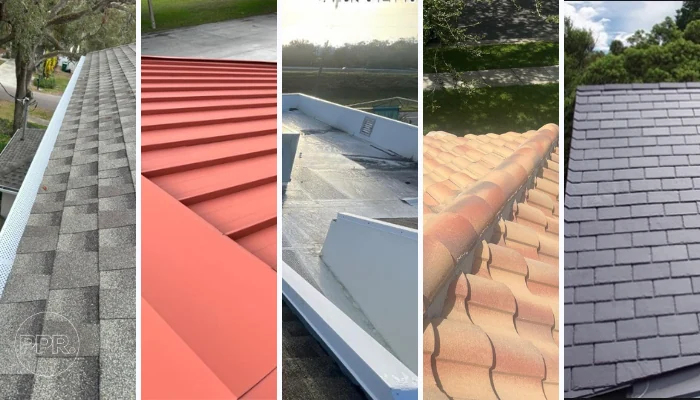
This part isn’t just about looks, it decides how long your roof lasts, how well it holds up to bad weather and how much it’s going to cost you. And spoiler: not all roofing materials are created equal.
Asphalt shingles
Asphalt shingles are the go-to choice for most homeowners. They’re easy to install, budget-friendly, and come in enough colors to make your wife (or HOA) happy.
- Average lifespan: 15 to 30 years.
- Pros: Cheap and widely available, easy to replace and works well on most pitched roofs.
- Cons: Doesn’t last as long as other options and can crack in extreme heat.
- Best for: Gable, hip, and shed roofs.
- Protect Preserve Roofing tip: If you’re using tarps on asphalt shingles, always go with sandbag weights, nails will just turn a small issue into a roofing horror story.
Metal roofing
Metal is tough. It laughs in the face of rain and wind. And it looks sharp if you’re into that modern, industrial vibe.
- Average lifespan: 40 to 70 years.
- Pros: Extremely durable, fire-resistant and reflects heat = lower energy bills
- Cons: Costs more upfront and it’s noisy during storms (unless insulated well).
- Best for: All roof types, especially steep ones.
- Protect Preserve Roofing tip: Never drill into metal roofing to secure a tarp. Use padded straps and sandbags or call a pro.
Clay and concrete tiles
These aren’t your grandpa’s roof tiles… well, actually, they might be. They’ve been used for centuries, and for good reason.
- Average lifespan: 50 to 100 years.
- Pros: Fireproof, handles sun and heat like a champ and classic Mediterranean look.
- Cons: Heavy (needs reinforced framing) and breaks easily if walked on.
- Best for: Hip, gable, and combination roofs.
- Protect Preserve Roofing tip: Never walk on a tile roof to lay a tarp. Ever. Use long poles, scaffolding or let a trained team handle it.
Wood shingles and shakes
If you want a rustic look, wood can get you there. It’s natural, it’s beautiful and it’s also a little needy.
- Average lifespan: 20 to 40 years (with care).
- Pros: Great insulation and unique, earthy look.
- Cons: Needs regular maintenance and it’s vulnerable to fire unless treated.
- Best for: Gable and gambrel roofs.
- Protect Preserve Roofing tip: Avoid tarping over wet wood. If you must, make sure it’s vented.
Slate roofing
Slate is the James Bond of roofing materials: elegant, tough and expensive.
- Average lifespan: 75 to 150 years.
- Pros: Long-lasting and beautiful. Fireproof and waterproof.
- Cons: Very heavy and super high install cost.
- Best for: High-end gable or mansard roofs.
- Protect Preserve Roofing tip: Don’t try to tarp a slate roof on your own. One cracked tile = $$$.
Synthetic roofing options
Today’s tech gives you fake versions of everything, including roofs, and honestly, some of them are pretty good.
- Materials: Rubber, polymer, recycled blends.
- Average lifespan: 30 to 50 years.
- Pros: Lightweight, molded to look like real slate or wood and often cheaper than natural alternatives.
- Cons: Varies a lot by brand and quality and some don’t age as well.
- Best for: Almost all roof shapes.
- Protect Preserve Roofing tip: Make sure your tarp material is compatible. Some synthetic surfaces can slip under standard tarp fabrics when wet.
Roof Types: Shingles
Let’s break down the main types of roof shingles in a way that makes sense. And no, you don’t need a construction degree to understand any of this.
Three-tab asphalt shingles
These are the “basic package” of roofing: cheap, easy and gets the job done.
- Look: Flat, uniform.
- Lifespan: 15–20 years.
- Pros: Budget-friendly, widely used and easy to install.
- Cons: Less durable and blows off easier in storms.
- Best for: Rental homes or short-term properties.
- Protect Preserve Roofing tip: These shingles are easy to damage during tarp installs. Always tarp gently using sandbags – no nails, no shortcuts.
Architectural shingles
Now we’re talking. These have layers, they give your roof a more custom, textured look without breaking the bank.
- Look: Thicker, more shadowed texture.
- Lifespan: 25–30 years.
- Pros: More durable than 3-tab, better resistance to wind and hail and looks great on most homes.
- Cons: A little pricier.
- Best for: Family homes, modern builds.
- Protect Preserve Roofing tip: Holds up better under a tarp. Still, avoid covering hot shingles directly after sun exposure, you’ll cook the sealants.
Luxury shingles
Luxury shingles aren’t just about looks, they’re beefy. They mimic the style of slate or wood but come with asphalt’s easy maintenance.
- Look: Thick, high-end finish.
- Lifespan: 30–50 years.
- Pros: Stronger than other asphalt types, high curb appeal and can boost resale value.
- Cons: Costs more up front and adds weight to the roof.
- Best for: Larger or high-value homes.
- Protect Preserve Roofing tip: These can survive heavier winds, but tarp over luxury shingles only when absolutely needed, improper placement could scuff the finish.
Metal shingles
Not metal panels, metal shingles. These combine the durability of metal with the style of traditional roofing.
- Look: Crisp, modern, sometimes textured to mimic shake or tile.
- Lifespan: 40–70 years.
- Pros: Long life, great weather resistance and stylish, high-end finish.
- Cons: Needs specialized install and expensive per square foot.
- Best for: Steep-pitched homes or hurricane zones.
- Protect Preserve Roofing tip: Never nail through metal shingles. Use tie-down straps and padding if a tarp is absolutely necessary.
Synthetic shingles
These are the chameleons of roofing; designed to look like something else but built from man-made materials.
- Look: Mimics wood, slate, or even clay.
- Lifespan: 30–50 years.
- Pros: Lightweight, easier to install than real tile or slate and usually eco-friendly.
- Cons: Quality varies wildly and some fade or warp over time.
- Best for: Anyone who wants the look without the hassle.
- Protect Preserve Roofing tip: Synthetic roofs often get overlooked by insurance. If you tarp it, document everything. Take photos and keep receipts.
Roof Types: Vents
Without proper ventilation, your attic turns into a sauna in summer and a moisture trap in winter. That means higher energy bills, mold growth, roof rot and even voided warranties. So, let’s fix that by understanding the main types of roof vents.
Ridge vents
These run along the top of your roof, right on the ridge (hence the name). You usually don’t even see them unless you’re up close.
- How it works: Hot air naturally rises and escapes through the ridge.
- Best for: Homes with large attic spaces and gable/hip roofs.
- Pros: Blends in, no moving parts and works great with soffit vents.
- Cons: Doesn’t work well without intake vents below.
- Protect Preserve Roofing tip: Never cover ridge vents when tarping. That’s like taping your nostrils shut during a jog.
Soffit vents
These are tucked under the eaves, the underside of your roof overhang.
- How it works: Brings cool, fresh air in to push hot air out the top.
- Best for: Just about every home.
- Pros: Hidden and helps prevent ice dams and attic mold.
- Cons: Can clog with insulation if installed wrong.
- Protect Preserve Roofing tip: Always check if your soffits are open or closed.
Gable vents
Old-school and still useful. Found on the sides of the attic near the roof peaks.
- How it works: Cross-ventilation, air flows in one gable and out the other.
- Best for: Homes with tall attics and gable roofs.
- Pros: Easy to spot and cheap to install.
- Cons: Wind-dependent and can cause uneven airflow.
- Protect Preserve Roofing tip: If you have gable vents and a ridge vent, make sure they’re not fighting each other.
Turbine vents
You’ve probably seen these spinning on roofs like little metal UFOs.
- How it works: Wind spins the turbine, sucking hot air out.
- Best for: Windy areas, older homes.
- Pros: Passive + mechanical combo and moves more air than static vents.
- Cons: Noisy when old and useless in calm weather.
- Protect Preserve Roofing tip: They need clearance to spin. Don’t tarp over them. If they stop spinning, you’ve got trapped heat fast.
Powered attic vents
These run on electricity or solar and actively pull air out of your attic.
- How it works: Electric motor draws out hot air on a timer or thermostat.
- Best for: Large homes, high-heat zones.
- Pros: Efficient and can be tied to smart home systems.
- Cons: Cost more and can pull air-conditioned air out if the attic isn’t sealed properly.
- Protect Preserve Roofing tip: If a tarp is needed near this system, shut off the power. Fan damage during storms is a fire risk.
Comparing Roof Types by Cost, Durability and Appearance
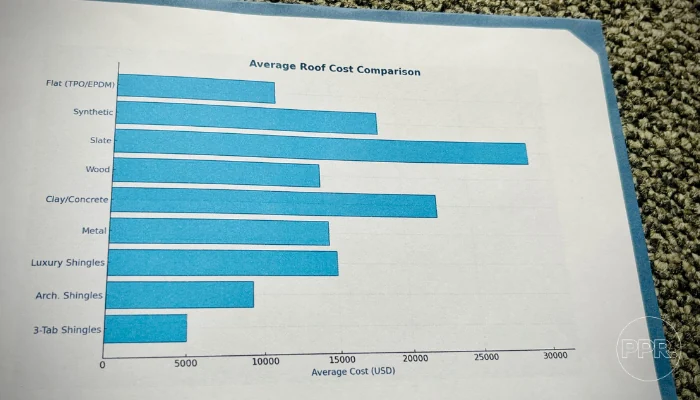
Below is a side-by-side breakdown of the most common roof types based on installation cost, expected lifespan and visual style, so you can make a choice that fits your budget:
| Roof Type | Avg. Cost (USD) | Lifespan (Years) | Appearance Level | Notes |
| 3-Tab Asphalt Shingles | $4,000 – $6,000 | 15 – 20 | ★ Basic | Budget-friendly, common look, best for short-term use |
| Architectural Shingles | $6,500 – $12,000 | 25 – 30 | ★★★ Polished | Great balance of price, looks, and strength |
| Luxury Shingles | $10,000 – $20,000+ | 30 – 50 | ★★★★ Premium | Thick, elegant finish, adds value and curb appeal |
| Metal Roofing | $9,000 – $20,000+ | 40 – 70 | ★★★ Modern | Durable, energy-efficient, ideal for hot or storm-prone areas |
| Clay/Concrete Tiles | $15,000 – $30,000+ | 50 – 100 | ★★★★ Traditional/Luxury | Heavy, strong, classic Spanish or Mediterranean style |
| Wood Shakes/Shingles | $10,000 – $18,000 | 20 – 40 | ★★★ Rustic | Natural look, needs regular maintenance |
| Slate Roofing | $20,000 – $40,000+ | 75 – 150 | ★★★★★ Elite | Long-lasting, elegant, heavy and expensive |
| Synthetic Roofing | $12,000 – $25,000 | 30 – 50 | ★★★ Versatile | Mimics slate or wood, lightweight, eco-friendly options available |
| Flat Roofing (TPO/EPDM) | $7,000 – $15,000 | 20 – 35 | ★★ Minimalist | Best for modern or commercial, easy access but tricky drainage |
Pro tip from Protect Preserve Roofing: The cost of emergency tarp installation can add $800 to $1,600, depending on your roof’s pitch, height and damage. Picking a roof that works with emergency solutions, not against them, can save you big during storm season.
Choosing the Best Roof Type for Your Home
What works great for a beach house in Florida might be a disaster for a cabin in Colorado. So instead of asking “what’s the best roof,” the better question is: What’s the best roof type for your home, climate and wallet? Let’s break it down.
Climate
Your roof’s biggest job is to protect against what the sky throws at it. So, the weather where you live is a huge deal.
| Climate | Ideal Roof Types |
| Hot & Sunny | Metal (reflects heat), Clay Tiles (heat-resistant) |
| Cold & Snowy | Asphalt Shingles (with good pitch), Metal (sheds snow) |
| Rainy & Wet | Metal, Architectural Shingles, Synthetic Slate |
| Hurricane Zones | Hip Roof + Metal or Architectural Shingles (wind-rated) |
Roof pitch and shape
Some materials just don’t work well on certain slopes.
- Low-pitch or flat roofs: Use materials like TPO, EPDM or metal.
- Steep roofs: Asphalt shingles, slate or clay tiles are ideal.
- Complex shapes: Combination or butterfly roofs may need custom material planning.
Home design and style
Your roof affects more than weather protection, it defines the look of your house.
- Modern homes? Flat roofs or standing seam metal scream style.
- Traditional homes? Architectural or luxury shingles give it texture.
- Farmhouses or barns? Wood shakes or metal keep it rustic.
- Mediterranean or Spanish styles? Clay tiles all day.
Budget
Be honest here. There’s no shame in sticking to a budget, just don’t underbuild what protects your house.
- Tight budget (under $10k): Go with 3-tab or basic architectural shingles.
- Mid-range ($10k–$20k): Upgrade to metal, clay or luxury asphalt.
- Long-term investment ($20k+): Slate, concrete tile or advanced synthetics.
Insurance & HOA rules
Some HOAs don’t allow certain materials or colors. Some insurance companies may give discounts for Class 4 impact-resistant shingles. Others might deny claims if they feel the roof was poorly maintained or improperly installed.
- Always check before building.
- Document your roof choices (material, age, maintenance).
- Use a licensed contractor, like Protect Preserve Roofing.
What Protect Preserve Roofing recommends
We’ve installed and repaired thousands of roofs in all shapes, pitches and storm conditions. Here’s what we’ve learned:
- It’s not about “the best roof.”
- It’s about the right roof for the right house, in the right place, for the right budget.
- And it has to be something we can protect quickly in an emergency without putting your coverage or structure at risk.
Specialty Roof Types: Metal, Flat and Eco-Friendly Options
Let’s look at three categories: metal, flat and eco-friendly roofing, how they work, when they shine and what to consider before you commit.
| Roof Type | Common Styles / Materials | Pros | Cons | Best Uses |
| Metal Roofing | – Standing Seam (hidden fasteners, clean look) – Screw-Down Panels (exposed fasteners, cheaper install) – Metal Shingles (look like slate or shake, but metal tough) | – Lifespan: 40–70 years – Reflects heat → lower energy bills – Excellent wind, fire, and impact resistance – Recyclable and often made from recycled materials | – Higher upfront cost – Noisy during heavy rain if not insulated – Requires skilled installation (not DIY) | Homes in storm-prone or hot climates, modern designs, long-term investment |
| Flat Roofs | – TPO (Thermoplastic Polyolefin) – EPDM (Synthetic rubber) – Modified Bitumen | – Easy to walk on for maintenance – Works well with solar panels/HVAC – Clean, minimalist look | – Can collect water if installed poorly – Needs regular inspections – Weak performance in snowy climates | Modern homes, commercial buildings, solar setups |
| Eco-Friendly Roofs | – Cool Roofs (reflect sunlight) – Green Roofs (plants + soil over membrane) – Solar-Ready Roofs (made for panels) | – Reduces A/C use and energy bills – May qualify for tax credits/incentives – Strong resale value for sustainability | – Higher upfront investment – Some require added structural support – More maintenance | Homeowners focused on energy savings, sustainability, or resale boost |
Pro tip from Protect Preserve Roofing: Specialty roofs often require custom tarp solutions during storms. Metal, flat, and eco-friendly roofs can’t just be “covered quickly.” That’s why we design every install with emergency protection in mind – saving you money and avoiding insurance headaches.
Roofing Mistakes to Avoid
Before you pick a roof just because it “looks good” or “your neighbor has one,” let’s talk about the most common roofing mistakes homeowners make and how to dodge them like a pro.
- Picking based on looks only: Sure, that clay tile roof looks gorgeous on Pinterest. But if you live in a place with hailstorms every other week? That roof’s beauty is going to crack fast. Choose based on climate, pitch and structure, not just looks.
- Ignoring your roof’s pitch: Roof pitch is the angle or slope of your roof, and it affects what materials work, how water drains and how easy it is to tarp in emergencies.
- Overlooking ventilation needs: Your roof needs to breathe. If you don’t get ventilation right, moisture builds up, mold grows, and materials age faster than they should.
- Going cheap… and paying double: Trying to “save money” with the cheapest shingles usually ends up costing you twice as much in repairs, replacements or energy bills.
- Not planning for emergency tarping: Some roof types make it almost impossible to safely install a tarp, especially without causing more damage. Choose wisely.
- Assuming insurance will cover it all: Insurance isn’t obligated to pay just because your roof got wet. You need to be smart and save every single proof.
Final note from Protect Preserve Roofing: We’ve seen all these mistakes happen and fixed them for homeowners who paid the price for poor advice or rushed decisions. Our job isn’t just putting on a roof. It’s helping you make a smart, long-lasting, insurance-safe choice. And making sure that when things go wrong, you’re protected, covered and confident.
Conclusion: Your Roof, Your Rules, But You Don’t Have to Do It Alone
If you’ve made it this far, let’s be honest, you care more about your roof than most people ever will. And that’s a good thing. Because being informed is the difference between a roof that lasts 30 years and one that lets you down after the first major storm.
You now understand the main roof structures, the pros and cons of each material, which roof fits your home, climate and budget and the mistakes that can cost thousands if ignored. That’s more than most homeowners learn in a lifetime.
However, you don’t have to figure it all out alone. At Protect Preserve Roofing, we don’t just show up with shingles and ladders. We show up with:
- Expert guidance tailored to your home.
- Clean, safe, and insurance-conscious installations.
- Fast tarp protection when the weather turns.
- And zero-pressure conversations that start with what you need, not what we’re selling.
Ready to take the next step? Talk to the team that thousands of homeowners trust when it matters most. Schedule your free inspection today or get a quick estimate for a roof job.
Because when storms hit, guessing isn’t a plan, but we are.
FAQs About Roof Types
Which roof is best for hot climates?
What’s the cheapest roofing option?
Do insurance companies always pay for roof repairs?
How do I know which roof type is right for my home?
Climate – Heat, snow, storms, or all of the above?
Budget – Short-term vs. long-term investment.
Style – Does it fit your home’s design and resale value?
Still unsure? That’s exactly what Protect Preserve Roofing helps homeowners figure out — with honest guidance and zero guesswork.

Leave a Reply